

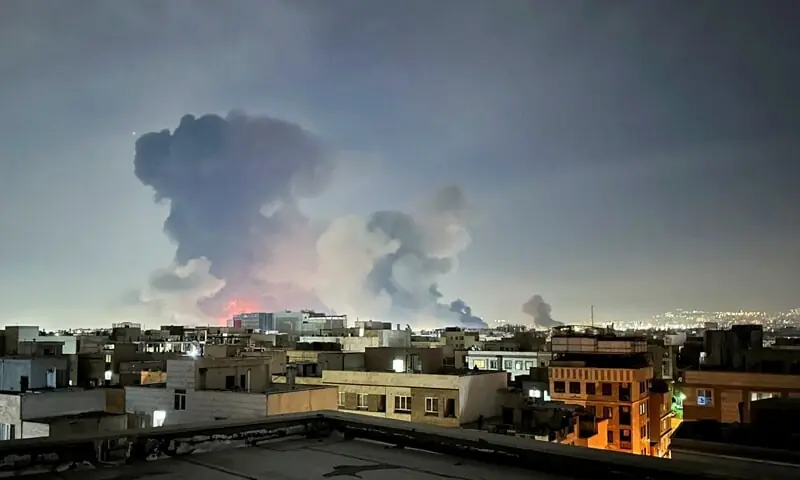

Balochistan security crisis
Summarized and contextualized by DistantNews.
At a glance
News
Sources not specified
Context piece
- Pakistan's leadership has vowed to eliminate terrorism following a surge in violence in Balochistan.
- While officials met in Quetta, local elders successfully negotiated the release of hostages from an armed group, reportedly affiliated with the TTP.
- The article suggests a growing gap between the state and civilians, complicating the security landscape and allowing various militant groups to operate.
Pakistan's civil and military leadership has reaffirmed its commitment to eradicating terrorism after a recent escalation of violence in Balochistan. Prime Minister Shehbaz Sharif and Field Marshal Asim Munir declared a "mutual and singular decision" to eliminate the threat during a high-level meeting in Quetta.
Amidst the official discussions on the National Action Plan, a parallel, less public process unfolded in the Hanna Urak area. There, local elders directly negotiated with an armed group that had abducted several citizens, securing the hostages' release without apparent government involvement. The abductors claimed affiliation with the banned TTP, though their specific identity and motives remain unconfirmed.
The effectiveness of the state's resolve in addressing Balochistan's volatile security situation remains uncertain. The article highlights a widening gap between the state and its citizens, which is exacerbating the province's security challenges. This environment has emboldened various Baloch insurgent groups, the TTP, and even ISIS to conduct terrorist activities, including the recent assassination of two Christian cricketers in Mastung.
The article criticizes the state's policy, noting a pattern of claiming victory when violence subsides and blaming external factors when it increases. It argues that violent actors are thriving due to a lack of substantial policy change. Baloch insurgent groups have shown an ability to adapt their operational tempo, suggesting that temporary lulls in activity may indicate tactical recalibration rather than a diminishing conflict.
Data from recent weeks indicates that the insurgency in Balochistan remains geographically dispersed, operationally flexible, and strategically deliberate. Despite a decline in the total number of attacks, 17 incidents across 13 districts demonstrate the continued capacity of insurgent groups to operate across a wide and challenging area. The Balochistan Liberation Army alone conducted attacks in nine districts in June, underscoring the persistent nature of the threat.
DistantNews Editorial
Originally published by Dawn. Summarized and contextualized by our editorial team with added local perspective. Read our editorial standards.
More Stories

From Our Blog

What Gets Lost (and Found) When News Is Translated

The Critical Role of Diaspora Media in Global News

What Travellers Should Know About Countries with Restricted Press

A Digital Nomad's Guide to Following Local News

How the Same Story Looks Different in Different Countries
