


Baltic Sea: Auroras or algae? Photos reveal the state of the Baltic Sea
Translated from Finnish, summarized and contextualized by DistantNews.
At a glance
News
Sources not specified
Context piece
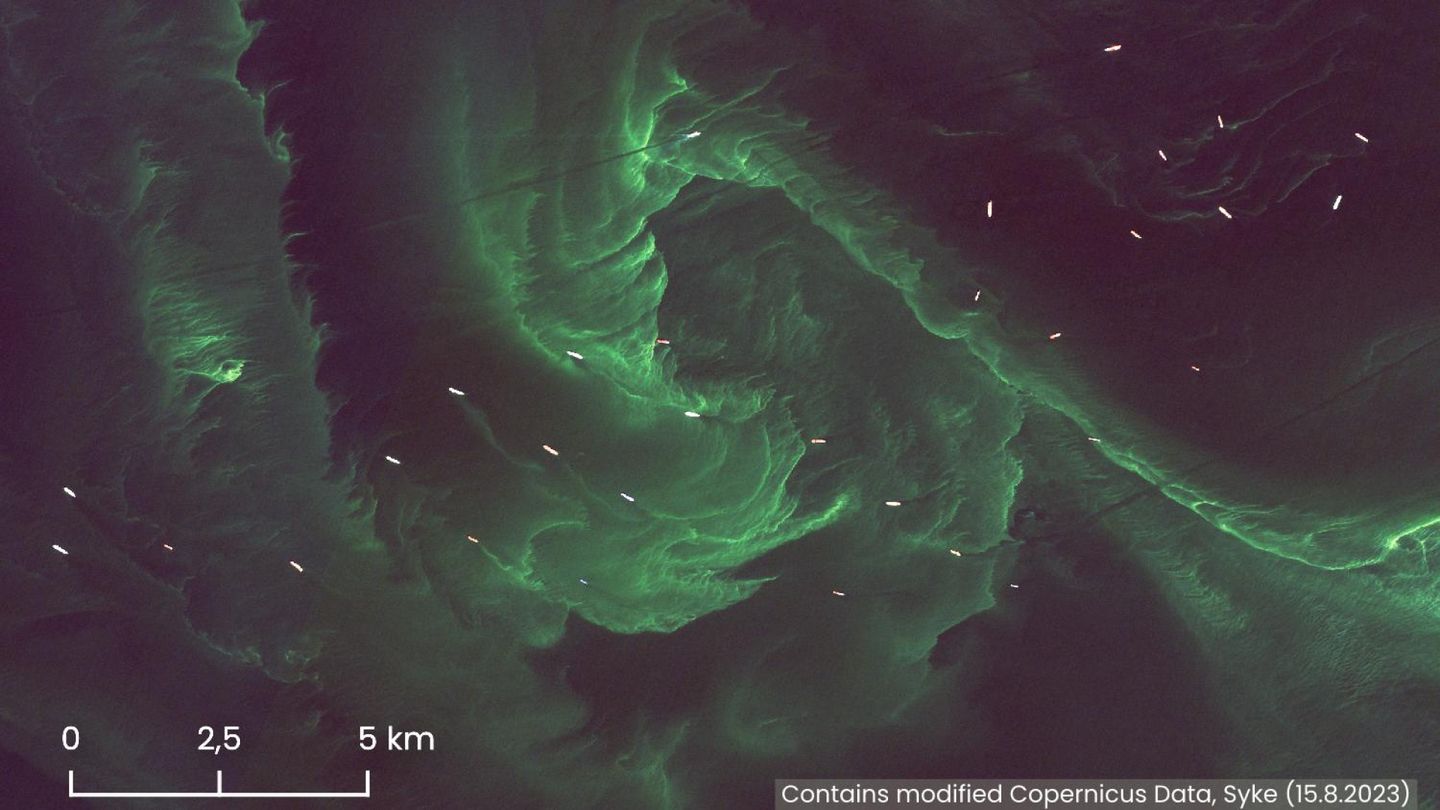
- Satellite images reveal the poor state of the Baltic Sea, with white dots representing ships and green swirls indicating cyanobacteria.
- Human impact is strongly visible in the shallow Baltic Sea, illustrated by beautiful images that expose the reality of biodiversity loss.
- The Finnish Environment Centre used modified Copernicus data for an image taken in the Gulf of Finland in August 2023.
Beautiful images of the Baltic Sea, resembling a starry sky with auroras, actually reveal a grim reality of biodiversity loss. White dots in the images are ships, while the green swirls are cyanobacteria. A photo from the Gulf of Finland, taken in August 2023 by the Finnish Environment Centre using modified Copernicus data, starkly illustrates the human impact on the shallow Baltic Sea.
Like an aurora in the winter sky. The white dots are ships and the green swirls are cyanobacteria.
The visual contrast between the aesthetic appearance and the underlying environmental degradation is striking. What might look like a celestial display is, in fact, a sign of ecological distress. The article highlights the pervasive influence of human activity on this sensitive marine environment.
Human impact is strongly visible in the shallow Baltic Sea.
Specific examples of this impact are presented, such as ghost fishing nets, which remain eternally entangled, and the green, undulating patterns against a dark background that, upon closer inspection, are not auroras but blooms of algae like bladderwrack. These captivating visuals serve as a stark reminder of the ecological challenges facing the Baltic Sea.
A ghost fishing net, forever caught in fishing, is a ghostly sight.
DistantNews Editorial
Originally published by Helsingin Sanomat in Finnish. Translated, summarized, and contextualized by our editorial team with added local perspective. Read our editorial standards.
More Stories

From Our Blog

What Gets Lost (and Found) When News Is Translated

The Critical Role of Diaspora Media in Global News

What Travellers Should Know About Countries with Restricted Press

A Digital Nomad's Guide to Following Local News

How the Same Story Looks Different in Different Countries
