

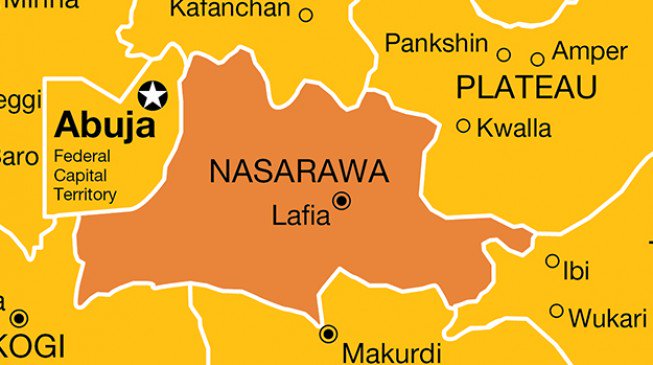

Ban on tree felling, charcoal production still in force — Nasarawa
Summarized and contextualized by DistantNews.
At a glance
News
Named sources
Context piece
- - The Nasarawa State Government has reiterated its ban on tree felling and charcoal production to combat climate change effects.
- Violators face stiff penalties as the state government enforces the ban across all 13 local government areas.
- The measure aims to address deforestation, extreme weather, flooding, and land degradation caused by human activities.
The Nasarawa State Government has issued a stern warning that the ban on tree felling and the production and sale of charcoal remains in effect throughout the state's 13 local government areas. The government emphasized that violators will face severe penalties as part of its ongoing efforts to mitigate the impacts of climate change.
As regards the charcoal ban, you will realise that the whole world is experiencing climate change. Climate change is with us, and it is a result of human activities that have intentionally destroyed our environment.
According to Ede Yakubu, the Permanent Secretary of the Ministry of Environment and Natural Resources, the ban was implemented due to the high rate of deforestation driven by indiscriminate tree cutting and charcoal production. These activities have significantly contributed to environmental degradation, exposing the region to excessive heat and pollution.
The environment is natural; it does not change on its own. It is our activities that are causing it to change negatively. What we are experiencing now, flooding, hot weather and land degradation, is a result of our activities that have negatively affected the environment.
Yakubu explained that climate change, characterized by extreme weather events like flooding and land degradation, is a direct result of human activities that have negatively impacted the environment. He highlighted that charcoal production had become a lucrative business, leading to the widespread exploitation of the state's forests and degraded land.
We realised in the past that people embraced charcoal production as a business. It became a major source of income, and people exploited our forests. They cut down trees indiscriminately, and because of that, our land became degraded.
The permanent secretary stressed the urgency of the situation, warning that inaction could worsen climate change effects and lead to the destruction of remaining forest reserves. He also mentioned the ministry's collaboration with the World Bank-supported Agro-Climatic Resilience in Semi-Arid Landscapes project to restore degraded land and rehabilitate exploited forests through tree replanting initiatives.
If we don’t act now, climate change will become worse. Our remaining forest reserves will be exploited and destroyed, exposing us to even greater environmental dangers.
DistantNews Editorial
Originally published by The Punch. Summarized and contextualized by our editorial team with added local perspective. Read our editorial standards.
More Stories


From Our Blog

How the Same Story Looks Different in Different Countries

What Gets Lost (and Found) When News Is Translated

The Critical Role of Diaspora Media in Global News

What Travellers Should Know About Countries with Restricted Press

A Digital Nomad's Guide to Following Local News
