


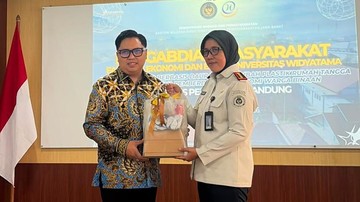
Bandung Officials Appreciate Prison Program Empowering Inmates Through Plastic Waste Recycling
Translated from Indonesian, summarized and contextualized by DistantNews.
At a glance
News
Named sources
New plan
- Bandung City DPRD Chairman Radea Respati Paramudhita praised a community service program at the Bandung Women's Prison.
- The program focused on ecopreneurship, transforming household plastic waste into valuable products.
- This initiative aims to enhance the skills and economic independence of female inmates.
Radea Respati Paramudhita, Chairman of Commission I of the Bandung City Regional People's Representative Council (DPRD), lauded a community service initiative by the Widyatama University Faculty of Economics and Business (FEB) at the Bandung Women's Class IIA Prison. The program, themed "Ecopreneurship Based on Household Plastic Waste Recycling as an Effort to Empower the Economic Independence of Inmates," was held on Tuesday.
Paramudhita described the initiative as a concrete step toward improving the skills and fostering economic self-sufficiency among the inmates, particularly women. The program, led by Dr. Rima Rahmayanti, SE., MM., involved participants from various Bandung city government agencies, including the DPRD Secretariat, the Environmental Agency, and the Trade and Industry Agency.
He emphasized that empowering inmates goes beyond mere technical skills. Paramudhita highlighted the necessity of an ecosystem that connects training, product development, and marketing to ensure the inmates' creations yield tangible economic benefits. "We certainly appreciate this activity very much. What is provided is not only knowledge and skills, but also how inmates can see that something previously considered trash can actually be processed into products with economic value," Paramudhita stated.
The ecopreneurship concept, he explained, offers dual benefits: reducing waste, especially household plastic, and creating economic opportunities through creative waste processing into marketable products. Paramudhita sees this approach as aligning with community empowerment efforts that address environmental issues while simultaneously generating business prospects and enhancing economic independence.
Paramudhita stressed the importance of collaboration between universities, local governments, correctional institutions, businesses, and the community. This cross-sector synergy, he believes, is crucial for ensuring such programs are sustainable and provide long-term benefits, moving beyond just training to include ongoing support for product development, promotion, and market access.
DistantNews Editorial
Originally published by CNN Indonesia in Indonesian. Translated, summarized, and contextualized by our editorial team with added local perspective. Read our editorial standards.
More Stories


From Our Blog

What Gets Lost (and Found) When News Is Translated

The Critical Role of Diaspora Media in Global News

What Travellers Should Know About Countries with Restricted Press

A Digital Nomad's Guide to Following Local News

How the Same Story Looks Different in Different Countries
