


Bank of Korea Raises Key Rate Again, Citing Proactive Inflation Control
Translated from Korean and summarized by DistantNews. Read the original for the full story.
At a glance
News
Named sources
New plan
- The Bank of Korea's Monetary Policy Committee raised the benchmark interest rate by 0.25 percentage points to 3.00%, marking the second consecutive monthly increase.
- Governor Shin Hyun-song explained the decision using the proverb 'stopping with a hoe what would otherwise require a shovel,' signifying a preemptive strike against entrenched inflation.
- The committee also revised upward its economic growth forecasts for both this year and next, while signaling the possibility of further rate hikes based on inflation and financial stability concerns.
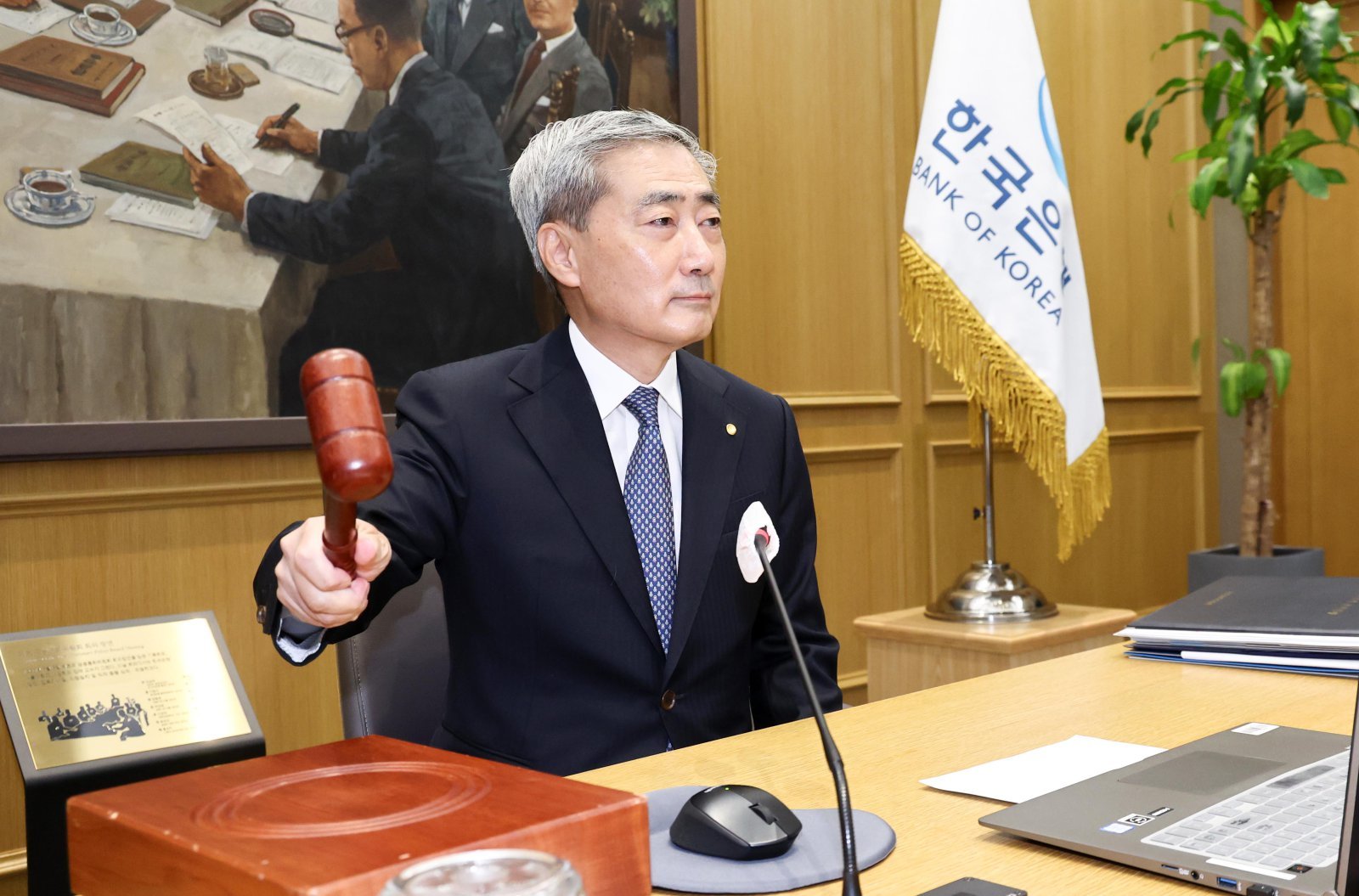
The Bank of Korea (BOK) has once again increased its benchmark interest rate, this time by 0.25 percentage points to 3.00%. This marks the second consecutive month of rate hikes, a move not seen in nearly four years, underscoring the central bank's commitment to combating inflation. Governor Shin Hyun-song explained the decision by invoking the Korean proverb, 'stopping with a hoe what would otherwise require a shovel,' to illustrate the bank's strategy of preemptive action before inflation becomes deeply entrenched.
We took preemptive action early on, employing a 'hoe' policy.
The BOK's Monetary Policy Committee stated that the domestic economy is showing stronger growth than expected, driven by robust exports and recovering domestic demand. However, inflation is projected to remain above the target level of 2% for a considerable period. The committee also highlighted the need to remain vigilant about financial stability risks, justifying the rate increase. Furthermore, the BOK revised its economic growth forecast upwards, projecting 3.3% for the current year and 2.9% for the next, up from previous estimates of 2.6% and 2.1%, respectively.
Late responses incur significant costs. By responding early and preemptively before inflation spreads, we can ultimately reduce the cost to the economy.
In a press conference following the decision, Governor Shin reiterated the preemptive nature of the rate hikes, stating that acting early prevents the cost of dealing with inflation from becoming much larger. He argued that proactive measures help reduce the overall economic cost. Addressing concerns about potential policy divergence between the government's fiscal expansion and the central bank's tightening monetary policy, Shin suggested that fiscal spending aimed at boosting future growth and potential output would not necessarily conflict with monetary policy.
Fiscal spending is determined by its form, scale, and purpose. If fiscal spending is applied to investments that can boost future growth and raise potential growth rates, it is not out of sync with monetary policy.
The committee's decision was not unanimous, with six out of seven members voting for the rate hike, while one member advocated for maintaining the current rate. The median forecast for the interest rate six months from now, as indicated by the dot plot, has shifted upwards, suggesting further increases are anticipated. Governor Shin indicated that the bank expects one more rate hike in the coming months, describing it as a gradual increase. He expressed confidence that the recent consecutive hikes would help stabilize the exchange rate, import prices, and overall inflation.
The dot plot shows the median forecast at 3.25%, anticipating one more increase than the current level. We expect a gradual increase.
About this summary
Originally published by Hankyoreh in Korean. Translated, summarized, and contextualized automatically by DistantNews, with a note on how the source frames the story. Not individually reviewed before publishing. How this works.
More Stories


From Our Blog

What Gets Lost (and Found) When News Is Translated

The Critical Role of Diaspora Media in Global News

What Travellers Should Know About Countries with Restricted Press

A Digital Nomad's Guide to Following Local News

How the Same Story Looks Different in Different Countries
