


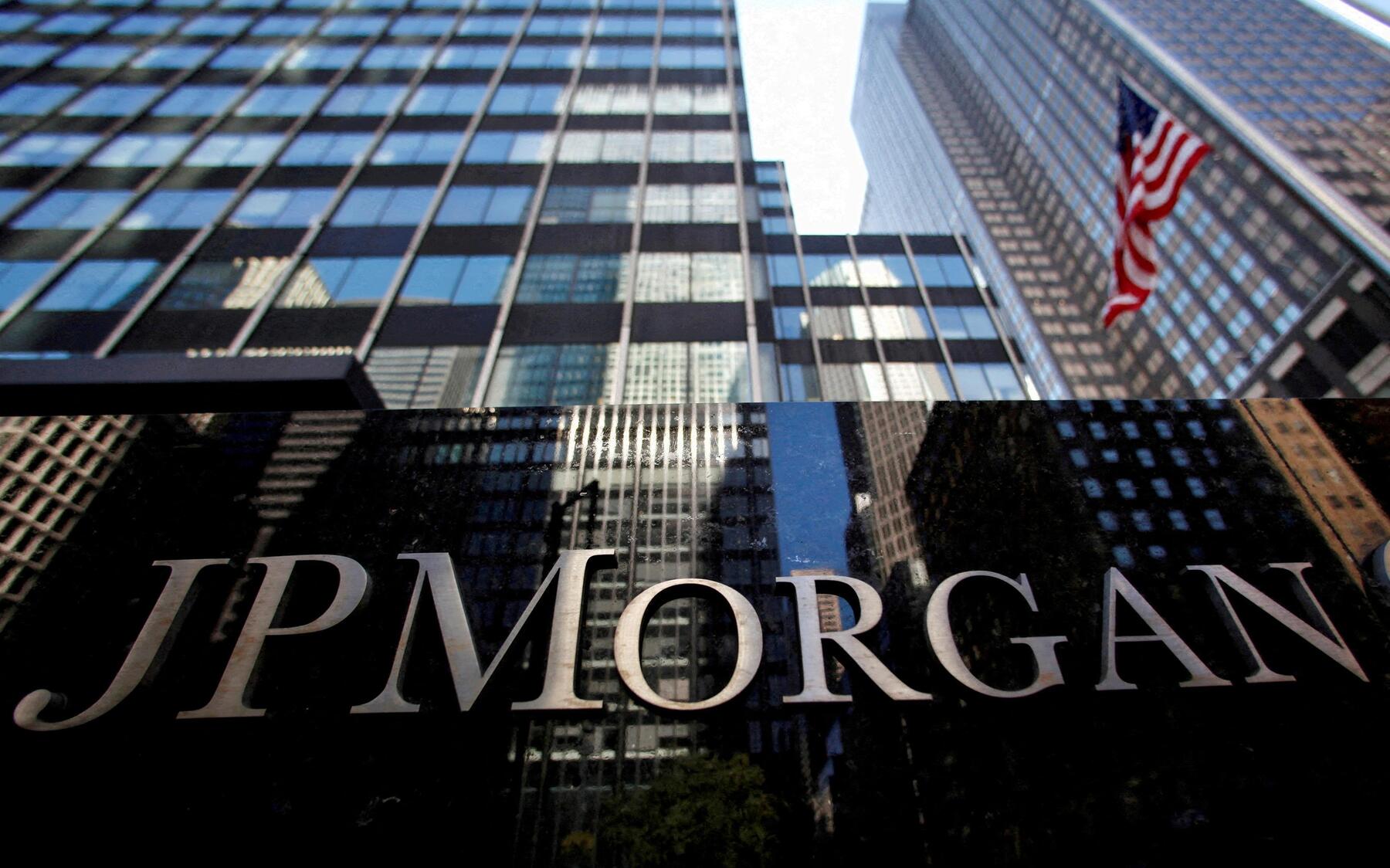
Bank Stocks Fall Despite Good Results as JP Morgan CEO Warns of Financial Tremors
Translated from German, summarized and contextualized by DistantNews.
At a glance
News
Named sources
New plan
- US bank stocks are underperforming despite positive sector performance and strong earnings reports.
- JP Morgan's CEO warned of underlying risks in the financial system, including geopolitical uncertainty and inflation.
- Investors are shifting from tech to banking and healthcare, but concerns about potential disruptions remain.
US bank stocks are facing headwinds despite being the best-performing sector in the S&P 500 over the past 30 days. Investors are rotating out of high-flying semiconductor stocks and into banking and healthcare. The current environment for banks is generally favorable, with higher-than-expected interest rates in the US allowing them to profit from the net interest margin. Major banks like JP Morgan, Bank of America, Goldman Sachs, Citigroup, and Wells Fargo recently reported their second-quarter earnings. However, not all stocks saw gains. JP Morgan's stock dipped despite reporting a 41% profit increase to $21.2 billion, partly due to a one-off item. Some investors had hoped for a stronger increase in JP Morgan's net interest income forecast. While high interest rates benefit banks, this effect is diminishing as savers move funds to higher-yielding investments. Adding to investor caution, JP Morgan CEO Jamie Dimon issued a warning about "several risks shifting beneath the surface like tectonic plates," citing geopolitical uncertainties, persistent inflation, high global deficits, and inflated asset prices. Dimon cautioned that these risks could cause significant disruptions. Despite these concerns, the stock dip may be partly attributed to a 'sell-the-news' effect, as JP Morgan's earnings were otherwise strong, particularly in investment banking, where it facilitated major recent transactions like the SpaceX IPO.
Several risks shifting beneath the surface like tectonic plates, including geopolitical uncertainties and wars, a persistent inflation, high global budget deficits and inflated asset prices.
DistantNews Editorial
Originally published by Die Presse in German. Translated, summarized, and contextualized by our editorial team with added local perspective. Read our editorial standards.
More Stories



From Our Blog

What Gets Lost (and Found) When News Is Translated

The Critical Role of Diaspora Media in Global News

What Travellers Should Know About Countries with Restricted Press

A Digital Nomad's Guide to Following Local News

How the Same Story Looks Different in Different Countries
