


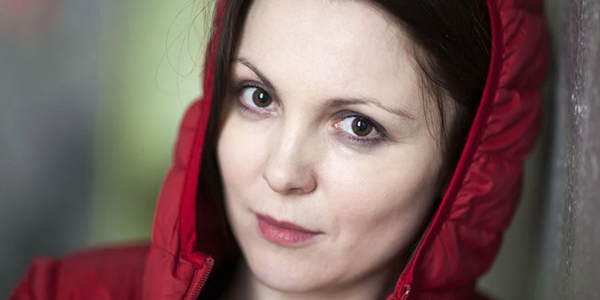
Barbara Wysocka: In Today's World, There Is No Room for Romeo and Juliet's Love
Translated from Polish, summarized and contextualized by DistantNews.
At a glance
Interview
Sources not specified
Context piece
- Director Barbara Wysocka discusses her approach to staging Shakespeare's "Romeo and Juliet" as an opera.
- She highlights Gounod's focus on the love duets while emphasizing her own interest in the play's darker themes of violence and societal conflict.
- Wysocka explains her directorial choice to set classic operas in contemporary times, a practice she employed in "Rigoletto" and will continue with "Romeo and Juliet."
Director Barbara Wysocka is preparing to stage Charles Gounod's opera "Romeo and Juliet," exploring the work's relationship with Shakespeare's original drama. She notes that while Gounod's opera centers on the passionate love between the titular characters, her own interpretation delves into the play's underlying themes of violence, conflict, and societal rejection of love.
Love is heavy and light, bright and dark, hot and cold, sick and healthy, asleep and awake – it’s everything except what it is!
Wysocka points out that Shakespeare's "Romeo and Juliet" is built on stark contrasts, quoting Romeo's description of love as "heavy and light, bright and dark, hot and cold." She seeks to find these complex emotional layers, including the darker aspects, within Gounod's music, particularly in instrumental passages and Julia's arias, which she views as her inner monologue.
She also highlights the opera's chorus, which Gounod elevates beyond a mere background element. "The chorus in this opera functions like in ancient tragedy," Wysocka explains, serving as a commentator, witness, and participant. The chorus narrates the prologue, foretelling the tragic end and commenting on the societal violence that allows the lovers' fate to unfold.
The chorus in this opera functions like in ancient tragedy, it is a commentator, a witness and a participant in events, already in the prologue it addresses the viewer and tells the whole plot.
Wysocka's directorial style consistently updates classic operas to contemporary settings. Her recent production of "Rigoletto" at the Staatsoper in Munich, and her upcoming "Romeo and Juliet," will both be situated in the 20th or 21st century, bringing the timeless themes closer to modern audiences.
Yes, I usually move the productions to the 20th or 21st century.
DistantNews Editorial
Originally published by Rzeczpospolita in Polish. Translated, summarized, and contextualized by our editorial team with added local perspective. Read our editorial standards.
More Stories


From Our Blog

What Gets Lost (and Found) When News Is Translated

The Critical Role of Diaspora Media in Global News

What Travellers Should Know About Countries with Restricted Press

A Digital Nomad's Guide to Following Local News

How the Same Story Looks Different in Different Countries
