

Barzani Visit to Damascus Eases Iraq-Syria Tensions, Paves Way for Baghdad Premier's Visit
Translated from English, summarized and contextualized by DistantNews.
At a glance
News
Named sources
Context piece
- Kurdistan Region President Nechirvan Barzani's visit to Damascus facilitated eased tensions and paved the way for Iraqi Prime Minister Ali al-Zaidi to visit Syria.
- Barzani carried messages between Iraqi and Syrian leaders, addressing bilateral ties and security concerns.
- The Kurdistan Regional Government supports Baghdad's efforts to consolidate weapons under state control and aims to remain outside regional conflicts.
Iraq's federal government and the Kurdistan Regional Government are enhancing security and political coordination, with Erbil backing Baghdad's initiative to bring weapons under state control. Simultaneously, efforts are underway to bridge differences between Iraq and Syria, according to informed sources.
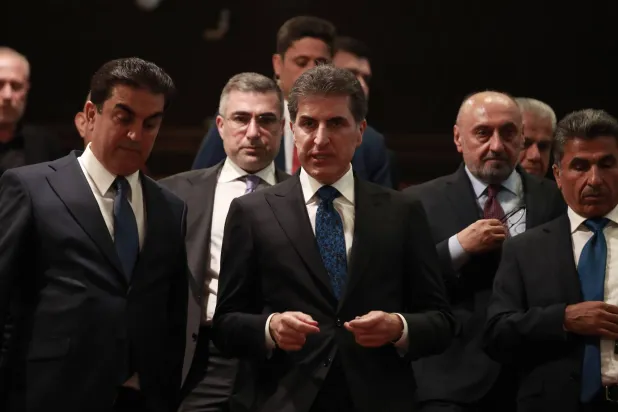
Kurdistan Region President Nechirvan Barzani's recent visit to Damascus played a crucial role in easing mutual concerns between Baghdad and Damascus regarding bilateral relations and outstanding political and security issues. Sources revealed that Barzani conveyed messages between Iraqi Prime Minister Ali al-Zaidi and Syrian President Ahmed al-Sharaa, potentially paving the way for al-Zaidi's visit to Damascus.
This diplomatic push coincides with Baghdad's pursuit of closer security coordination with Erbil, particularly concerning the consolidation of weapons solely under state authority. The State Administration Coalition, comprising major political forces and the Kurdistan Region's president, has prioritized this objective. A press statement indicated a September 30 deadline for armed factions to surrender their weapons, with potential action under the counterterrorism law for non-compliance.
The Kurdistan Region supported Baghdad’s efforts to bring weapons under state control and did not want the region drawn into any regional conflict.
Kurdistan Regional Government Prime Minister Masrour Barzani affirmed his government's support for Baghdad's drive to centralize arms and expressed a desire to avoid regional conflict. He noted that the Kurdistan Region has endured over 1,000 rocket and drone attacks, some originating from Iran and others from armed factions within Iraq. Barzani also denied the presence of U.S. troops at Harir Air Base in Erbil, stating no such military presence had existed there for approximately a decade. He emphasized the region's priority is to protect its territory and remain neutral in regional disputes.
Security and political sources indicate that cooperation between Baghdad and Erbil extends beyond arms control to encompass intelligence sharing and coordination on domestic security matters. Majid Shingali, a senior official from the Kurdistan Democratic Party, confirmed the Kurdistan Region's backing for state control over weapons and support for al-Zaidi's government on this issue. He added that the region has been significantly impacted by attacks from armed factions during regional conflicts, affecting facilities and oilfields.
The Kurdistan Region backed efforts to bring weapons under state control and supported al-Zaidi’s government on the issue.
DistantNews Editorial
Originally published by Asharq Al-Awsat in English. Translated, summarized, and contextualized by our editorial team with added local perspective. Read our editorial standards.
More Stories

From Our Blog

What Gets Lost (and Found) When News Is Translated

The Critical Role of Diaspora Media in Global News

What Travellers Should Know About Countries with Restricted Press

A Digital Nomad's Guide to Following Local News

How the Same Story Looks Different in Different Countries
