


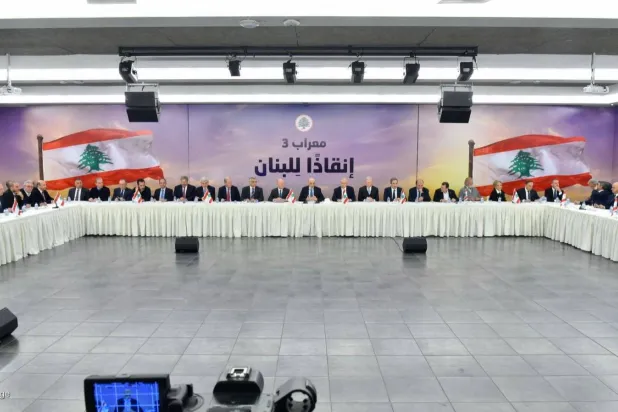
Beirut Conference Sees Wide Consensus Over Weapons-free Capital
Summarized and contextualized by DistantNews.
TLDR
- A 10-day truce began in Lebanon, aiming to pause fighting between Israel and Hezbollah and potentially extend a broader ceasefire.
- The agreement, announced by US President Donald Trump, has led to celebrations in Beirut, with displaced families beginning to move.
- Despite the truce, Israeli Prime Minister Benjamin Netanyahu stated Israeli troops would not withdraw from a "security zone" in southern Lebanon, and Hezbollah indicated it would respond to any Israeli strikes, complicating the ceasefire's stability.
A fragile 10-day truce has commenced in Lebanon, offering a glimmer of hope for a pause in the devastating conflict between Israel and the Iranian-backed Hezbollah militant group. The agreement, brokered with the involvement of US President Donald Trump, has been met with jubilation in Beirut, where residents took to the streets firing into the air to celebrate the cessation of hostilities. Displaced families have begun the arduous journey of returning to their homes, though officials caution them to wait until the ceasefire's durability is confirmed.
Israeli occupation on our land grants Lebanon and its people the right to resist it, and this matter will be determined based on how developments unfold.
Prime Minister Benjamin Netanyahu of Israel has affirmed his agreement to the truce, framing it as a step towards advancing peace efforts with Lebanon. However, he made it clear that Israeli troops would not withdraw from the "security zone" they have established approximately 10 kilometers inside southern Lebanon. This zone, created through fierce battles with Hezbollah, is intended to bolster Israeli security. Netanyahu's firm stance on maintaining the Israeli military presence underscores the complex security dynamics at play.
at any time, against planned, imminent, or ongoing attacks.
Hezbollah, for its part, has issued a statement asserting that "Israeli occupation on our land grants Lebanon and its people the right to resist it." This declaration suggests that any Israeli offensive actions, even within the agreed-upon truce, could provoke a response, thereby posing a significant challenge to the long-term viability of the ceasefire. The US State Department's statement that Israel reserves the right to defend itself "at any time, against planned, imminent, or ongoing attacks" further complicates the situation, potentially allowing for continued Israeli offensive operations under the guise of self-defense.
to advance peace efforts with Lebanon.
Reports indicate that Israeli shelling continued in southern Lebanese villages even after the truce officially began, with the Israeli military stating it was investigating these claims. Simultaneously, Hezbollah continued firing rockets into northern Israeli towns right up until the ceasefire's start. The uncertainty surrounding the return of the estimated one million people displaced by the war highlights the profound human cost of the conflict and the immense challenges that lie ahead in achieving lasting peace. For Lebanon, the focus remains on the immediate relief from violence while grappling with the deep-seated issues of Israeli occupation and the right to resist, a narrative often viewed differently in Western media which may prioritize de-escalation over the fundamental right of resistance against occupation.
That is where we are, and we are not leaving.
DistantNews Editorial
Originally published by Asharq Al-Awsat. Summarized and contextualized by our editorial team with added local perspective. Read our editorial standards.
More Stories
From Our Blog

What Gets Lost (and Found) When News Is Translated

The Critical Role of Diaspora Media in Global News

What Travellers Should Know About Countries with Restricted Press

A Digital Nomad's Guide to Following Local News

How the Same Story Looks Different in Different Countries
