


Beneath the Waves: South Africa's Silent Kelp Forests Under Threat
Translated from Turkish, summarized and contextualized by DistantNews.
At a glance
In-depth
Sources not specified
Context piece
- A recent storm brought massive kelp forests ashore along the coast, revealing a vibrant ecosystem within the detached seaweed.
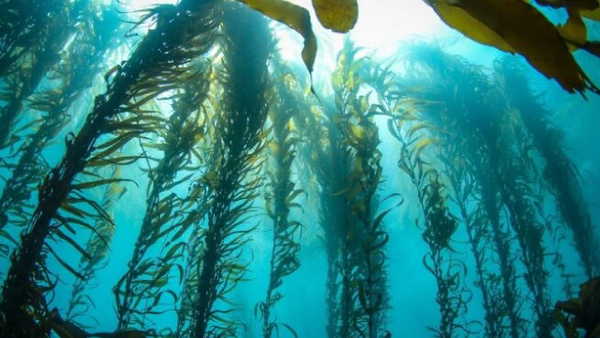
- These "silent forests" off the coast of South Africa, particularly along the Benguela Current, are crucial habitats for diverse marine life.
- Despite their ecological importance, these kelp forests face increasing threats from ocean warming, acidification, and overfishing, jeopardizing delicate marine balances.
Following one of the most powerful winter storms in thirty years, the coast was littered with massive kelp, detached from their underwater homes. These towering, brown-stemmed seaweeds, resembling bamboo, were washed ashore by waves reaching seven meters high. Days after the storm, the air was thick with the scent of salt and iodine. Within the slick leaves of the stranded kelp, new symbiotic life had already taken hold: flies sought refuge in decaying stalks, crustaceans navigated the damp fibers, and seagulls feasted on mussels dislodged by the waves. These ocean "trees," seemingly abandoned to death on land, had become part of a new coastal food chain.
The destruction of kelp forests in the Southern Hemisphere could eliminate more species of animals than the destruction of a forest on land.
However, the scene on the beach was merely a small fragment of the vast underwater world. Along the coastlines of South Africa, stretching over a thousand kilometers from Cape Town to Namibia, extensive kelp forests thrive in the cold, nutrient-rich waters of the Benguela Current. These underwater ecosystems are among the largest and best-preserved on Earth. Charles Darwin, during his voyage on the Beagle, recognized the immense biodiversity supported by these kelp forests, noting that their destruction could impact more species than the clearing of a terrestrial forest.
Kelp forests are a refuge, a feeding ground, and even a maternity ward. Countless creatures, from small crustaceans and sea snails to seals, sharks, and octopuses, hide, grow, and reproduce here.
Kelp forests serve as vital sanctuaries, feeding grounds, and nurseries for countless marine species, from small crustaceans and sea snails to seals, sharks, and octopuses. Yet, these "silent forests" are increasingly under pressure. Rising ocean temperatures, increasing acidification, and the impacts of overfishing are disrupting ecological balances that have evolved over millions of years. The article laments that humanity often destroys the most valuable and fragile elements of nature without noticing, as the losses in the oceans occur silently, unseen and unheard.
Our oceans are warming. Seas are acidifying. Overfishing is altering ecological balances that have taken millions of years to form.
DistantNews Editorial
Originally published by Cumhuriyet in Turkish. Translated, summarized, and contextualized by our editorial team with added local perspective. Read our editorial standards.
More Stories
From Our Blog

What Gets Lost (and Found) When News Is Translated

The Critical Role of Diaspora Media in Global News

What Travellers Should Know About Countries with Restricted Press

A Digital Nomad's Guide to Following Local News

How the Same Story Looks Different in Different Countries
