




Berlin Election: Evers Rules Out Cooperation with AfD
Translated from German and summarized by DistantNews. Read the original for the full story.
At a glance
Newswire
From a news agency
New plan
- Berlin CDU lead candidate Stefan Evers ruled out any cooperation with the far-right AfD after the party won the most votes in Saxony-Anhalt.
- Evers said the AfD stood against Berlin’s openness, international character and cross-cultural cohesion, and opposed the democratic compromise process.
- Berlin will elect a new state parliament on Sept. 20, with polls indicating a close race among the CDU, Left, Greens and AfD.
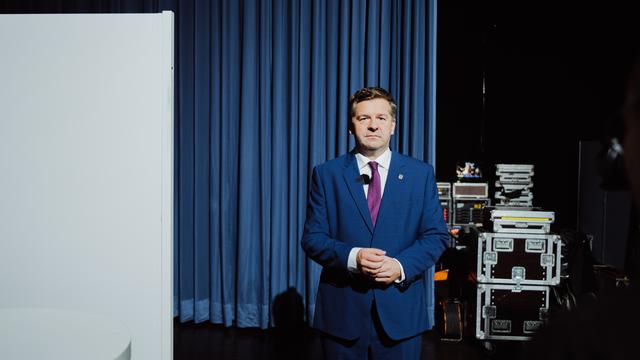
Stefan Evers, the CDU’s lead candidate in Berlin, has categorically rejected any cooperation with the Alternative for Germany after the far-right party’s strong showing in Saxony-Anhalt.
“The AfD stands for pretty much everything that Berlin does not represent,” Evers told RBB. He described Berlin as open, international and united across cultural boundaries, and said the AfD wanted to destroy those qualities.
The AfD stands for pretty much everything that Berlin does not represent.
“That is why I will stand with everything I can and everything we have to ensure that there is never any cooperation with this AfD,” Evers said in the interview released on Monday evening. “For me, that is ruled out in the CDU.”
That is why I will stand with everything I can and everything we have to ensure that there is never any cooperation with this AfD.
The AfD won the most votes by a wide margin in the Saxony-Anhalt election. Berlin will vote for a new state parliament on Sept. 20, and polls indicate a close contest, with the CDU, Left, Greens and AfD recently running close together.
Evers said the AfD rejected the established way of reaching compromises and seeking agreement across party lines in coalitions. “That is why it is directed not only against individual parties, but against the democracy that we live here together,” he said.
That is why it is directed not only against individual parties, but against the democracy that we live here together.
About this summary
Originally published by Die Zeit in German. Translated, summarized, and contextualized automatically by DistantNews, with a note on how the source frames the story. Not individually reviewed before publishing. How this works.
More Stories

From Our Blog

News in Translation: What Gets Lost, and How We Keep the Framing

The Same Story, Different Countries: How Coverage Changes at the Border

Diaspora Media: How Communities Follow News From Home

Traveling Where the Press Is Not Free: How to Read the News There

The Digital Nomad's Guide to Local News
