


Beyond Sadness: The Many Faces of Depression We Don't See
Translated from Korean, summarized and contextualized by DistantNews.
At a glance
In-depth
Named sources
Context piece
- Depression is not simply an intensification of sadness but a state where the brain's mood, motivation, and thinking functions are suppressed.
- Unlike sadness, which is a temporary response to specific events, depression can lead to a cycle of negative thoughts about the past and future.
- Understanding depression requires acknowledging its complex and varied manifestations beyond simple sadness, and offering quiet support rather than hasty advice.
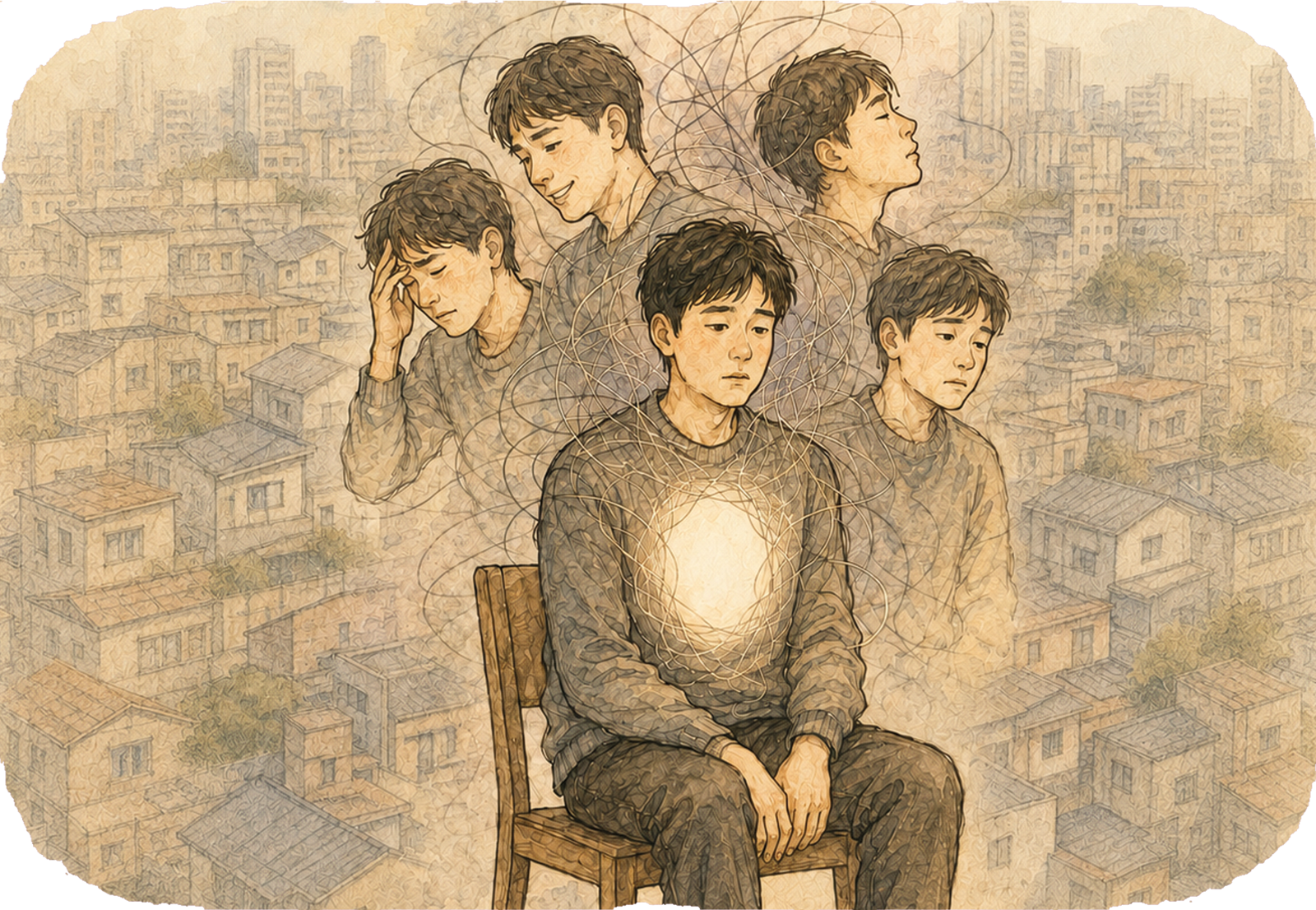
Many people assume that when someone says they are depressed, their mind is filled with sadness. It's easy to picture a depressed person as someone who cries all day. However, when mental health professionals ask patients about their feelings, "sadness" is rarely the answer.
When we say someone is depressed, we tend to assume their mind is filled with sadness.
Instead, common responses include, "I don't know what I'm feeling" or "I feel empty, like my mind is hollow." Depression isn't just an increase in sadness. While sadness is a temporary, natural emotional response to a specific event or loss, depression is a state where the brain's mood, motivation, and thinking functions are fundamentally suppressed.
Sadness often resolves naturally as the cause disappears or with the passage of time. In contrast, with depression, even positive events may not lift one's mood. The brain's overall function declines, leading to a cycle of negative thoughts, regret about the past, and despair about the future. Patients struggle to describe their emotions in a single word because complex feelings like anxiety, emptiness, worthlessness, guilt, and self-loathing are intertwined, and the brain's ability to recognize emotions is also impaired.
Instead, common responses include, 'I don't know what I'm feeling' or 'I feel empty, like my mind is hollow.'
While social media often presents simplified or judgmental views of depression, the reality is far more complex. Typical melancholic depression involves deep sadness, but anxiety-type depression is characterized by extreme restlessness and worry. Atypical depression can even involve temporary mood improvement with good news. Therefore, assuming someone is not depressed just because they smile or show motivation briefly misunderstands the diverse faces of depression.
Depression is not simply an intensification of sadness but a state where the brain's mood, motivation, and thinking functions are suppressed.
Offering advice like "cheer up" or "think positively" can be well-intentioned but may inadvertently cause further disappointment. For someone struggling with depression, these phrases can be hurtful because they are unable to "cheer up" or "think positively" despite wanting to. It's crucial to remember that depression is not a matter of willpower but a condition where brain and emotional functions are temporarily impaired. Those suffering from depression need quiet support, like knowing someone is ready to listen without pressure, rather than hasty solutions or demands for explanation. True understanding begins with recognizing that depression is a profound and complex pain that cannot be contained by the single word "sadness."
Therefore, assuming someone is not depressed just because they smile or show motivation briefly misunderstands the diverse faces of depression.
DistantNews Editorial
Originally published by Dong-A Ilbo in Korean. Translated, summarized, and contextualized by our editorial team with added local perspective. Read our editorial standards.
More Stories


From Our Blog

What Gets Lost (and Found) When News Is Translated

The Critical Role of Diaspora Media in Global News

What Travellers Should Know About Countries with Restricted Press

A Digital Nomad's Guide to Following Local News

How the Same Story Looks Different in Different Countries
