

The Artist's Brushstroke: Filling the Void in a Secular World
Translated from Korean, summarized and contextualized by DistantNews.
At a glance
Analysis
Named sources
Context piece
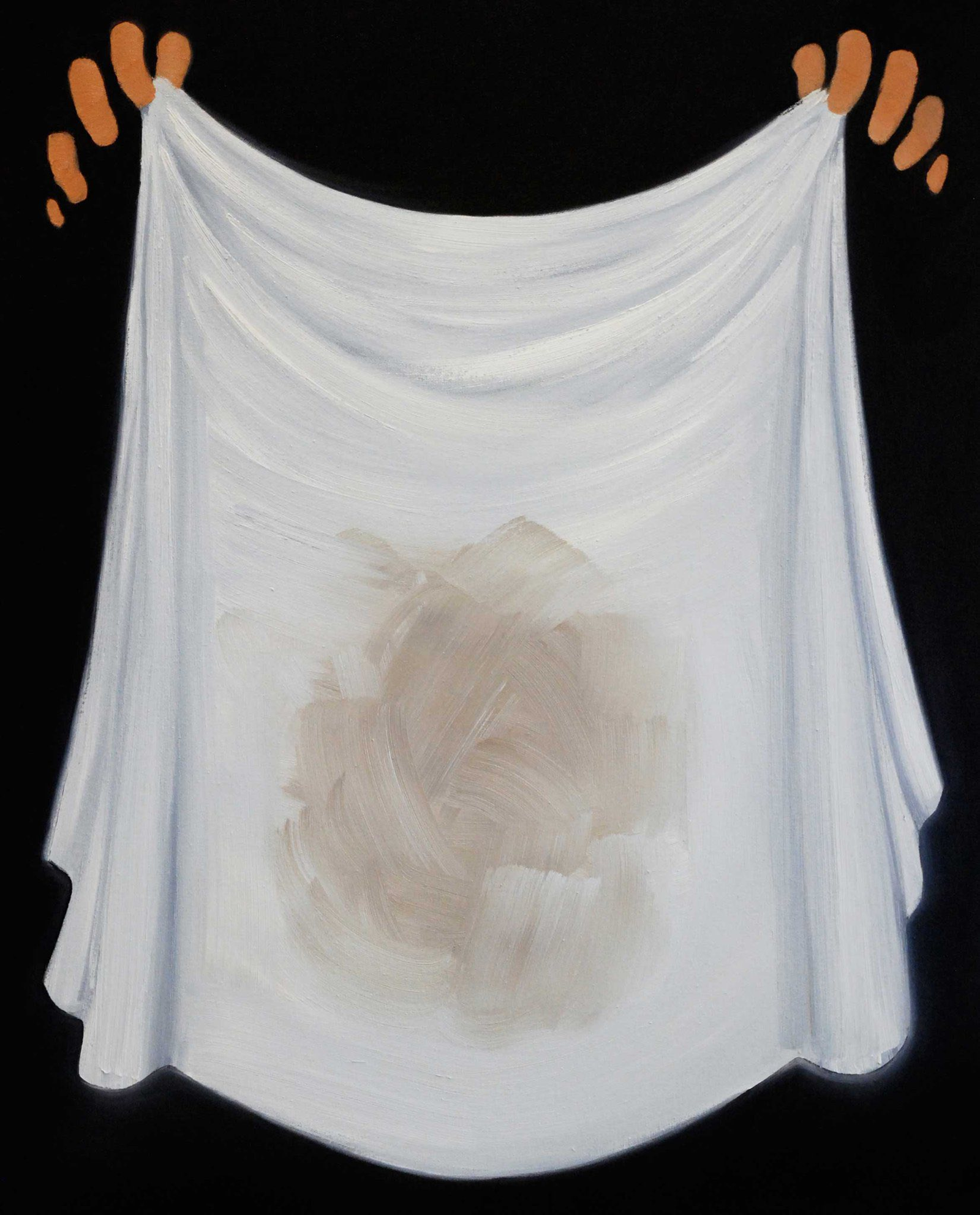
- A painting titled 'Abracadabra' by Finnish artist Henny Alftan depicts hands holding a cloth with a brushstroke, referencing the 'Veil of Veronica' from Western art history.
- Historically, objects like the Veil of Veronica were imbued with power and meaning, forming the basis of a 'magical' worldview.
- Modern society, characterized by secularization and consumerism, has rendered objects largely devoid of inherent meaning, leading to a sense of emptiness that contemporary artists aim to fill.
A 2014 oil painting by Finnish artist Henny Alftan, titled 'Abracadabra,' features hands holding a plain white cloth marked with a greyish-brown brushstroke. This seemingly simple image serves as a profound commentary on Western civilization's 2000-year history, particularly its relationship with sacred objects and meaning.
This seemingly simple painting encapsulates 2,000 years of Western civilization.
For those familiar with Western art, the painting immediately evokes the 'Veil of Veronica.' This relic, believed to bear the imprint of Jesus's face as he journeyed to Golgotha, was traditionally seen as a holy object capable of miracles. Similarly, the 'Shroud of Turin' is revered as the cloth that wrapped Jesus's body, allegedly bearing his image. The significance of these objects lay not in their authenticity, but in the widespread belief in their miraculous power. This belief fueled pilgrimages, supported commerce, and shaped the very fabric of society, creating a world saturated with what could be termed 'magic.'
However, the modern individual has moved far from this 'magical' worldview. Objects today are largely perceived as commodities – soulless items bought and sold, easily replaced by newer models. While some may still hold faith in religious relics, their daily lives are predominantly governed by the logic of capitalism. Unlike people in the medieval and Renaissance periods who lived amidst objects charged with meaning and power, modern individuals inhabit a world where objects are far more 'hollow.'
The Veil of Veronica... became a holy relic and was said to perform miracles, such as healing the sick.
According to philosopher Charles Taylor, secularized moderns no longer take belief in God or magic for granted. Even religious faith becomes an existential choice rather than a natural state. Meaning is not inherent in the world but must be actively constructed by individuals. For an object to gain significance, humans must imbue it with meaning themselves. In the past, good and evil manifested through objects, countered by other sacred objects. Today, such narratives belong to supernatural dramas.
Unlike people in the medieval and Renaissance periods who lived amidst objects charged with meaning and power, modern individuals inhabit a world where objects are far more 'hollow.'
Secularization does not mean humans can live without a need for meaning. The pursuit of a fulfilling life requires confronting the emptiness of the modern world. This necessitates a 're-enchantment,' a move beyond secularization to find meaning in new ways. Contemporary artists, in this context, act as modern-day sorcerers or priests. Alftan's choice of the title 'Abracadabra', a word associated with magic and miracles, is deliberate. It functions as an artistic spell, inviting viewers into a new framework of meaning. The painting suggests that while the sacred icon of Jesus's face has been replaced, the artist's brushstroke now occupies that revered space, urging the viewer to find meaning in contemporary art as a modern-day relic.
Contemporary artists, in this context, act as modern-day sorcerers or priests.
DistantNews Editorial
Originally published by Dong-A Ilbo in Korean. Translated, summarized, and contextualized by our editorial team with added local perspective. Read our editorial standards.
More Stories


From Our Blog

What Gets Lost (and Found) When News Is Translated

The Critical Role of Diaspora Media in Global News

What Travellers Should Know About Countries with Restricted Press

A Digital Nomad's Guide to Following Local News

How the Same Story Looks Different in Different Countries
