


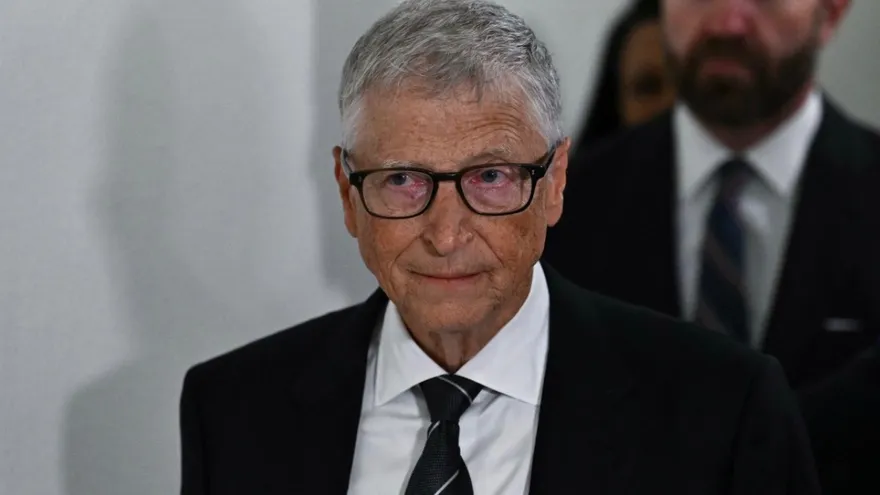
Bill Gates warns of AI's disruptive potential, job losses
Translated from Spanish, summarized and contextualized by DistantNews.
At a glance
News
Sources not specified
Context piece
- Bill Gates warned that the world is unprepared for the consequences of artificial intelligence, citing job destruction and threats to human connection.
- He identified three main risks: permanent job destruction, AI falling into the wrong hands for malicious attacks, and AI's impact on children's social development.
- Gates believes the transition to the AI era will be one of history's most turbulent periods, with geopolitical and economic incentives pushing for rapid advancement.
Bill Gates, co-founder of Microsoft, has issued a stark warning about the unpreparedness of the world for the disruptive potential of artificial intelligence (AI). He believes AI poses significant threats, including widespread job destruction and a weakening of human connections, particularly among young people.
AI will be the greatest equalizer ever invented or the worst source of injustice.
In a blog post, Gates described the transition to the AI era as potentially one of the most turbulent periods in history. He expressed concern that no credible plan exists to manage this shift. "AI will be the greatest equalizer ever invented or the worst source of injustice," Gates wrote, emphasizing the dual nature of the technology.
There is no plan for easing into the AI era.
Gates outlined three primary risks associated with AI's rapid deployment. First, he foresees permanent job destruction, arguing that AI's ability to replicate human thought processes differs fundamentally from past technological shifts. Unlike the transition from agriculture to office work, which created new roles requiring human intellect, AI can replace thinking itself. This could impact professions like law, medicine, and software development within a decade, disproportionately affecting early-career and mid-level positions, thereby limiting opportunities for young people. The manual labor sector, including construction and hospitality, is also expected to be impacted as robots become more affordable.
Geopolitical and economic incentives push too hard to move at full speed.
Second, Gates highlighted the danger of AI's advanced capabilities falling into the wrong hands, enabling attacks that outpace corporate defenses. Critical infrastructure such as hospitals, banks, water systems, and power grids are all vulnerable. The third risk concerns children and human relationships. Gates cited research suggesting that AI chatbots, designed to be agreeable, could become addictive and hinder the development of essential social skills. He warned that these bots might "rob us of the lessons we learn from interacting with other people."
AI can substitute for thinking itself.
DistantNews Editorial
Originally published by TVN Panamá in Spanish. Translated, summarized, and contextualized by our editorial team with added local perspective. Read our editorial standards.
More Stories


From Our Blog

What Gets Lost (and Found) When News Is Translated

The Critical Role of Diaspora Media in Global News

What Travellers Should Know About Countries with Restricted Press

A Digital Nomad's Guide to Following Local News

How the Same Story Looks Different in Different Countries
