


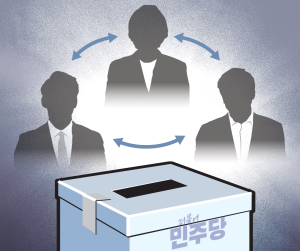
Birthday-Based Voting Tactic Sparks Controversy in South Korean Politics
Translated from Korean, summarized and contextualized by DistantNews.
At a glance
Analysis
Sources not specified
Context piece
- A strategic voting tactic based on birth months, dubbed 'birthday pairing,' emerged within the Democratic Party ahead of its national convention primaries.
- This strategy aimed to ensure three specific candidates, all from the 'pro-Cheong' faction, advanced to the main convention.
- Critics condemned the tactic as blatant collusion and a violation of party members' voting rights, while supporters defended it as a past practice.
A peculiar voting strategy, nicknamed 'birthday pairing,' has surfaced among supporters of the Democratic Party in South Korea as the party gears up for its national convention primaries. This tactic, circulating among the 'pro-Cheong' faction, suggests specific pairings of candidates based on the birth months of voters to ensure favorable outcomes.
The proposed pairings include 'January-April born Choi Min-hee + Lee Sung-yoon,' 'May-August born Lee Sung-yoon + Han Min-soo,' and 'September-December born Choi Min-hee + Han Min-soo.' The objective is to strategically distribute votes, as each party member can vote for two Supreme Council candidates. This plan aims to guarantee that all three candidates from the 'pro-Cheong' faction successfully pass the preliminary round held on the 23rd.
The emergence of such a detailed, birth-month-based voting guide has drawn sharp criticism from within the party. Kim Min-seok, a candidate for party leader, denounced the practice as "blatant pairing, an old evil. What is this, not even a birthday celebration?" Park Beom-kye, a lawmaker, also voiced strong opposition, stating it "gravely infringes upon the voting rights of party members." However, Chung Jin-suk, another party leader candidate, defended the strategy, suggesting that such tactical voting has always occurred and that party members make their own decisions.
Blatant pairing, an old evil. What is this, not even a birthday celebration?
This 'birthday pairing' tactic is not entirely unprecedented. Similar strategic voting patterns have been observed in past Democratic Party conventions. For instance, during the 2024 convention, a strategy circulated among some pro-Lee Jae-myung supporters to fix one vote on candidate Kim Min-seok while allocating the second vote to another pro-Lee candidate. However, the meticulous, graphic-accompanied 'birthday guide' has sparked particular controversy, with many within the party labeling it as overtly collusive.
The core issue with such pairing strategies is that they undermine the vetting of candidates' qualifications, policy proposals, and ethical standing from the outset. They favor candidates with strong factional affiliations over those with genuine capabilities. More significantly, these tactics create a vicious cycle, reinforcing factional politics. When such factionally driven voting leads to success, even lawmakers intending to work independently may feel pressured to align with factions. This pattern, dominated by established politicians, could also lead to younger, aspiring politicians being consistently excluded from convention successes, regardless of their potential.
It gravely infringes upon the voting rights of party members.
DistantNews Editorial
Originally published by Dong-A Ilbo in Korean. Translated, summarized, and contextualized by our editorial team with added local perspective. Read our editorial standards.
More Stories


From Our Blog

What Gets Lost (and Found) When News Is Translated

The Critical Role of Diaspora Media in Global News

What Travellers Should Know About Countries with Restricted Press

A Digital Nomad's Guide to Following Local News

How the Same Story Looks Different in Different Countries
