


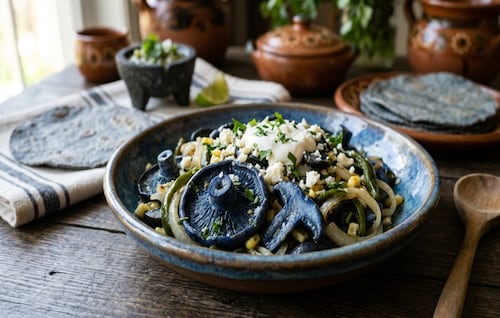
 Image: Generada con IA.
Blue mushroom: Is it edible, what does it taste like and where can you find it?
Translated from Spanish and summarized by DistantNews. Read the original for the full story.
At a glance
In-depth
Sources not specified
Context piece
- The blue mushroom, Lactarius indigo, grows in Mexico’s pine and oak forests during the rainy season and is described as edible and valued in traditional cooking.
- Its blue pigment comes from a natural azulene-derived compound, while its blue milky liquid turns greenish when exposed to air.
- People can find it from July to October in mountain regions and seasonal markets in Mexico City, including Mercado de San Juan Pugibet and La Merced.
The striking blue mushroom found in Mexico’s rainy-season forests is not poisonous or hallucinogenic, according to this culinary guide. Lactarius indigo is described as fully edible, safe and highly valued in traditional cooking.
Its electric-blue color comes from a natural pigment derived from azulene. When cut, the mushroom releases an intense blue milky liquid that gradually turns greenish in the air. The change is natural and does not affect its safety or flavor.
The mushroom has an earthy, slightly sweet taste with hints of nuts or sweet milk. Its firm, meaty texture stays crisp when cooked, making it suitable for stews and other hot dishes.
Lactarius indigo grows in association with pine and oak roots. Wild harvesting in Mexico generally takes place from July to October in Tlaxcala, the State of Mexico, Puebla, Michoacán, Hidalgo and Oaxaca. During the rainy season, buyers can also find it in specialized Mexico City markets such as Mercado de San Juan Pugibet and among traditional wild-mushroom sellers in La Merced.
The guide recommends cleaning the mushroom with a soft brush or damp cloth rather than soaking it in water. Suggested preparations include sautéing it with butter, garlic, epazote and salt, using it in blue-corn quesadillas with Oaxaca cheese, or adding it to green sauce or an al ajillo dish.
About this summary
Originally published by El Universal in Spanish. Translated, summarized, and contextualized automatically by DistantNews, with a note on how the source frames the story. Not individually reviewed before publishing. How this works.
More Stories

From Our Blog

What Press Freedom Means for the News You Read

What Gets Lost (and Found) When News Is Translated

The Critical Role of Diaspora Media in Global News

What Travellers Should Know About Countries with Restricted Press

A Digital Nomad's Guide to Following Local News
