


Bogusław Chrabota: A Parade of Buffoons Triumphs
Translated from Polish, summarized and contextualized by DistantNews.
At a glance
Opinion
Named sources
Context piece
- Poland's decision to revoke an award given to Ukrainian President Volodymyr Zelenskyy is driven by internal politics, satisfying right-wing factions.
- The move risks damaging Polish-Ukrainian relations and sidelines Poland from potential pro-Ukrainian initiatives in Europe.
- The author suggests the decision is a political maneuver aimed at pressuring Polish Prime Minister Donald Tusk.
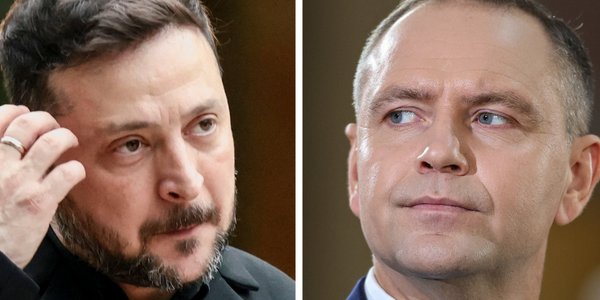
The recent decision by Poland to revoke an award presented to Ukrainian President Volodymyr Zelenskyy appears to be a product of internal political calculations, catering to the demands of right-wing groups, including those aligned with the Kaczyński and Czarnek factions, as well as Konfederata supporters. Economist Bogusław Chrabota suggests that for Karol Nawrocki, the head of the National Heritage Board of Poland, foreign policy considerations and Poland's standing in Western Europe, which largely supports Zelenskyy, are secondary.
Chrabota posits that Nawrocki's actions align with a nationalist "Poland First" sentiment, echoing views similar to those held by figures like J.D. Vance regarding the European Union. This approach seemingly disregards potential negative reactions from European capitals like Paris, Berlin, and London, prioritizing domestic political gains. Public opinion polls in Poland reportedly show a majority in favor of revoking the award, making it a seemingly easy political point to score.
Furthermore, the author speculates that Nawrocki might be attempting to corner Polish Prime Minister Donald Tusk. By taking this stance, Tusk is placed in a difficult position: opposing the President and the national sentiment could alienate voters, while supporting Zelenskyy against the memory of the Volhynia massacres could alienate Ukraine. This situation, according to Chrabota, escalates tensions with Kyiv and likely ends any personal relationship between Nawrocki and the Ukrainian president.
The decision also has broader geopolitical implications, potentially ending Poland's aspirations to influence the formation of a pro-Ukrainian "European quartet" involving Paris, London, and Berlin. Chrabota questions whether Zelenskyy might even cancel his planned attendance at an upcoming international conference in Gdańsk on Ukraine's future, viewing it as a retaliatory measure against Warsaw and a significant setback for the conference's objectives. The author concludes that this move represents a self-exclusion for Poland from a key European initiative.
DistantNews Editorial
Originally published by Rzeczpospolita in Polish. Translated, summarized, and contextualized by our editorial team with added local perspective. Read our editorial standards.
More Stories


From Our Blog

What Gets Lost (and Found) When News Is Translated

The Critical Role of Diaspora Media in Global News

What Travellers Should Know About Countries with Restricted Press

A Digital Nomad's Guide to Following Local News

How the Same Story Looks Different in Different Countries
