

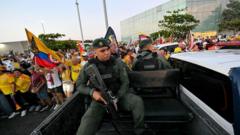

Bolivia deploys military to quell protests, declares state of emergency
Translated from English, summarized and contextualized by DistantNews.
At a glance
News
From a news agency
Ongoing story
- Bolivian President Rodrigo Paz declared a 90-day state of emergency and deployed the military to clear anti-government roadblocks.
- Protests by unions, Indigenous groups, and coca farmers have paralyzed the country for over six weeks, causing shortages and economic losses.
- While some groups vow to continue protesting, others welcome the move to restore normalcy and end the disruption.
Bolivia's President Rodrigo Paz has declared a 90-day state of emergency, deploying soldiers and bulldozers to dismantle anti-government roadblocks that have paralyzed the nation for over six weeks. The protests, led by unions, Indigenous groups, and coca farmers, have led to severe shortages of fuel, food, and medicine in major cities, inflicting billions of dollars in economic losses and threatening the government.
Bolivians cannot continue to be held hostage by blockades that prevent them from working, studying, receiving medical care, getting supplies and bringing food to their homes.
Paz warned protesters of "the full force of the law" in a televised address, asserting that the state of emergency curbs the right to protest and authorizes domestic military deployment. Following his announcement, soldiers and armed police moved to clear blockades, with some residents expressing relief. A shopkeeper in El Alto described the prolonged disruption as difficult for work and movement.
This state of emergency is not intended to take away normalcy, but to restore it.
While President Paz had previously signaled a willingness to negotiate and reached a deal with one major union to end protests in exchange for a promise against privatizing state companies, some Indigenous groups remain defiant. Lidia Callisaya, an Aymara leader, stated their intention to continue protesting until Paz steps down. However, many Bolivians, like truck driver Erland Richard Segovia, are eager for the disruption to end and for normal life to resume.
I’m very happy. Everything has been difficult here in El Alto during these 50-some days – work, free movement.
DistantNews Editorial
Originally published by The Guardian in English. Translated, summarized, and contextualized by our editorial team with added local perspective. Read our editorial standards.
More Stories


From Our Blog

What Gets Lost (and Found) When News Is Translated

The Critical Role of Diaspora Media in Global News

What Travellers Should Know About Countries with Restricted Press

A Digital Nomad's Guide to Following Local News

How the Same Story Looks Different in Different Countries
