

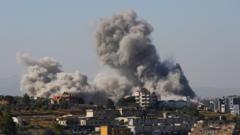

Israeli strikes kill at least 16 in southern Lebanon despite reports of renewed ceasefire
Summarized and contextualized by DistantNews.
At a glance
News
Named sources
Ongoing story
- Israeli airstrikes in southern Lebanon killed at least 16 people on Saturday, according to local authorities.
- The strikes occurred despite reports of a renewed ceasefire aimed at ending the ongoing violence between Hezbollah and Israel.
- Mediators canceled talks in Switzerland intended to formalize a US-Iran interim agreement due to the renewed fighting.
At least 16 people were killed in Israeli airstrikes on southern Lebanon on Saturday, local authorities reported. The strikes targeted the Nabatieh district, with civil defense personnel working since early morning to transport casualties. The violence escalated on Friday when Hezbollah attacked an Israeli tank, killing four soldiers, including a senior officer. Israel responded with retaliatory attacks that local authorities said killed 47 people across southern Lebanon and the Beqaa Valley.
These renewed clashes have jeopardized a new ceasefire agreement intended to halt persistent violence and facilitate the formalization of an interim deal between the US and Iran. Mediators were forced to cancel talks in Switzerland that were meant to build upon the existing agreement, which calls for a cessation of hostilities on all fronts, including Lebanon. However, the agreement has faced criticism from Israeli officials who argue it hinders their ability to counter Hezbollah.
16 dead and 12 wounded
The Israeli military stated it was striking Hezbollah targets in response to projectile launches from Lebanon. One particularly deadly strike hit a residential building in Barish, killing a father, mother, and their two children. The exact status of the ceasefire, reportedly in effect since Friday evening, remains unclear. Hezbollah has stated it will abide by a ceasefire if Israel does, but has not confirmed its implementation.
Hassan Fadlallah, a Hezbollah parliamentarian, asserted his group's right to respond to Israeli attacks, emphasizing that "what concerns us is that the enemy fully … doesn’t attempt to attack our country and villages or seek to occupy any new position." The recent escalation follows US and Israeli strikes on Iran on February 28, after which Hezbollah launched rockets and drones into northern Israel, and Israel occupied parts of southern Lebanon to create a buffer zone. The ongoing conflict and diplomatic exchanges fuel skepticism about finding a definitive end to a regional war that has caused significant casualties, soaring energy prices, and threats to the global economy.
There is talk of a ceasefire. For us, what concerns us is that the enemy fully … doesn’t attempt to attack our country and villages or seek to occupy any new position.
DistantNews Editorial
Originally published by The Guardian. Summarized and contextualized by our editorial team with added local perspective. Read our editorial standards.
More Stories


From Our Blog

What Gets Lost (and Found) When News Is Translated

The Critical Role of Diaspora Media in Global News

What Travellers Should Know About Countries with Restricted Press

A Digital Nomad's Guide to Following Local News

How the Same Story Looks Different in Different Countries
