

Bolivia: Police and military clear roads blocked during state of exception
Translated from Spanish, summarized and contextualized by DistantNews.
At a glance
News
Sources not specified
Outcome reported
- Bolivian police and military began clearing roads blocked by protesters demanding President Rodrigo Paz's resignation.
- The protests, which began in early May, led to disruptions in transportation and supply chains across the country.
- A state of exception was declared to restore order, with authorities emphasizing dialogue while also vowing to protect citizens affected by the blockades.
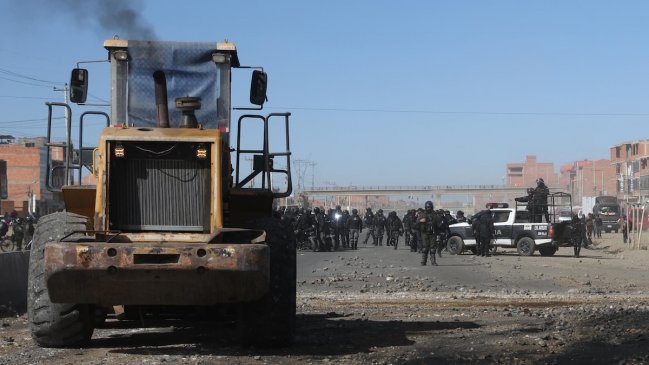
Bolivian police and military forces have begun clearing major roads that have been blocked since early May, following the declaration of a state of exception. Protesters, demanding the resignation of President Rodrigo Paz, had obstructed key routes connecting the western and central parts of the country.
Agents deployed from cities like El Alto, near La Paz, started removing stones, concrete blocks, and earth mounds placed by demonstrators on the highway to Oruro. In some areas, residents applauded the clearing efforts, which aimed to restore normal circulation after weeks of disruption. The protests were initiated by peasant unions and the Bolivian Workers' Center (COB), later joined by other social sectors and supporters of former President Evo Morales.
Defense Minister Ernesto Justiniano, who led one of the clearing operations, described some blocked points as "ghost blockades" with only debris remaining. He reported no incidents during the operation, highlighting the "tranquility" of the process. Justiniano stated that the government's priority is to protect citizens who have suffered from the blockades and to restore normalcy, while keeping dialogue open for legitimate demands.
The state of exception, declared Saturday, prohibits road blockades and the use of weapons, while authorizing the military to support the police in maintaining public order. The conflict has led to shortages of food, fuel, and medical oxygen in various regions, underscoring the significant impact of the protests on daily life and the economy.
DistantNews Editorial
Originally published by Cooperativa in Spanish. Translated, summarized, and contextualized by our editorial team with added local perspective. Read our editorial standards.
More Stories
From Our Blog

What Gets Lost (and Found) When News Is Translated

The Critical Role of Diaspora Media in Global News

What Travellers Should Know About Countries with Restricted Press

A Digital Nomad's Guide to Following Local News

How the Same Story Looks Different in Different Countries
