

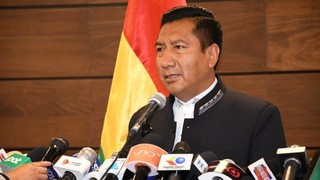
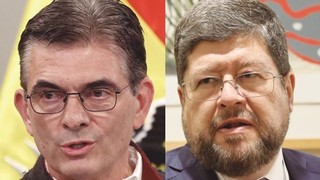
Bolivia's ruling party fractures as UN splits from President Paz's government
Translated from Spanish, summarized and contextualized by DistantNews.
At a glance
News
Named sources
Outcome reported
- Samuel Doria Medina's party, Unidad Nacional (UN), has officially split from President Rodrigo Paz's government, citing ethical differences and concerns over corruption.
- This political fracture raises questions about the stability of Paz's administration and the government's majority in the Plurinational Legislative Assembly.
- UN has pledged to provide "constructive opposition," supporting positive reforms while opposing destabilizing actions.
Bolivia's political landscape has shifted as Samuel Doria Medina officially announced the separation of his party, Unidad Nacional (UN), from President Rodrigo Paz's administration. The rupture stems from ethical disagreements, concerns about the government's handling of corruption, and differing views on leadership.
Doria Medina stated that while UN shares some ideological ground with the government, he criticized "the ways of doing (or not doing) things." He expressed particular worry over corruption, which he believes is not being addressed with sufficient firmness. He clarified that any UN members remaining in government positions will do so in a personal capacity, and the party will now pursue a "constructive opposition" strategy.
UN's official statement, signed by party president Elizabeth Reyes, revealed the decision was solidified during the crisis caused by 53 days of blockades. The party highlighted its unsuccessful push for its "100 days carajo" economic plan, its support for fuel subsidy withdrawal, and what it termed the government's "negligent" management of the "garbage gasoline" scandal. UN also reproached the administration for a lack of decisive anti-corruption actions and its inability to build legislative consensus.
The split has created uncertainty regarding the balance of power in the Plurinational Legislative Assembly. UN spokesperson Roberto Moscoso indicated that the party is still determining how its parliamentary representation will be structured following the dissolution of the electoral alliance. While some legislators might align with the ruling party, others are expected to fully adopt the party's opposition stance, emphasizing that this opposition will remain constructive.
negligente
DistantNews Editorial
Originally published by El Deber in Spanish. Translated, summarized, and contextualized by our editorial team with added local perspective. Read our editorial standards.
More Stories
From Our Blog

What Gets Lost (and Found) When News Is Translated

The Critical Role of Diaspora Media in Global News

What Travellers Should Know About Countries with Restricted Press

A Digital Nomad's Guide to Following Local News

How the Same Story Looks Different in Different Countries
