


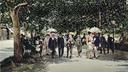
Book presents Zagreb of the past through old postcards
Translated from Croatian, summarized and contextualized by DistantNews.
At a glance
In-depth
Sources not specified
Context piece
- A book titled "A Walk Through Old Zagreb" by collector Berislav Sekelj was presented in Zagreb.
- The book features old postcards and photographs depicting Zagreb from the late 19th and early 20th centuries, showcasing its transformation.
- The collection is considered valuable archival material, comparable to collections in major city museums, offering insights into Zagreb's history and architecture during the Austro-Hungarian era.
A book titled "A Walk Through Old Zagreb," compiled by collector Berislav Sekelj, was recently presented at the Croatian Cultural Society Napredak in Zagreb. The book offers a visual journey through the city as it was at the turn of the 19th and 20th centuries, tracing its development from Gradec and Kaptol to areas like Ilica and Maksimir.
Ivana Haničar Buljan, deputy director of the Institute of Art History, spoke about the book, highlighting the Institute's collaboration with Sekelj. Following Zagreb's earthquakes, the Institute developed conservation plans for the city's architecture, leading to a partnership where Sekelj provided his extensive collection of Zagreb postcards. These postcards, digitized through the collaboration, now form a crucial part of the Institute's research documentation.
Haničar Buljan emphasized the value of the postcards, which are based on photographs taken between the late 1800s and early 1900s. She described them as significant archival material, invaluable for studying Zagreb's streets, squares, and individual buildings during that period. The collection's importance, she noted, rivals that of holdings in the Zagreb City Museum and the National and University Library's Graphic Collection.
Sekelj's work captures the specific essence of Zagreb during a transformative era, particularly the Austro-Hungarian period, characterized by modernization, institutional development, and advancements in transport and communication. Haničar Buljan stated that understanding a city requires exploring its history, customs, and the memories of its past inhabitants. She praised Sekelj's book as a result of diligent, personal research, noting his lifelong passion for philately and collecting postal history items since childhood. His previous work includes "Postal History of Bosnia and Herzegovina" published in 2005.
DistantNews Editorial
Originally published by Večernji List in Croatian. Translated, summarized, and contextualized by our editorial team with added local perspective. Read our editorial standards.
More Stories



From Our Blog

What Gets Lost (and Found) When News Is Translated

The Critical Role of Diaspora Media in Global News

What Travellers Should Know About Countries with Restricted Press

A Digital Nomad's Guide to Following Local News

How the Same Story Looks Different in Different Countries
