


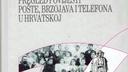
Book Review: Nedeljko Nižić's Comprehensive History of Postal Services
Translated from Croatian, summarized and contextualized by DistantNews.
At a glance
In-depth
Sources not specified
Context piece
- A review highlights Nedeljko Nižić's book, which offers a comprehensive history of postal services from ancient times to the present.
- The book is praised for its engaging narrative, particularly its detailed account of the history of postal services, telegraph, and telephones in Croatia.
- Specific sections detail the establishment of international telephone connections for Zagreb in the early 20th century, describing the manual operations of early telephone exchanges.
Nedeljko Nižić's book is presented as a captivating read, offering a sweeping history of postal services that spans from the ancient civilizations of Sumer and Babylon to contemporary times. The reviewer finds the book to be a valuable addition to any library, capable of both entertaining readers and inspiring writers.
This is one of the more interesting books in the home library, which would certainly be among the most interesting in any library.
What particularly stands out for the reviewer is the book's detailed exploration of Croatian postal history. Nižić, who was a museum curator when he wrote the book, envisioned it as a complete chronicle of postal, telegraph, and telephone services. After an engaging initial hundred pages covering global history, the narrative shifts focus to the local context, delving into the specific development of these services within Croatia.
One fascinating aspect highlighted is the chapter on the establishment of international telephone traffic for Zagreb. The book details how direct telephone links were established with Prague on October 1, 1921, with specific operating hours. Connections to Italy followed three years later, and by December 1, 1927, telephone services linked Zagreb and Ljubljana to Berlin and Leipzig. This era predated automatic exchanges, relying instead on manual operations by operators, vividly described as young women with specific hairstyles and headsets connecting calls.
In the time when he wrote this book, Nedeljko Nižić was a museum curator, and he envisioned it as a complete history of the postal service.
The book also notes the official approval for telephone communication with the Vatican in 1930, though service likely began in 1931, coinciding with the establishment of connections to Rome. The reviewer invites the reader to imagine the scene of an old archbishop coordinating these calls, adding a human touch to the historical account.
On October 1, 1921, a direct telephone connection between Zagreb and Prague was established, through which telephone traffic could be carried out from 8 to 10, from 12 to 14, and from 20 to 8 in the morning.
DistantNews Editorial
Originally published by Večernji List in Croatian. Translated, summarized, and contextualized by our editorial team with added local perspective. Read our editorial standards.
More Stories



From Our Blog

What Gets Lost (and Found) When News Is Translated

The Critical Role of Diaspora Media in Global News

What Travellers Should Know About Countries with Restricted Press

A Digital Nomad's Guide to Following Local News

How the Same Story Looks Different in Different Countries
