


'Book Thief' Platform to Cease Operations Amid AI Translation Controversy
Translated from Korean, summarized and contextualized by DistantNews.
At a glance
News
Sources not specified
Outcome reported
- The e-book subscription platform 'Book Thief' is shutting down due to controversy over its use of AI translation without disclosure.
- The platform initially denied using AI, claiming human review, but later admitted to its use, leading to accusations of deception.
- 'Book Thief' will refund all customers and cease new registrations and payments following the controversy.
The e-book subscription platform 'Book Thief,' which gained attention for offering 730 classic literary works for under 20,000 won, is abruptly ceasing operations. The decision comes after significant controversy erupted regarding the platform's undisclosed use of artificial intelligence for translation.
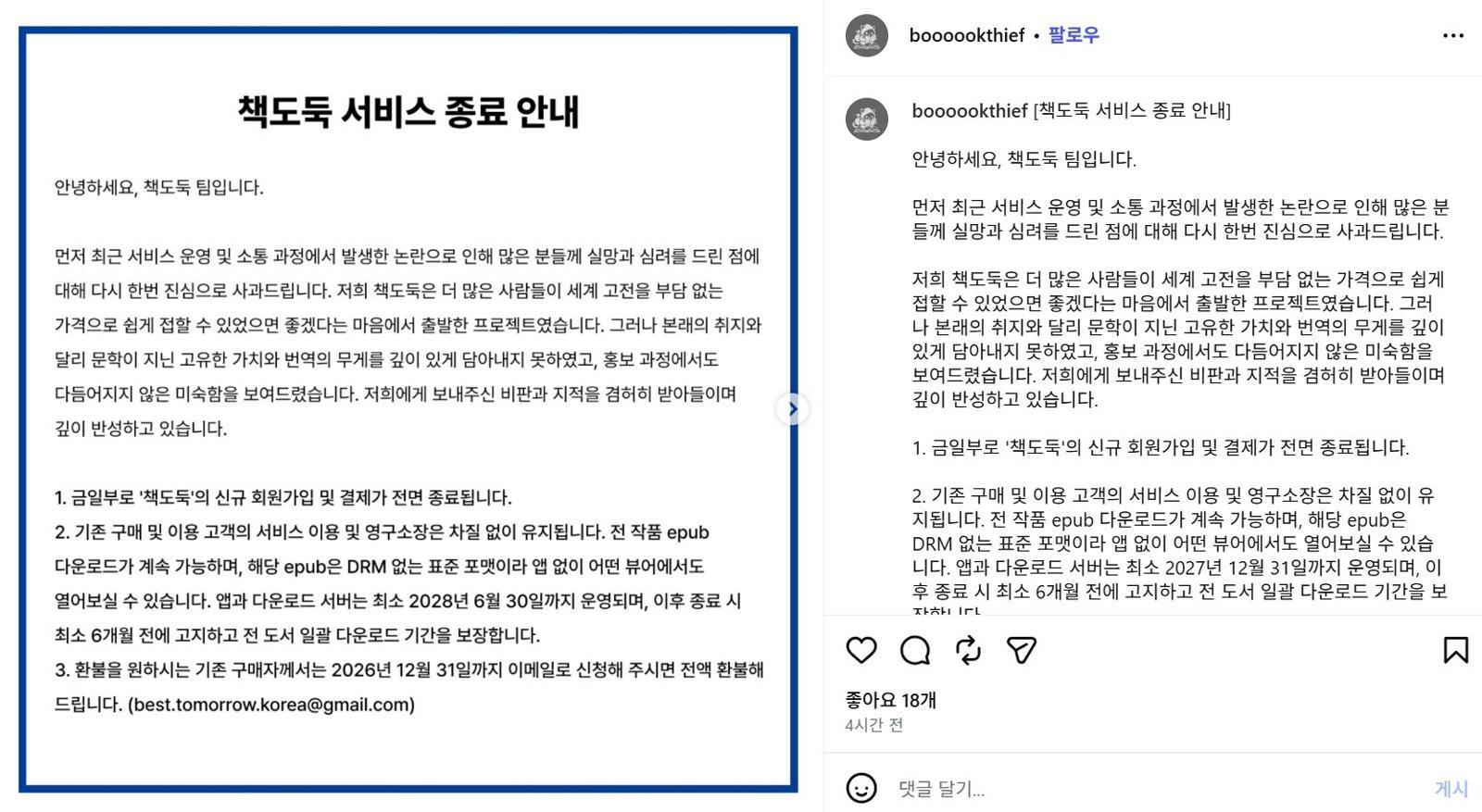
We sincerely apologize for the disappointment and concern caused to many people due to the recent controversies in service operation and communication.
Initially, 'Book Thief' vehemently denied employing AI, asserting that its translations were meticulously handled by human editors, including students from prestigious universities and writers. However, mounting user criticism and persistent questions about the rapid influx of translated works forced the platform to backtrack. On July 25, 'Book Thief' finally admitted to utilizing AI in its translation process, though it claimed the output was not 'sloppy.'
This delayed and partial admission fueled accusations of concealment and consumer deception. Users expressed outrage not over the use of AI itself, but over the platform's initial dishonesty and failure to disclose its methods. The controversy escalated, with discussions arising about potential violations of advertising and e-commerce laws.
AI is used in the translation process, but it is not made carelessly.
In response to the growing backlash, 'Book Thief' announced a full refund policy for previous customers on July 27. Subsequently, the platform decided to terminate its services entirely, just days after its launch. In a statement, 'Book Thief' expressed regret, acknowledging that its initial intention to make classics accessible was overshadowed by a failure to capture the unique value and gravity of literary translation. The incident serves as a stark reminder of the critical importance of ethical considerations and transparency in the integration of AI technologies within the publishing industry.
We failed to capture the unique value and weight of literature, contrary to our initial intention to allow more people to easily access classics.
DistantNews Editorial
Originally published by Dong-A Ilbo in Korean. Translated, summarized, and contextualized by our editorial team with added local perspective. Read our editorial standards.
More Stories



From Our Blog

What Gets Lost (and Found) When News Is Translated

The Critical Role of Diaspora Media in Global News

What Travellers Should Know About Countries with Restricted Press

A Digital Nomad's Guide to Following Local News

How the Same Story Looks Different in Different Countries
