

Borrowed Investment Surges as South Korean Stocks Rebound
Translated from Korean, summarized and contextualized by DistantNews.
At a glance
News
Sources not specified
Context piece
- South Korea's stock markets, Kospi and Kosdaq, opened higher on August 7, 2026, following a recent rebound.
- Investor borrowing for stock purchases, known as 'bitu' (borrowed investment), increased by 1 trillion won in a single day, reaching 28.4 trillion won as of August 5.
- This rise in leveraged investment follows a period of decline after a market crash, indicating renewed investor confidence despite a significant drop in total deposits.
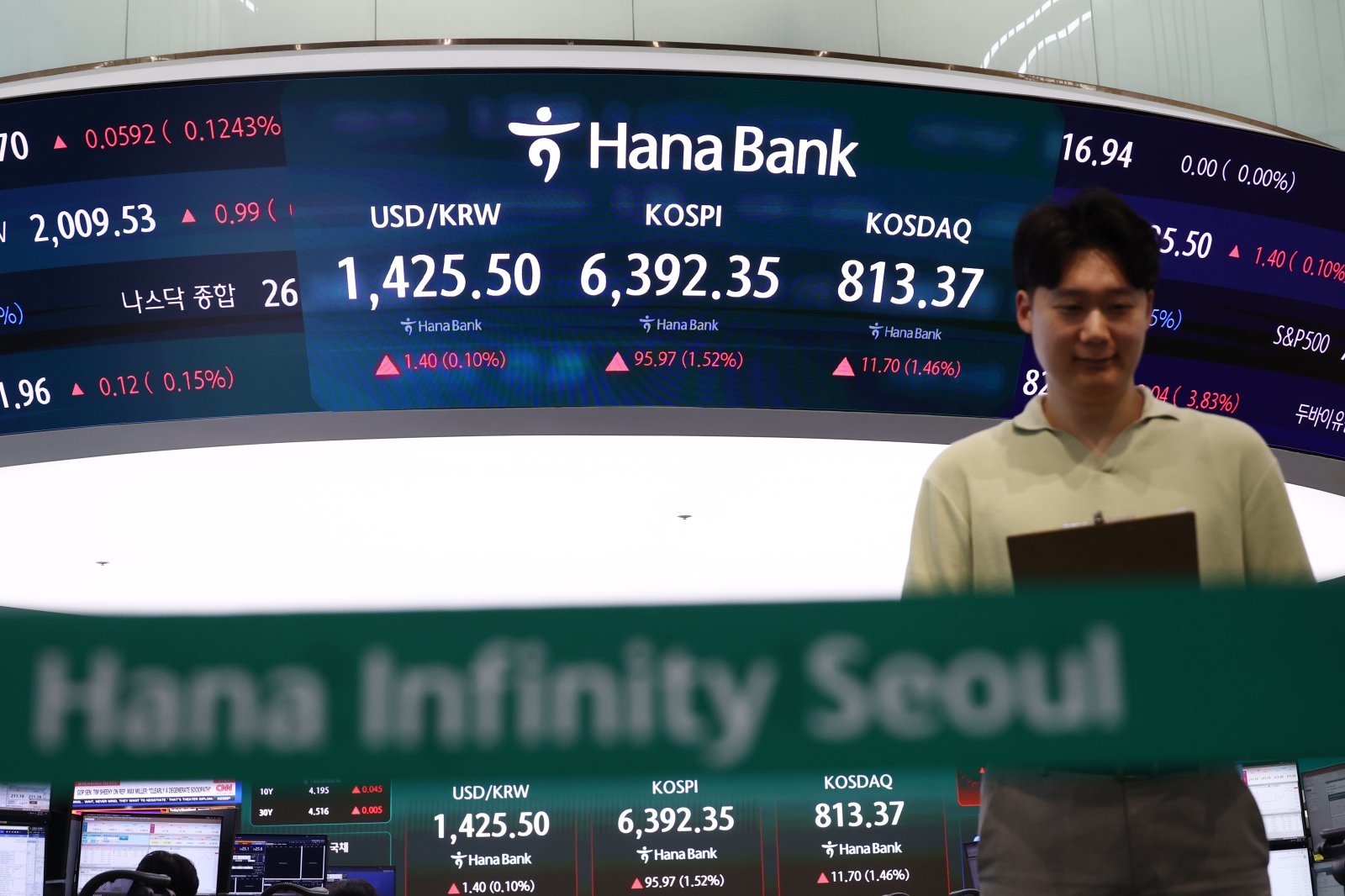
South Korea's stock markets showed signs of recovery on August 7, 2026, with both the Kospi and Kosdaq indices opening higher. The Kospi started the day up 1.09% at 6365.07 points, while the Kosdaq gained 0.74% to open at 807.62 points. This upward movement coincides with a notable increase in leveraged trading, commonly referred to as 'bitu' or borrowed investment.
Data from the Korea Financial Investment Association reveals that the balance of credit loans for stock investments surged by 1.01 trillion won in just one day, reaching 28.4179 trillion won as of August 5. This marks a reversal from the previous week's trend, where the balance had hit a year-to-date low of 27.4038 trillion won on August 4. The recent market downturn, which saw the Kospi and Kosdaq experience significant drops, had led to a liquidation of leveraged positions. However, as the market stabilized and showed signs of recovery, investor appetite for leveraged trading appears to have returned.
Despite the resurgence in borrowed investment, overall investor deposits saw a substantial decrease. Investor deposits, a key indicator of market liquidity, fell by approximately 7.2 trillion won on August 5, dropping to 103.2125 trillion won from over 110 trillion won just a day prior. Meanwhile, forced liquidations, or 'reverse trades,' which spiked during the market's volatile period, have significantly subsided. The scale of reverse trades, which reached as high as 103.8 billion won and 122 billion won on July 30 and 31 respectively, has now reduced to around 11.7 billion won as of August 5.
Analysts suggest that the recent sharp fluctuations, particularly in the semiconductor sector, may have peaked. They anticipate a shift towards a performance-driven market in August, with a focus on corporate fundamentals rather than speculative trading. While a strong upward trend like that seen in May and June might be unlikely, a gradual upward movement is expected, supported by foreign net buying and a clearer outlook on the profitability and sustainability of AI investments.
DistantNews Editorial
Originally published by Dong-A Ilbo in Korean. Translated, summarized, and contextualized by our editorial team with added local perspective. Read our editorial standards.
More Stories


From Our Blog

What Gets Lost (and Found) When News Is Translated

The Critical Role of Diaspora Media in Global News

What Travellers Should Know About Countries with Restricted Press

A Digital Nomad's Guide to Following Local News

How the Same Story Looks Different in Different Countries
