


Brain implant allows ALS patient to speak again, even tell jokes
Translated from Vietnamese, summarized and contextualized by DistantNews.
At a glance
In-depth
Named sources
Context piece
- A man with ALS, Casey Harrell, regained the ability to speak through an experimental brain implant that translates neural signals into speech.
- The technology, part of the BrainGate2 clinical trial, allows him to communicate at a speed of 56 words per minute.
- This advancement enables him to engage in conversations, tell jokes, and connect with his family and work, significantly improving his quality of life.
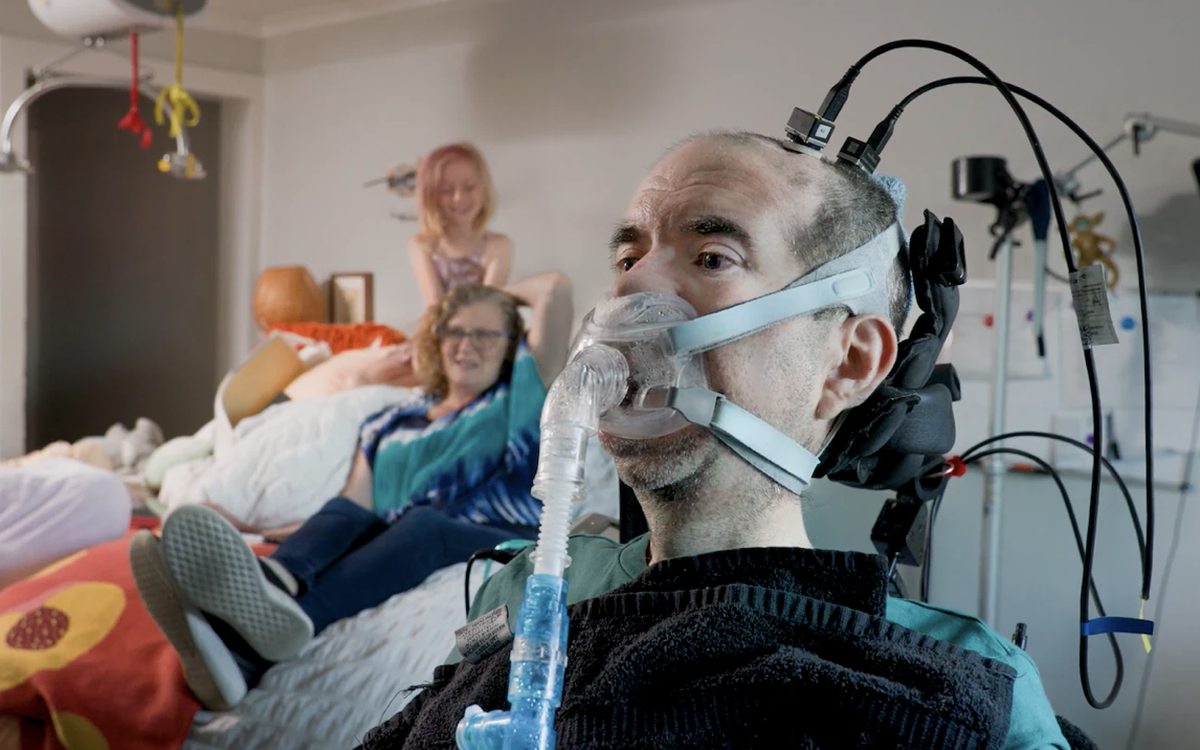
Casey Harrell, diagnosed with Amyotrophic Lateral Sclerosis (ALS) at age 42, has regained his voice through a groundbreaking experimental brain implant. The neurodegenerative disease had progressively robbed him of his ability to speak, sing, or even share a joke with his daughter. After a three-year wait, researchers at the University of California, Davis, implanted experimental devices into his brain, restoring a form of communication he describes as "very special": the ability to speak using his mind.
The ability to speak using my brain.
Harrell is a participant in the government-funded BrainGate2 clinical trial, known in scientific publications by the code "T15." A study published on June 15 in Nature Medicine details how this technology has transformed his life, extending beyond research sessions into daily activities. According to The Washington Post, Harrell found previous assistive communication technologies too slow for natural conversation, only capable of conveying basic information. "You don't have enough speed to tell a story or a joke. It's just conveying information. With this decoder, I'm not just participating in the conversation, I am the conversation," Harrell stated.
His wife, Levana Saxon, assists him by connecting the device to a computer via a cable. Despite the wired connection, the system has granted Harrell the freedom to make video calls, attend work meetings, and converse with his 7-year-old daughter. In nearly two years of home use, he has logged over 3,800 hours, generating 183,060 sentences, approximately 1.96 million words, at an average speed of 56 words per minute.
You don't have enough speed to tell a story or a joke. It's just conveying information. With this decoder, I'm not just participating in the conversation, I am the conversation.
The brain-computer interface (BCI) technology is still experimental. In Harrell's case, four small implants in his brain record neural signals. An artificial intelligence (AI) system then converts these signals into text and subsequently into audible speech. The system also allows him to control a computer cursor and perform mouse clicks. Researchers believe this study demonstrates the technology's real-world value, enabling Harrell to share humor, express emotions, and maintain connections with his family and professional life, a stark contrast to his active life before ALS.
The research shows the real value of the technology when used in everyday life.
DistantNews Editorial
Originally published by Tuổi Trẻ in Vietnamese. Translated, summarized, and contextualized by our editorial team with added local perspective. Read our editorial standards.
More Stories


From Our Blog

What Gets Lost (and Found) When News Is Translated

The Critical Role of Diaspora Media in Global News

What Travellers Should Know About Countries with Restricted Press

A Digital Nomad's Guide to Following Local News

How the Same Story Looks Different in Different Countries
