

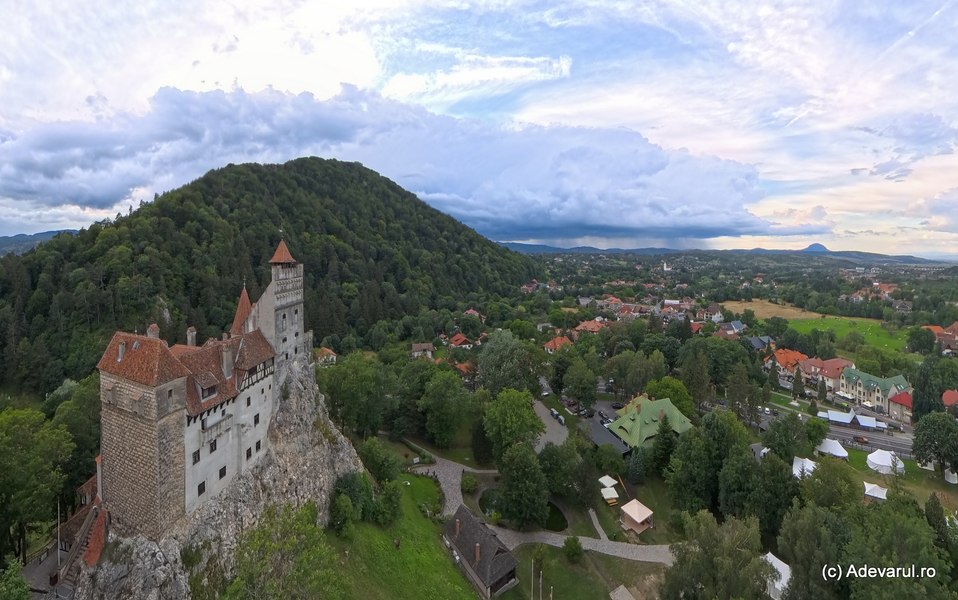
Bran Castle and the legend of Dracula: 'If someone who doesn't believe in vampires comes to Romania, when they leave the castle, will they believe in vampires?'
Translated from Romanian, summarized and contextualized by DistantNews.
At a glance
In-depth
Sources not specified
Context piece
- Castelul Bran, known internationally as Dracula's Castle, attracts many foreign tourists despite no evidence Vlad the Impaler lived there.
- The castle's fame is largely due to its association with Bram Stoker's novel, though the author never visited Romania.
- While the castle's entrance fee is higher than other historical sites, its mysterious aura and scenic location contribute to its popularity.
Castelul Bran, often internationally referred to as Dracula's Castle, continues to draw significant numbers of foreign tourists, largely due to its association with the legendary vampire. Although historical evidence does not confirm that Vlad the Impaler, the inspiration for Bram Stoker's character, ever resided or was imprisoned within its walls, the medieval fortress has become a major destination for those seeking the "prince of vampires."
Located about 30 kilometers from Brașov and 170 kilometers from Bucharest, Bran Castle remains one of Romania's most sought-after locations, particularly among international visitors. Its accessibility, proximity to other Brașov attractions, and the surrounding Carpathian mountain landscapes of Bucegi and Piatra Craiului enhance its appeal.
The nearby village of Bran offers a tourist-centric experience with local restaurants, rest stops, and souvenir shops, many themed around the Dracula legend. The castle is a popular year-round destination, attracting visitors in the summer for its mountain scenery and in the winter when nearby resorts are active.
While the entrance fee of 90 lei is notably higher than that of other Romanian castles like Corvin Castle (55 lei), which boasts grander architecture and more concrete historical ties to figures like Vlad the Impaler, Bran Castle's enduring allure lies in its medieval appearance and mysterious aura. The association with Bram Stoker's 1897 novel "Dracula," published in London, cemented its status as an international tourist attraction, despite Stoker never having visited Romania. It is believed he may have drawn inspiration from 19th-century illustrations of Bran Castle.
DistantNews Editorial
Originally published by Adevărul in Romanian. Translated, summarized, and contextualized by our editorial team with added local perspective. Read our editorial standards.
More Stories



From Our Blog

What Gets Lost (and Found) When News Is Translated

The Critical Role of Diaspora Media in Global News

What Travellers Should Know About Countries with Restricted Press

A Digital Nomad's Guide to Following Local News

How the Same Story Looks Different in Different Countries
