

Breaking the Stalin Line: Operation Barbarossa's brutal tank battles
Translated from Hungarian, summarized and contextualized by DistantNews.
At a glance
News
Sources not specified
Context piece
- The Molotov-Ribbentrop Pact initially served both Germany and the Soviet Union but soured in late 1940, leading to the planning of Operation Barbarossa.
- Despite underestimating Soviet strength, German forces engaged in a massive tank battle near Brody-Dubno-Luck in June 1941, ultimately winning but facing a vastly superior Soviet armored force.
- German troops breached the Stalin Line, a significant defensive system, pushing the Soviet Union into crisis, though its state structure endured.
The Molotov-Ribbentrop Pact, initially a pragmatic agreement benefiting both Nazi Germany and the Soviet Union for two years, began to unravel in the autumn of 1940. Soviet Foreign Minister Vyacheslav Molotov's visit to Berlin revealed a starkly cold and dismissive attitude towards further German plans for cooperation. This deterioration in relations directly precipitated the planning of Operation Barbarossa, Germany's invasion of the Soviet Union, a move supported by German Army Chief of Staff Franz Halder, who, like many, underestimated the Red Army's true capabilities.
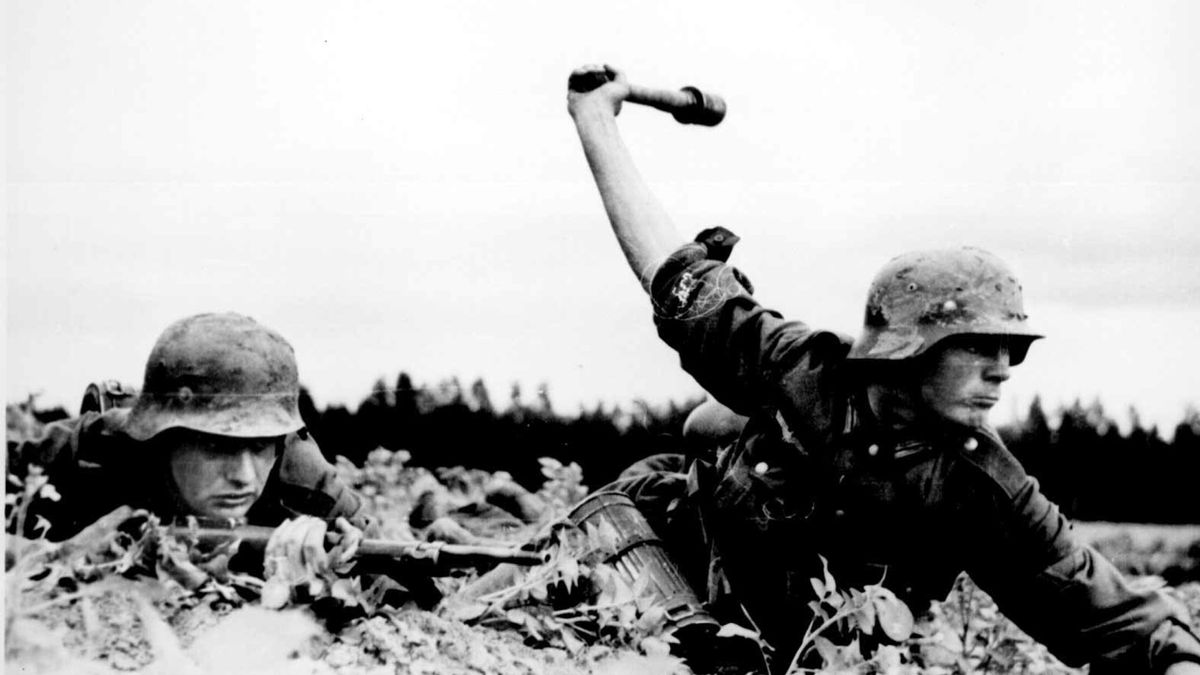
The early stages of Operation Barbarossa saw immense clashes, including the largest armored battle of World War II, fought in the Brody-Dubno-Luck region between June 23-30, 1941. The German 1st Panzer Group, part of Army Group South, fielded 618 tanks, mostly Panzer II and III models with limited 75mm cannons. They faced an overwhelming Soviet force of five mechanized corps, totaling approximately 3,140 tanks – nearly as many tanks as the entire German attacking army possessed. This brutal, week-long tank engagement in the summer heat concluded with a German victory, but at a significant cost and against staggering odds.
During their advance, German troops encountered the formidable Stalin Line, a vast defensive system stretching from the Baltic to the Black Sea. Although largely evacuated and mothballed due to the 1939 pact, it was reactivated in 1941. German forces managed to breach this line with momentum in July, plunging the Soviet Union into a severe crisis. Despite the existential threat, the Soviet state structure, though strained, did not collapse. Hitler's fatal underestimation of the Red Army's resilience was evident in reports of staggering Soviet losses, with Hitler noting on July 21st the "insane news" of destroying hundreds, even thousands, of Soviet tanks, while acknowledging that Soviet material replenishment was only beginning to wane.
The first few days brought absolutely insane news. Reports that we had destroyed four hundred, six hundred, eight hundred tanks.
DistantNews Editorial
Originally published by Magyar Nemzet in Hungarian. Translated, summarized, and contextualized by our editorial team with added local perspective. Read our editorial standards.
More Stories

From Our Blog

Countries Without a Free Press: What You Need to Know

What Press Freedom Means for the News You Read

What Gets Lost (and Found) When News Is Translated

The Critical Role of Diaspora Media in Global News

What Travellers Should Know About Countries with Restricted Press
