


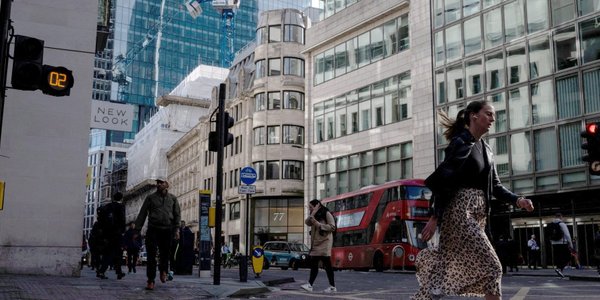
Brexit Moderately Wounded London's City, But Did Not Kill It
Translated from Polish, summarized and contextualized by DistantNews.
At a glance
News
Named sources
Context piece
- A decade after the Brexit referendum, London's financial center, the City, has not collapsed as predicted but has been moderately wounded.
- While some jobs and capital have relocated to European cities like Paris and Dublin, the City's employment is near record levels, and banks report strong results.
- The UK's share of global finance has decreased, with Asian markets growing significantly, and the US remaining the top destination for foreign capital.
Ten years after the United Kingdom voted to leave the European Union, the dire predictions of London's financial center, the City, collapsing have not materialized. While Brexit has indeed wounded the City, it has not delivered the fatal blow that many, including JPMorgan Chase CEO Jamie Dimon, once feared.
Initial forecasts suggested a mass exodus of jobs and capital from London to financial hubs like Frankfurt, Paris, and Amsterdam. While an estimated 40,000 jobs have moved to European financial centers due to the loss of "EU passporting" rights for British firms, the City of London's employment figures tell a different story. According to the Corporation of London, employment in the City stands at 676,000 people, an increase of over 25% since 2019.
JPMorgan Chase, which once considered moving 4,000 jobs, is now preparing to build a new office in Canary Wharf capable of housing 12,000 employees. Banks operating in the City are also reporting record-breaking results. However, the UK's overall share in global finance has seen a decline. Barclays analysts, citing IMF data, note that while the UK remains the second-largest recipient of foreign capital after the US, its share dropped from 8.6% in 2015 to 7% in 2025. In contrast, the US share grew from about 20% to 25%.
New Financial research indicates that the UK has lost market share in 10 out of 12 categories of international finance since 2015, including currency trading and stock offerings. Despite these shifts, European financial capitals have leveraged Brexit to compete, and both the EU and the UK are facing increased competition from rapidly growing Asian financial markets. Michael Mainelli, former Lord Mayor of the City of London, stated that while relocation has weakened London's position, Europe is also weaker, and both are losing ground to Asia.
Brexit niewątpliwie osłabił pozycję City – stwierdził w rozmowie z agencją Reuters Michael Mainelli, który w latach 2023–2024 pełnił funkcję burmistrza dzielnicy finansowej, wskazując na relokację miejsc pracy z Londynu do miast takich jak Paryż i Dublin. – Jednak Europa również jest słabsza. Zarówno UE, jak i Wielka Brytania tracą na rzecz ogromnego wzrostu azjatyckich rynków finansowych – dodał Mainelli.
DistantNews Editorial
Originally published by Rzeczpospolita in Polish. Translated, summarized, and contextualized by our editorial team with added local perspective. Read our editorial standards.
More Stories



From Our Blog

What Gets Lost (and Found) When News Is Translated

The Critical Role of Diaspora Media in Global News

What Travellers Should Know About Countries with Restricted Press

A Digital Nomad's Guide to Following Local News

How the Same Story Looks Different in Different Countries
