

Bride's Finger: Documentary questions love and marriage through parents' 50-year union
Translated from Spanish, summarized and contextualized by DistantNews.
At a glance
In-depth
Sources not specified
Context piece
- A documentary by Giselle Elías Karam explores her parents' nearly 50-year marriage, revealing that while her father was deeply in love, her mother married without being in love due to societal pressure.
- The film contrasts her parents' enduring, albeit complex, relationship with Giselle's own short-lived marriage, prompting reflections on generational differences in love, marriage, and personal choice.
- Beyond the romantic narrative, the documentary also touches upon Giselle's Mexican-Lebanese identity and the evolving roles of women, particularly regarding marriage and motherhood.
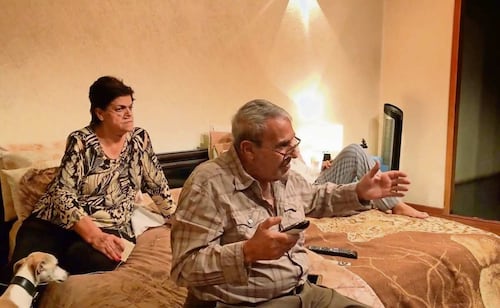
Giselle Elías Karam's documentary "Dedo de novia" (Bride's Finger) delves into the complexities of her parents' nearly 50-year marriage, uncovering a love story far from a fairytale. While her father, Jorge Elías, was certain about his love for Isabel Karam from the start, Giselle discovered through family videos that her mother, Isabel, married at 19 without being in love, succumbing to the pressure to start a family.
"It's not a Disney love story where she married her prince charming, madly in love," Giselle explains. "My dad was very sure, his joy was evident, as was my mom's sadness. However, I believe there are many parts of a love that was built over time." The director emphasizes that the marriage, despite its unconventional start, was not devoid of happiness, companionship, and shared hardships, including the loss of a child and the illness of another.
The film's exploration of her parents' relationship inevitably led Giselle to examine her own. After her three-year marriage ended, she questioned why her parents' union lasted for nearly half a century while hers did not. This comparison highlights a generational shift, where the possibility of choice has become more prominent. While societal pressure to find a partner, marry, and start a family persists, Giselle observes a growing willingness among people to question these traditional paths and forge lives outside of them.
"Dedo de novia" also touches upon Giselle's Mexican-Lebanese identity, noting shared patriarchal attitudes in both cultures where men held power and women felt repressed. However, she celebrates the increased openness for women to pursue their desires and achieve fulfillment, including in their careers. Giselle herself is childfree and content, a choice unthinkable for many in her mother's generation.
Ultimately, the documentary serves as a reflection on women's evolving agency. Giselle poses the question not of how long a relationship can last, but whether one still wishes to be in it. "Making the documentary helped me immensely," she shares. "What I learned is that I do want to love and be loved, but from a place of freedom, not feeling caged. And I think it's possible to find that. Well, I have hope."
DistantNews Editorial
Originally published by El Universal in Spanish. Translated, summarized, and contextualized by our editorial team with added local perspective. Read our editorial standards.
More Stories



From Our Blog

What Press Freedom Means for the News You Read

What Gets Lost (and Found) When News Is Translated

The Critical Role of Diaspora Media in Global News

What Travellers Should Know About Countries with Restricted Press

A Digital Nomad's Guide to Following Local News
