


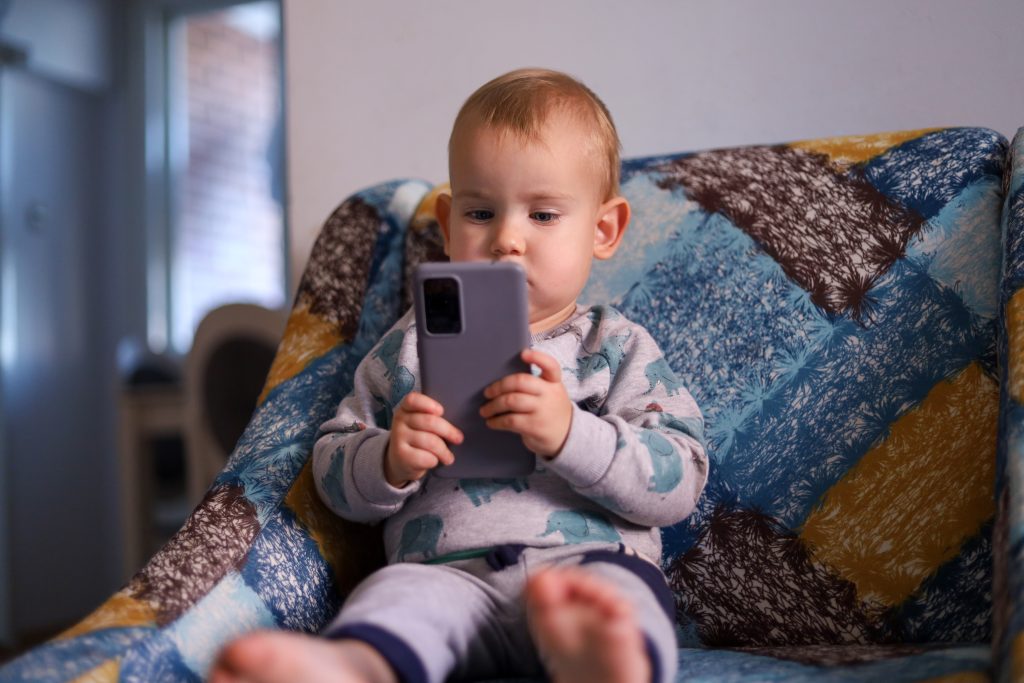
British study links infant screen time to lasting developmental harm
Translated from French, summarized and contextualized by DistantNews.
At a glance
News
Sources not specified
Context piece
- A comprehensive British study links screen exposure before age two to lasting negative effects on child health and development.
- Researchers warn of a public policy blind spot regarding infant screen time, urging government action.
- The study highlights risks like reduced parent-child interaction, limited language development, and sleep disturbances.
A major British study, described as the most exhaustive of its kind, has established a link between screen exposure in children under two years old and lasting detrimental effects on their health and development. This alert has captured the attention of governments and major technology companies.
While public debate often centers on social media and teenagers, a team of researchers from four British universities – Leeds, Leeds Trinity, Loughborough, and Aston – is sounding the alarm about a much earlier concern. Their study, considered the most complete review of available global research on the subject, points to the risks smartphones, tablets, and other digital devices pose to infants. Screens have become a commonplace part of daily life for parents, and researchers are denouncing what they call a "baby blind spot" in public policy.
Rafe Clayton, a lecturer in media and communication at the University of Leeds and co-leader of the research, stated that parents, lacking clear guidance on their own screen use, are "inadvertently teaching their children and babies to develop unhealthy habits and problematic relationships with digital devices." The study details a wide range of potential harms for infants exposed to screens, including fewer opportunities for bonding with parents and caregivers, less time for physical play with peers, and limited language development. Additional risks include overstimulation, sleep disturbances, and implications for eye health and childhood obesity.
Previous work by the same team found that one in ten babies regularly fall asleep in front of a screen, indicating a worrying shift towards digital devices as a substitute for parental comfort. The reduction in interaction between babies and adults appears to be the central factor in the observed risks, with screens replacing verbal exchanges with parents, joint attention, peer play, and manual exploration of the world. Although the study cannot establish direct causality between screen use and specific developmental disorders, its conclusion is unambiguous: "No child under the age of two should be given intentional and regular screen time. Passive exposure is socially inevitable, but adding deliberate use exacerbates risks without offering any significant benefit."
The researchers are calling on the British government to revise its recent recommendations, which, while advising against screens for very young children, are deemed insufficient by the study's authors.
DistantNews Editorial
Originally published by El Watan in French. Translated, summarized, and contextualized by our editorial team with added local perspective. Read our editorial standards.
More Stories



From Our Blog

What Gets Lost (and Found) When News Is Translated

The Critical Role of Diaspora Media in Global News

What Travellers Should Know About Countries with Restricted Press

A Digital Nomad's Guide to Following Local News

How the Same Story Looks Different in Different Countries
