


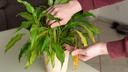
Brown Leaf Tips on Houseplants? Experts Reveal Causes and Quick Fixes
Translated from Croatian and summarized by DistantNews. Read the original for the full story.
At a glance
Explainer
Sources not specified
Context piece
- Brown, dried leaf tips on houseplants are usually a sign of environmental stress, not serious disease.
- Common causes include improper watering, poor water quality leading to salt buildup, and unsuitable environmental conditions like dry air or temperature fluctuations.
- Solutions involve adjusting watering habits, improving water quality, increasing humidity, and protecting plants from drafts and extreme temperatures.
The common sight of brown and dried leaf tips on houseplants can be alarming, but it rarely signals a serious illness. Instead, it's a clear indicator that the plant is experiencing stress due to its environment or care routine.
This browning is essentially dead tissue, often caused by a combination of factors. While the tip itself doesn't reveal the exact cause, issues like an underwatered or overwatered root system, a buildup of salts in the soil, or sudden temperature changes can all contribute. Damage during transport or exposure to dry indoor air can also play a role.
Brown on the leaf tip is actually dead tissue, a clear sign that the plant is experiencing stress.
Improper watering is a frequent culprit. Overwatering can suffocate the roots, leading to rot, paradoxically causing yellowing leaves even in moist soil. Conversely, underwatering dries out the roots, preventing water from reaching the leaf tips. A simple test is to check the soil moisture a few inches down before watering.
Paradoxically, a plant with rotten roots cannot absorb water, so the leaves turn yellow even if the soil is wet.
Water quality is another significant factor. Tap water often contains minerals, chlorine, and fluoride. These substances, along with salts from fertilizers, accumulate in the soil over time. This increased salt concentration makes it difficult for the plant to absorb water. Sensitive plants like calatheas and dracaenas are particularly susceptible to these chemicals, which can damage leaf edges as the plant tries to expel excess salts.
Environmental conditions, especially temperature and humidity, are crucial for tropical houseplants. Dry air, common during heating seasons, accelerates water evaporation from leaves. Sudden temperature shifts, such as placing a plant near a radiator or in a draft, can shock the plant. Grouping plants together can help create a more humid microclimate.
These substances, along with salts from fertilizers, accumulate in the substrate over time.
To address these issues, experts recommend improving water quality by letting tap water sit overnight to allow chlorine to dissipate and reach room temperature. For sensitive plants, filtered or rainwater is ideal. Periodically flushing the soil by watering thoroughly twice can help wash away accumulated salts. Increasing humidity through misting, using a pebble tray, or a humidifier can also benefit plants. While existing brown tips won't recover, they can be aesthetically trimmed with sharp scissors, following the leaf's shape and leaving a thin brown line to avoid damaging healthy tissue.
Dry air, especially during the heating season, is the main cause of drying leaf tips as it accelerates water evaporation from them.
About this summary
Originally published by Večernji List in Croatian. Translated, summarized, and contextualized automatically by DistantNews, with a note on how the source frames the story. Not individually reviewed before publishing. How this works.
More Stories


From Our Blog

What Gets Lost (and Found) When News Is Translated

The Critical Role of Diaspora Media in Global News

What Travellers Should Know About Countries with Restricted Press

A Digital Nomad's Guide to Following Local News

How the Same Story Looks Different in Different Countries
