

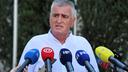
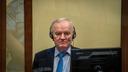
Brussels sends strong message to Montenegro over Ratko Mladić praise: 'No place in EU'
Translated from Croatian and summarized by DistantNews. Read the original for the full story.
At a glance
News
Sources not specified
Context piece
- The European Commission firmly stated that glorifying war criminals is contrary to European values and has no place in the EU or its aspiring member states.
- This statement follows reports of several Montenegrin politicians and officials from ruling parties praising Ratko Mladić, who is serving a life sentence for genocide and crimes against humanity.
- Montenegrin officials, including the Speaker of Parliament Andrija Mandić, have faced criticism for their remarks, with President Jakov Milatović emphasizing the need to respect international court rulings and condemn war crimes.
The European Commission has issued a strong rebuke to Montenegro, stating unequivocally that any glorification of war criminals is incompatible with European values and has no place within the European Union or countries seeking membership. This firm stance comes in response to reports detailing how several Montenegrin politicians and officials from ruling parties have publicly praised Ratko Mladić.
glorifying war criminals is contrary to European values and that there is no place for it either in the European Union or in candidates for membership.
Mladić, a convicted war criminal, is currently serving a life sentence for genocide and crimes against humanity, notably the Srebrenica massacre. The International Criminal Tribunal for the former Yugoslavia (ICTY) found him guilty, a verdict upheld by the International Residual Mechanism for Criminal Tribunals in 2021.
Among those drawing criticism is Andrija Mandić, the Speaker of Montenegro's Parliament and leader of the New Serb Democracy party. Mandić reportedly expressed condolences to Mladić's son, Darko, "on the occasion of the death of his father, General Ratko Mladić." This action prompted condemnation from Montenegrin President Jakov Milatović, who stressed that while showing respect to a deceased person's family is one thing, it cannot justify relativizing war crimes. Milatović insisted that Montenegro must uphold international court verdicts, clearly condemn atrocities, and respect the dignity of victims.
the relationship towards the family of the deceased cannot be an excuse for relativizing war crimes and that Montenegro must respect the verdicts of international courts, clearly condemn war crimes, preserve the dignity of victims and their families, and reject any glorification and relativization of war crimes.
Further criticism came from within the Montenegrin government itself. Ervin Ibrahimović, the Minister of Foreign Affairs and leader of the Bosniak Party, stated on social media that a "convicted war criminal, both alive and dead, deserves only contempt." He characterized any other stance as a form of hidden glorification. Nik Đeljošaj, Deputy Prime Minister from an Albanian party bloc, also condemned the praise, viewing it as indicative of the values these individuals represent. Notably, Ibrahimović and Đeljošaj are part of a government that includes at least four ministers and one deputy prime minister from Mandić's party, while Prime Minister Milojko Spajić's ruling Europe Now movement has remained silent on the matter.
A war criminal convicted by a final verdict, both alive and dead, deserves only contempt.
About this summary
Originally published by Večernji List in Croatian. Translated, summarized, and contextualized automatically by DistantNews, with a note on how the source frames the story. Not individually reviewed before publishing. How this works.
More Stories


From Our Blog

What Gets Lost (and Found) When News Is Translated

The Critical Role of Diaspora Media in Global News

What Travellers Should Know About Countries with Restricted Press

A Digital Nomad's Guide to Following Local News

How the Same Story Looks Different in Different Countries
