



Bucharest mayor demands public transport company declare insolvency to avoid city bankruptcy
Translated from Romanian and summarized by DistantNews. Read the original for the full story.
At a glance
News
Sources not specified
Context piece
- Bucharest's mayor is asking the public transport company's board to declare insolvency to avoid city bankruptcy.
- Mayor Ciprian Ciucu stated that STB's debts have reached unprecedented levels, with penalties alone exceeding 400 billion, primarily owed to the tax authority.
- He believes insolvency is the only way to protect the company, its employees, and ensure continued public transport service while potentially erasing a significant portion of the debt through a reorganization plan.
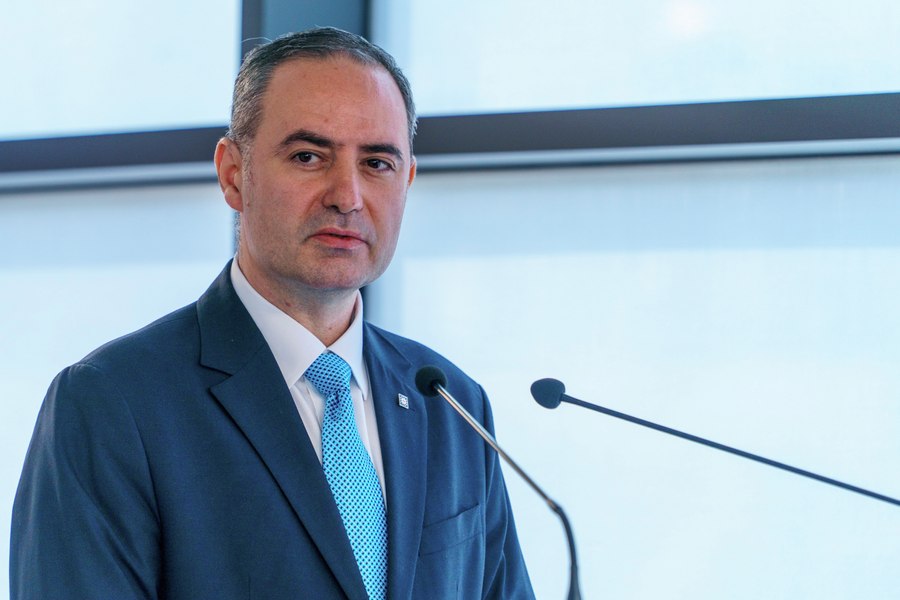
Bucharest Mayor Ciprian Ciucu has called for the public transport company STB to declare insolvency, citing a "disastrous" financial situation caused by years of mismanagement. Ciucu presented the company's finances, stating that the public transport service now costs nearly as much as the entire capital's budget.
I ask the General Director of STB and the STB Board of Directors to meet immediately, tomorrow morning, and request the company's insolvency. Only then can we save it. Only then can we pay salaries. Only then can we avoid the city's bankruptcy.
"I ask the General Director of STB and the STB Board of Directors to meet immediately, tomorrow morning, and request the company's insolvency. Only then can we save it. Only then can we pay salaries. Only then can we avoid the city's bankruptcy," Ciucu announced at a press conference. He emphasized that he, as mayor, cannot make this decision but is responsible for analyzing the situation.
Only then can we protect STB, only if it enters insolvency, from the accumulation of further additional penalties, from everywhere. If not, they will continue to accrue and these penalties will increase. Because we don't have money to pay them.
The mayor highlighted that STB's debts have reached an "unprecedented" level, far exceeding the funds allocated by the Bucharest City Hall for public transport. He specifically mentioned penalties exceeding 400 billion, largely owed to the National Agency for Fiscal Administration (ANAF).
Especially to ANAF, which is the main creditor, with penalties of over 400 billion.
Ciucu argued that insolvency would protect STB from further penalties and prevent the seizure of its accounts, which would disrupt the essential public utility service. He explained that while the service would continue, without insolvency, the company would eventually face outright bankruptcy. He noted that a judge could approve a reorganization plan, potentially erasing a significant portion of the debt, a scenario that has occurred in similar cases.
The service will continue, but without insolvency, at some point, it will effectively go directly into bankruptcy. So it is the only instrument through which it can escape even the full payment of arrears. If the judge approves the reorganization plan, a significant proportion of this debt can be written off. This has happened.
About this summary
Originally published by Adevărul in Romanian. Translated, summarized, and contextualized automatically by DistantNews, with a note on how the source frames the story. Not individually reviewed before publishing. How this works.
More Stories

From Our Blog

News in Translation: What Gets Lost, and How We Keep the Framing

Diaspora Media: How Communities Abroad Follow Home

Traveling Where the Press Is Not Free: How to Read the News There

The Digital Nomad's Guide to Local News

The Same Story, Different Countries: How Coverage Changes at the Border
