

Budapest plans major green corridor on Danube's Buda bank
Translated from Hungarian, summarized and contextualized by DistantNews.
At a glance
News
Sources not specified
New plan
- Budapest plans to develop a new green corridor along the Danube River in Újbuda, addressing a long-standing deficit in public access to the riverfront.
- The project aims to connect the southern transport and green infrastructure developments, including the area around the future Galvani Bridge.
- This initiative seeks to balance the preservation of industrial heritage with new real estate developments and the creation of a natural riverside environment.
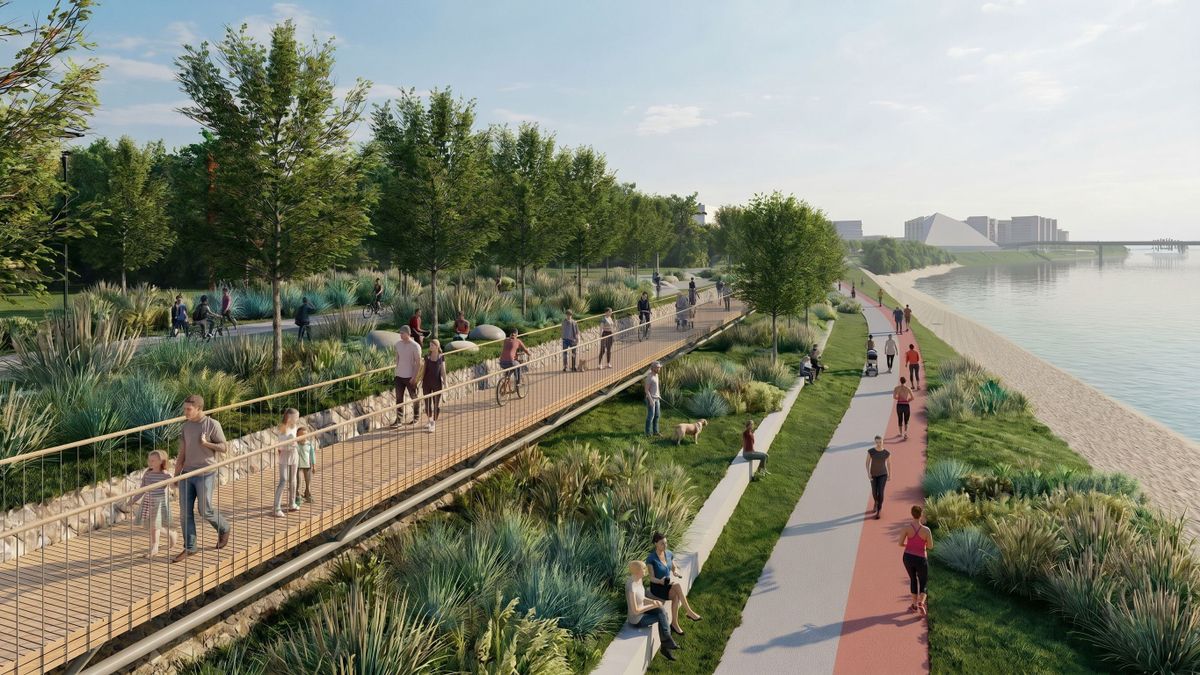
Budapest is set to transform a neglected industrial stretch of the Danube's southern Buda bank into a vibrant green corridor. This development aims to rectify a decades-long issue where many of the city's riverside areas remained inaccessible or underutilized, particularly on the Buda side.
While the Pest side has seen significant public space improvements in recent years, the industrial legacy of South Buda had largely excluded the riverfront from urban life. The current project intends to change this by making the Buda embankment continuously accessible for pedestrians and cyclists. The planned promenade will link to the Galvani Bridge area and other southern transport and green infrastructure projects.
The development area's history is deeply tied to the Danube's regulation and Kelenföld's industrialization. After the Danube's regulation and the construction of parallel works in the late 19th century, the region became a major industrial hub in the early 20th century, hosting numerous factories and crisscrossed by industrial railway lines. Following the fall of communism, these industrial functions gradually ceased, leaving much of the area as a brownfield site.
In recent years, residential and office developments have begun to reshape the area's role. The current investment faces the challenge of harmonizing the preservation of industrial heritage, new real estate projects, and the creation of a natural riverside environment. The project also navigates environmental sensitivities, as parts of the stretch include Natura 2000-classified Danube riverbed areas, requiring careful attention to ecological values and natural habitats. The initiative is a collaboration between the Újbuda municipality as the client and Metrodom Duna Bravo Kft. as the financier, with Open Air Design Kft. serving as the general designer.
DistantNews Editorial
Originally published by Magyar Nemzet in Hungarian. Translated, summarized, and contextualized by our editorial team with added local perspective. Read our editorial standards.
More Stories
From Our Blog

Countries Without a Free Press: What You Need to Know

What Press Freedom Means for the News You Read

What Gets Lost (and Found) When News Is Translated

The Critical Role of Diaspora Media in Global News

What Travellers Should Know About Countries with Restricted Press
