

Supercell: When the summer sky shows its terrifying face
Translated from Hungarian, summarized and contextualized by DistantNews.
At a glance
In-depth
Sources not specified
Context piece
- Supercells, characterized by rotating updrafts, are becoming more frequent during summer.
- These powerful storms can produce hurricane-force winds exceeding 100 km/h and hail stones several centimeters in diameter.
- The formation of supercells is linked to wind shear, and under specific conditions, they can spawn tornadoes.
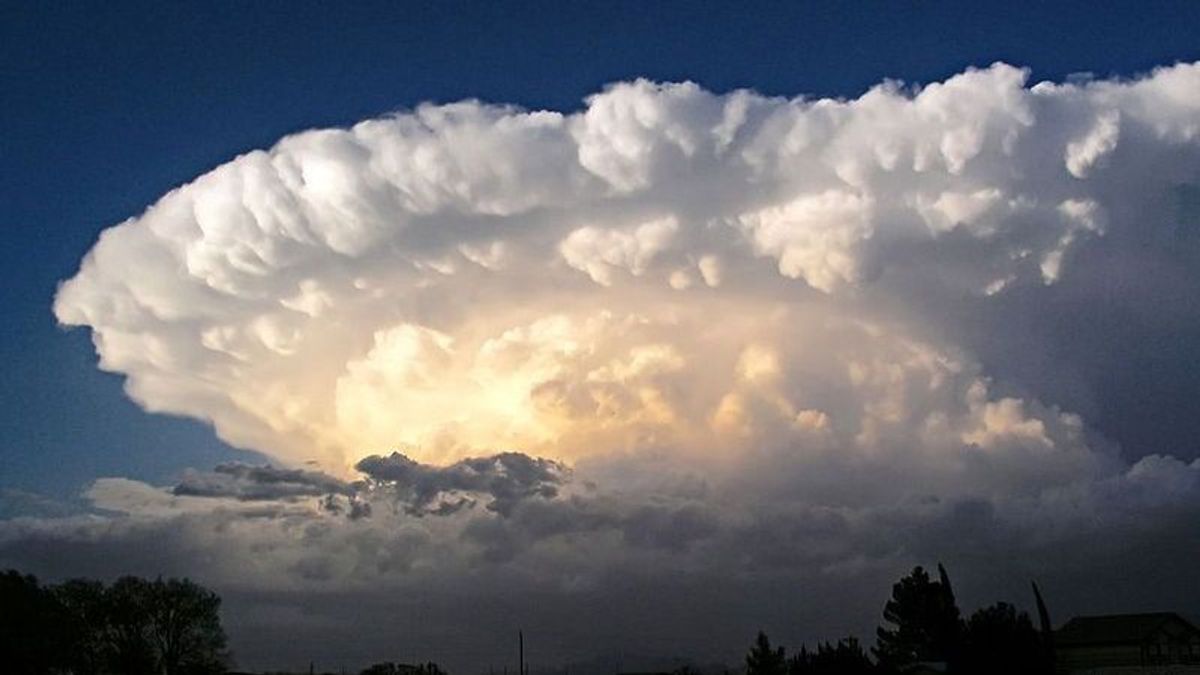
The summer sky is increasingly showing its formidable face with the growing occurrence of powerful supercell thunderstorms. These storms develop when closely spaced thunderclouds align in regular rows, forming a chain that can stretch for 5 to 15 kilometers. Within this chain, a particularly advanced storm cloud, the supercell, can emerge.
A defining characteristic of a supercell is its rotating updraft, known as a mesocyclone, which is typically formed by wind shear. Wind shear, a term primarily used in aviation, describes rapid and unpredictable changes in wind direction and speed over short distances. In a supercell, this phenomenon fuels the storm's intense internal circulation.
The interior of a mature supercell is marked by extremely violent winds, often exceeding 100 km/h, and the formation and fall of hailstones that can be several centimeters in diameter. The air currents within a supercell are far more powerful than those in simple storm clouds, also called cells. Areas directly in the path of a supercell experience particularly severe storms, prompting the highest level of red storm warnings.
Meteorologists explain that the horizontal air vortices within the storm are transformed into vertical ones by the strong updraft. If a sufficient balance is achieved between wind shear and updraft, a supercell forms. From the deep mesocyclone, which acts as the supercell's engine, destructive rotating winds known as tornadoes can develop. A tornado is a narrow column of air with immense rotational force, extending from the storm cloud down to the ground, characterized by lower atmospheric pressure within.
DistantNews Editorial
Originally published by Magyar Nemzet in Hungarian. Translated, summarized, and contextualized by our editorial team with added local perspective. Read our editorial standards.
More Stories

From Our Blog

Countries Without a Free Press: What You Need to Know

What Press Freedom Means for the News You Read

What Gets Lost (and Found) When News Is Translated

The Critical Role of Diaspora Media in Global News

What Travellers Should Know About Countries with Restricted Press
