


Buenos Aires Reconfigures Palermo Avenue for New Electric TramBus System
Translated from Spanish, summarized and contextualized by DistantNews.
At a glance
News
Named sources
Ongoing story
- Buenos Aires is implementing an electric TramBus system, with the T1 line connecting Nueva Pompeya to Aeroparque Jorge Newbery scheduled to begin operations by late 2026.
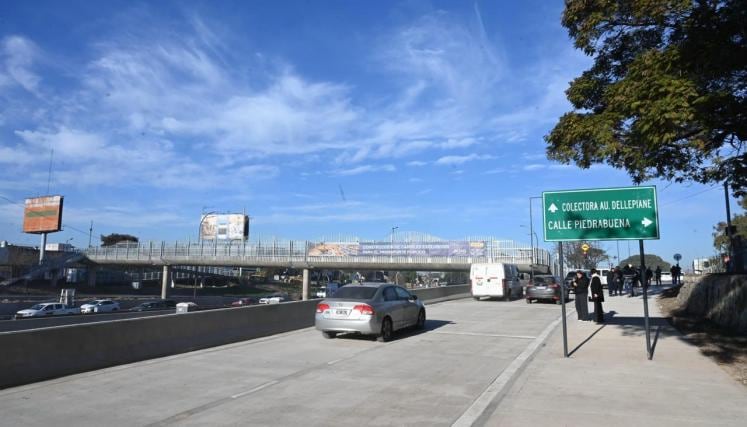
- Significant infrastructure work is underway on Avenida Intendente Bullrich in Palermo to accommodate the TramBus, including dedicated lanes for public transport while maintaining capacity for private vehicles.
- The project includes the installation of six stations along Avenida Bullrich, featuring an "iconic stop" at Juan B. Justo designed as a transit hub connecting to subway and train lines, enhancing passenger experience and safety.
Buenos Aires is advancing its urban mobility transformation with the implementation of the TramBus, a fully electric public transport system. The T1 line, set to connect Nueva Pompeya with Aeroparque Jorge Newbery, is projected to commence operations by the end of 2026, promising a more sustainable and efficient transit experience.
A critical phase of this project involves the reconfiguration of Avenida Intendente Bullrich in Palermo. Works have begun to integrate two exclusive lanes for public transport, one in each direction, into the avenue. Despite this change, the avenue will retain four lanes for private vehicle traffic heading north and two heading south, ensuring that overall circulation capacity is maintained. The sidewalks will also remain unchanged, with the reorganization focused on existing lanes to improve traffic flow predictability in this busy area.
They will be points that organize movement and make people travel more safely and efficiently.
The project also includes the development of six stations along Avenida Bullrich. A notable feature will be an "iconic stop" at the intersection with Juan B. Justo, strategically positioned to facilitate transfers to the Palermo station of subway line D and the Palermo station of the San Martín railway. These stations are envisioned as more than just stops; they will serve as connection hubs designed to enhance travel experience and bolster safety, offering amenities like bicycle storage and logistics lockers.
The T1 line will span 20 kilometers, connecting eight neighborhoods and integrating with five subway lines and five train stations. It is expected to serve an estimated 50,000 passengers daily. Pablo Bereciartua, the city's Minister of Mobility and Infrastructure, noted that while substantial, this figure is less than the daily ridership of the subway's busiest lines, B and D, which each carry between 250,000 and 300,000 passengers.
The T1 line will have an estimated flow of 50,000 passengers daily. For comparison, subway lines B and D, which are the two most used, transport between 250,000 and 300,000 passengers each per day.
DistantNews Editorial
Originally published by La Nación in Spanish. Translated, summarized, and contextualized by our editorial team with added local perspective. Read our editorial standards.
More Stories


From Our Blog

What Gets Lost (and Found) When News Is Translated

The Critical Role of Diaspora Media in Global News

What Travellers Should Know About Countries with Restricted Press

A Digital Nomad's Guide to Following Local News

How the Same Story Looks Different in Different Countries
