


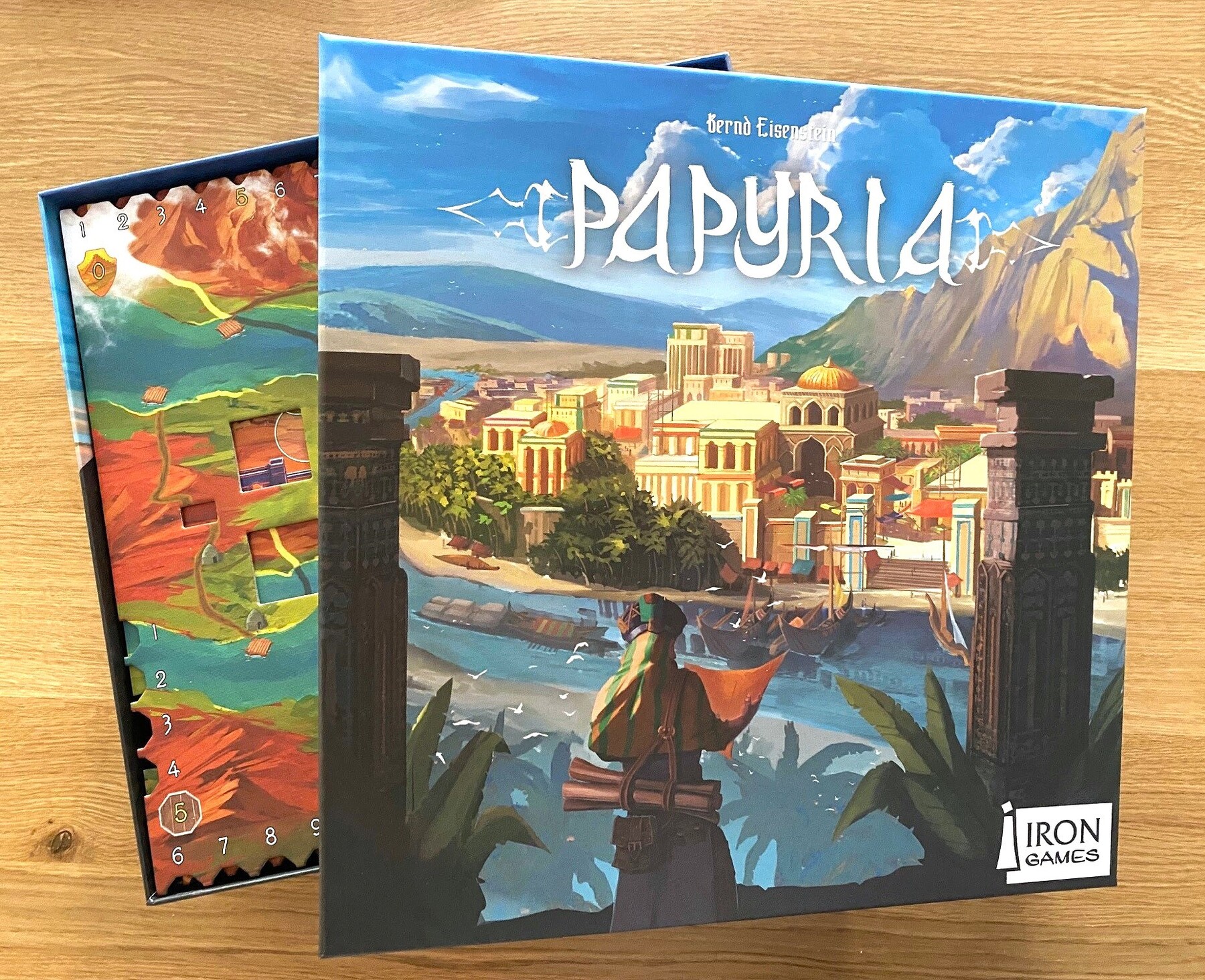
Build a Civilization and Prosper in the Board Game 'Papyria'
Translated from German, summarized and contextualized by DistantNews.
At a glance
In-depth
Sources not specified
Context piece
- "Papyria," a board game by Bernd Eisenstein, allows players to build a Mesopotamian civilization.
- The game focuses on economic management and resource gathering, with papyrus being a rare but essential resource for knowledge expansion.
- Unlike games with scarcity, "Papyria" allows players to thrive and win through smart economic strategy.
In the board game "Papyria," designed by Bernd Eisenstein, players immerse themselves in building a Mesopotamian civilization around 1500 BC. Unlike games that emphasize scarcity and resource grinding, "Papyria" offers a more abundant experience where all players can prosper.
The game centers on economic management and strategic building. Players collect landscape tiles to develop their own civilization, establishing canals, cities, and mining valuable lapis lazuli. Papyrus, though rare, is crucial for expanding knowledge, which in turn is essential for earning victory points. Players must balance economic development with knowledge acquisition to succeed.
"Papyria" features a unique scoring system. Players can take scoring tiles that evaluate specific aspects of their landscape, like temples, earning victory points. Additionally, collecting multiplier tiles can significantly boost these scores. The game requires players to achieve fundamental goals, such as canal construction, to unlock certain scoring opportunities at the end.
This approach ensures that even with a focus on urban development, as seen in an initial playthrough, players can still achieve substantial success by managing their resources and scoring multipliers effectively. The game provides a challenging yet rewarding experience for those who enjoy strategic economic gameplay.
DistantNews Editorial
Originally published by Die Presse in German. Translated, summarized, and contextualized by our editorial team with added local perspective. Read our editorial standards.
More Stories


From Our Blog

What Gets Lost (and Found) When News Is Translated

The Critical Role of Diaspora Media in Global News

What Travellers Should Know About Countries with Restricted Press

A Digital Nomad's Guide to Following Local News

How the Same Story Looks Different in Different Countries
