


Building a disaster-response ecosystem and sustainable economy through Islamic finance
Translated from Indonesian and summarized by DistantNews. Read the original for the full story.
At a glance
Opinion
Named sources
Context piece
- Four Indonesian volcanoes erupted in near succession in September 2026, disrupting aviation and sending ash columns hundreds of metres above their peaks.
- The article argues that disaster response must address lost livelihoods, damaged supply chains and reduced production capacity, not only immediate relief needs.
- It presents Islamic social finance, including zakat, infak and sadaqah, as a potential foundation for a more inclusive and sustainable recovery system.
Indonesia cannot choose its geological fate, and September 2026 brought that reality into sharp focus. Four volcanoes erupted within a similar period: Anak Krakatau disrupted flight routes, Mount Semeru sent volcanic ash 1,000 metres into the air, and Mount Ibu in North Maluku recorded an eruption column about 400 metres above its peak, or roughly 1,725 metres above sea level.
For a religious nation, the eruptions may encourage people to draw closer to God. But spiritual closeness alone cannot meet the needs created by disaster. It must lead to practical, measurable action on the ground.
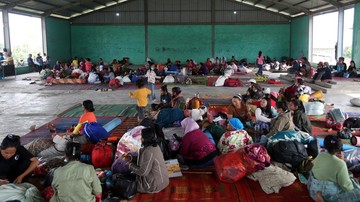
The article criticizes a response model that often stops at charity. Instant noodles, tents and blankets may reach people during an emergency, but the humanitarian task does not end when the emergency period does. Disasters also destroy livelihoods, break local economic supply chains and undermine communities' ability to produce.
Islamic finance, the article argues, can help build a recovery ecosystem rather than provide only temporary relief. Its guiding principles include opposition to greed, social solidarity, known as ta'awun, and sustainability. It is also presented as an inclusive system whose benefits and participation are open to people of every religion and social group.
During the emergency phase, Islamic social finance can serve as the first line of support. Zakat, infak and sadaqah, mobilized through organizations such as the National Amil Zakat Agency and zakat institutions, can provide a safety net while broader recovery takes shape.
About this summary
Originally published by Republika in Indonesian. Translated, summarized, and contextualized automatically by DistantNews, with a note on how the source frames the story. Not individually reviewed before publishing. How this works.
More Stories


From Our Blog

News in Translation: What Gets Lost, and How We Keep the Framing

Diaspora Media: How Communities Follow News From Home

Traveling Where the Press Is Not Free: How to Read the News There

The Digital Nomad's Guide to Local News

The Same Story, Different Countries: How Coverage Changes at the Border
