

Bukowa Góra is 'Polish Stonehenge,' archaeologist says, citing new evidence of intentional design
Translated from Polish, summarized and contextualized by DistantNews.
At a glance
News
Sources not specified
Context piece
- Archaeologist Dariusz Rozmus believes Bukowa Góra in Poland, resembling Stonehenge, may have been intentionally designed to create a
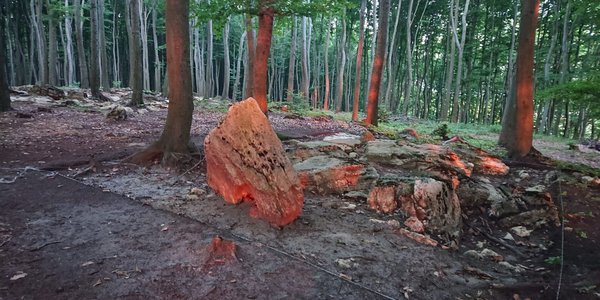
Professor Dariusz Rozmus, an archaeologist and senior curator at the "Sztygarka" Municipal Museum in Dąbrowa Górnicza, suggests that Bukowa Góra in Poland could be a "Polish Stonehenge." He points to a phenomenon where sunlight striking the site creates the illusion of it "burning with living fire." Rozmus believes this effect was deliberately engineered by the ancient builders of these structures.
This ancient site, with its unique geological and astronomical alignments, has long intrigued researchers. The "burning" effect, observed under specific solar conditions, adds another layer to the mystery surrounding its purpose and construction. Rozmus's interpretation suggests a sophisticated understanding of natural phenomena by its creators, who may have harnessed these effects for ritualistic or symbolic purposes.
The comparison to Stonehenge highlights the potential significance of Bukowa Góra as a major prehistoric monument. Further research into the site's archaeology and archaeoastronomy could reveal more about the people who built it and their worldview. The "fresh evidence" mentioned by Rozmus may shed new light on these ancient mysteries.
In certain situations, sunlight falls in such a way that Bukowa appears to be burning with living fire. We consider this effect to have been intentionally generated by the builders of these structures.
DistantNews Editorial
Originally published by Rzeczpospolita in Polish. Translated, summarized, and contextualized by our editorial team with added local perspective. Read our editorial standards.
More Stories

From Our Blog

What Gets Lost (and Found) When News Is Translated

The Critical Role of Diaspora Media in Global News

What Travellers Should Know About Countries with Restricted Press

A Digital Nomad's Guide to Following Local News

How the Same Story Looks Different in Different Countries
