


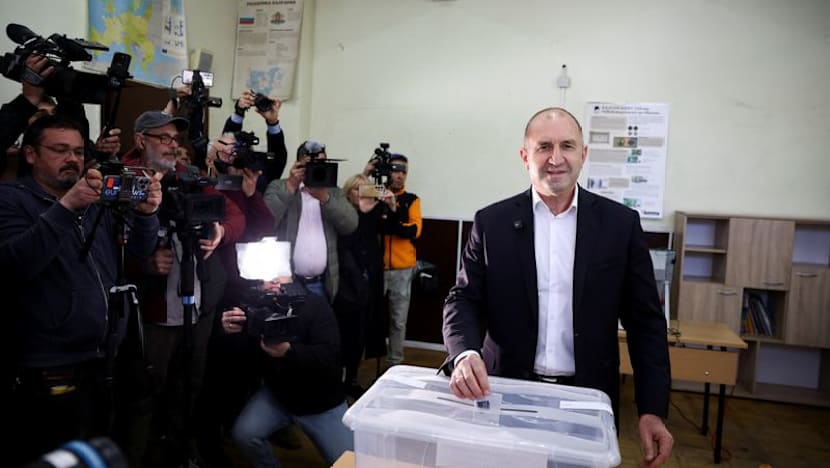
Bulgaria's Pro-Russian Former President Radev Poised for Landslide Election Win, Exit Polls Show
Translated from English, summarized and contextualized by DistantNews.
TLDR
- Former President Rumen Radev is poised for a significant victory in Bulgaria's parliamentary elections, according to exit polls.
- His Progressive Bulgaria party may secure a majority, potentially ending years of political instability and weak coalition governments.
- Radev's win could signal a shift in Bulgaria's foreign policy, with a potential move towards closer ties with Moscow and reduced support for Ukraine.
Bulgaria stands on the cusp of a significant political shift as exit polls indicate a landslide victory for former President Rumen Radev and his Progressive Bulgaria party. This potential outcome, if confirmed by final results, could put an end to the chronic instability that has plagued the nation, leading to eight elections in just five years.
Radev, a figure who has previously expressed skepticism towards the European Union and advocated for improved relations with Moscow, has tapped into a deep well of public frustration. Voters appear weary of corruption and the long-standing political elite, seeking a change that Radev's platform promises. His campaign, which saw him resign the presidency to contest these elections, drew parallels with figures like Hungary's Viktor Orban, suggesting a potential recalibration of Bulgaria's foreign policy.
Progressive Bulgaria won decisively. This is a victory of hope over distrust, a victory of freedom over fear, and finally, if you will, a victory of morality.
From a Bulgarian perspective, this election is not just about changing faces in parliament; it's about a potential reorientation of the country's geopolitical stance. While Western media might focus on the implications for NATO and the EU, here in Bulgaria, the narrative is deeply rooted in domestic concerns: stability, economic well-being, and a desire for a government that truly addresses the people's grievances. The prospect of resuming Russian oil and gas flows, and a less confrontational stance on the Ukraine conflict, are significant talking points that resonate differently within the country compared to Brussels or Washington.
This election presents a unique opportunity for Bulgaria to forge its own path, potentially challenging the prevailing consensus within the EU. The strong showing for Radev suggests a public appetite for a more independent foreign policy, one that prioritizes national interests as perceived by his supporters. The coming months will reveal whether this electoral mandate translates into concrete policy changes and how Bulgaria navigates its complex relationship with both the EU and Russia.
There is now an opportunity for the things people have been hoping to see change to actually become visible.
DistantNews Editorial
Originally published by CNA in English. Translated, summarized, and contextualized by our editorial team with added local perspective. Read our editorial standards.
More Stories


From Our Blog

What Gets Lost (and Found) When News Is Translated

The Critical Role of Diaspora Media in Global News

What Travellers Should Know About Countries with Restricted Press

A Digital Nomad's Guide to Following Local News

How the Same Story Looks Different in Different Countries
