


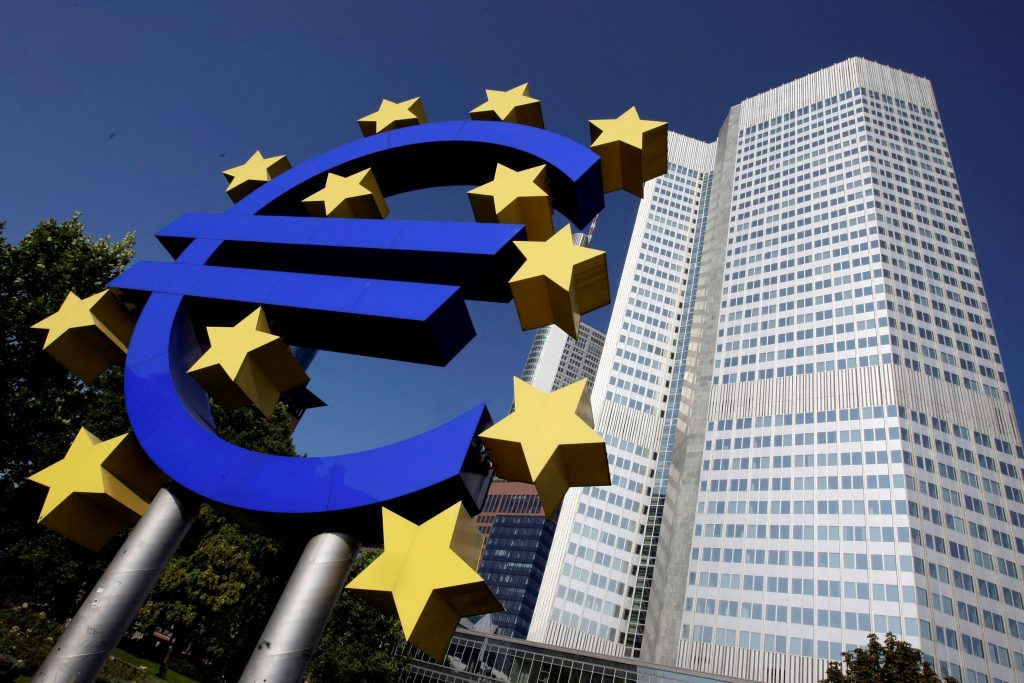
Bundesbank chief Nagel backs raising ECB rates to 2.5%
Translated from Greek and summarized by DistantNews. Read the original for the full story.
At a glance
Interview
Named sources
New plan
- Bundesbank President Joachim Nagel said inflation near 3% remains above the European Central Bank’s 2% medium-term target.
- He indicated that higher interest rates may be needed to bring inflation back to target, while warning that volatile oil and gas prices create uncertainty.
- Nagel also called for deeper European economic integration and said common debt could support defense spending under narrowly defined conditions.
Joachim Nagel has made a clear case for another European Central Bank rate increase, even as he cautions against reading too much into the next policy decision. The Bundesbank president said inflation is currently around 3%, rather than the ECB’s 2% target, and is not yet close enough to the medium-term objective.
For now, inflation, which is around 3% rather than 2%, is not close to our medium-term target.
In an interview with Le Monde, Nagel said June forecasts indicated that inflation would return to 2% over the medium term only if interest rates rose further. He remained cautious about offering more guidance, however, pointing to continuing fluctuations in oil and natural gas prices and highly volatile financial markets.
“There is a great deal of uncertainty. It is an uncomfortable situation, including from a monetary policy perspective,” Nagel said. He added that the ECB’s meeting-by-meeting approach had served it well and would continue to do so.
According to the June forecasts, inflation will return to 2% over the medium term only if interest rates are higher.
Nagel said the euro area had proved resilient despite wider economic pressures. Second-quarter growth across the bloc exceeded expectations, while Germany’s export data remained fairly solid and construction orders were described as respectable. German growth is still modest, he said, but the country is on course for roughly 1% growth this year, above the Bundesbank’s June forecast.
There is a great deal of uncertainty. It is an uncomfortable situation, including from a monetary policy perspective.
Asked about tariffs under Donald Trump and China’s economic closure, Nagel argued that Germany and the euro area could benefit from stronger European growth. He called for deeper integration in savings, investment, banking markets and energy. He also said common European debt could serve a specific purpose, such as defense spending, under tightly defined conditions, but should not become an excuse for avoiding sound fiscal policies.
Europe must become stronger and much more economically integrated.
About this summary
Originally published by Ta Nea in Greek. Translated, summarized, and contextualized automatically by DistantNews, with a note on how the source frames the story. Not individually reviewed before publishing. How this works.
More Stories


From Our Blog

What Gets Lost (and Found) When News Is Translated

The Critical Role of Diaspora Media in Global News

What Travellers Should Know About Countries with Restricted Press

A Digital Nomad's Guide to Following Local News

How the Same Story Looks Different in Different Countries
