


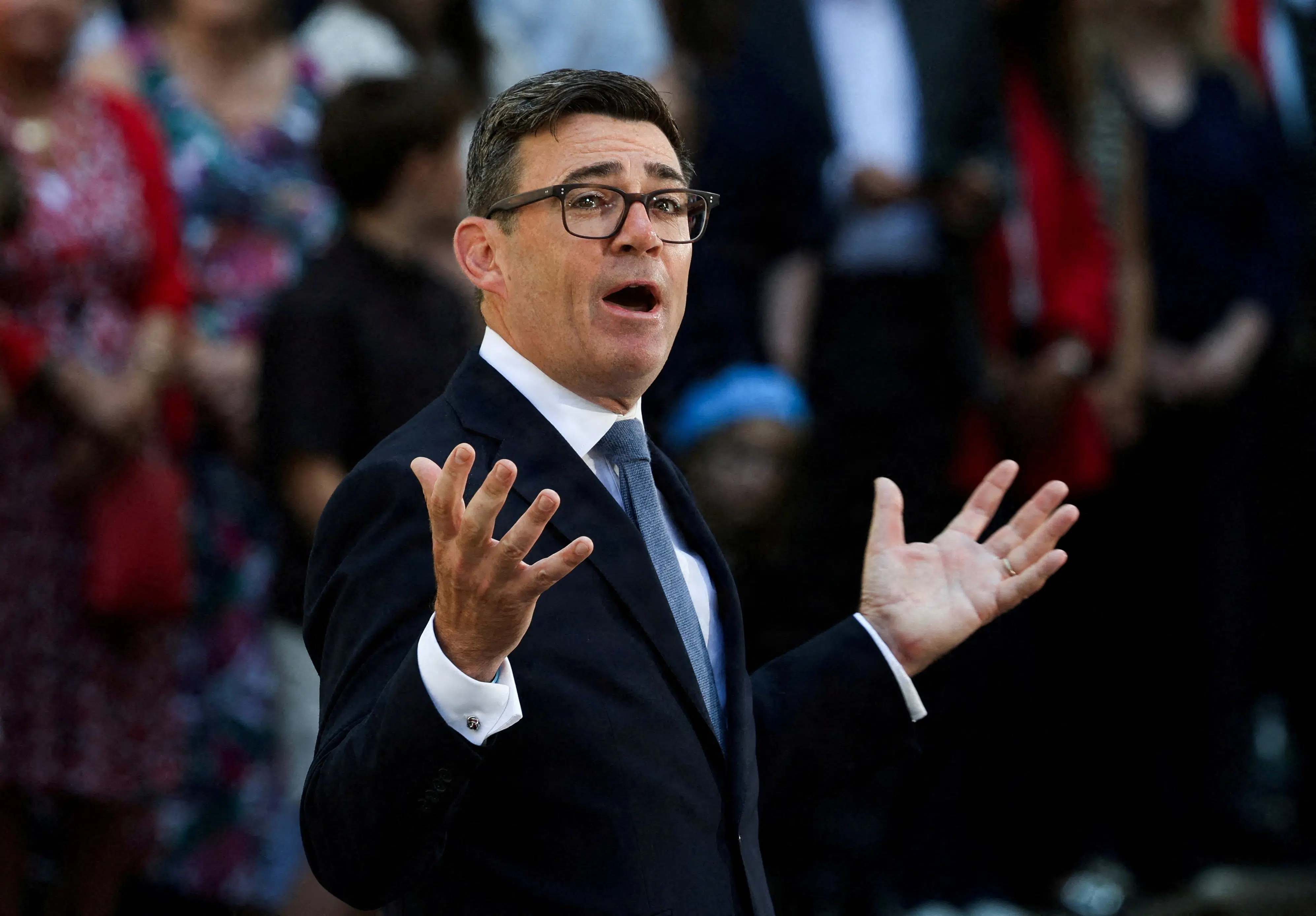
Burnham Sounds Like a Tired Echo of the 1970s
Translated from Danish, summarized and contextualized by DistantNews.
At a glance
Opinion
Sources not specified
Context piece
- Andy Burnham, the new Labour prime minister, has reached the highest political office without winning a general election or facing a party leadership contest.
- His policy platform mixes left-wing nostalgia with populism, drawing criticism for potentially worsening the UK's economic situation.
- Burnham's approach is seen as an echo of 1970s politics, contrasting with the Thatcher era and neoliberalism.
Andrew Burnham, the new Labour prime minister, has achieved the UK's top political position under unusual circumstances. He is among the few leaders to reach this office without ever winning a parliamentary election for his party or facing any challengers during his bid for party leadership.
Burnham's political profile is built on a rejection of Margaret Thatcher's legacy and "neoliberalism." However, his concrete policies are described as a blend of left-wing nostalgia and populism. Critics argue that this approach is unlikely to solve the nation's problems and may, in fact, exacerbate them.
His platform is seen by some commentators as a throwback to the economic and social policies of the 1970s. This is in stark contrast to the market-oriented reforms of the Thatcher era, which reshaped Britain's economy. The current approach, critics suggest, risks repeating past mistakes and failing to adapt to modern economic challenges.
The article frames Burnham's premiership as a potentially detrimental step, suggesting his policies could lead to negative outcomes. The comparison to the 1970s implies a period of economic difficulty and industrial strife, raising concerns about the direction of the United Kingdom under his leadership.
DistantNews Editorial
Originally published by Berlingske in Danish. Translated, summarized, and contextualized by our editorial team with added local perspective. Read our editorial standards.
More Stories



From Our Blog

What Gets Lost (and Found) When News Is Translated

The Critical Role of Diaspora Media in Global News

What Travellers Should Know About Countries with Restricted Press

A Digital Nomad's Guide to Following Local News

How the Same Story Looks Different in Different Countries
