


Business sector files actions against community consultation for Palo Viejo hydroelectric plant
Translated from Spanish, summarized and contextualized by DistantNews.
At a glance
News
Named sources
In the courts
- Guatemalan business associations CACIF and the Chamber of Industry have filed legal actions against a community consultation for the Palo Viejo hydroelectric project.
- They argue the Ministry of Energy and Mines exceeded its authority by establishing the consultation, potentially violating legal certainty and the rule of law.
- The Constitutional Court has provisionally suspended the ministry's agreement, with further legal actions pending.
Guatemala's leading business associations, CACIF and the Chamber of Industry, have lodged legal challenges against a community consultation process concerning the Palo Viejo hydroelectric project. The organizations filed actions of unconstitutionality against an agreement by the Ministry of Energy and Mines (MEM) that mandates a consultation with the Ixil Maya people in San Juan Cotzal, Quiché.
According to the Coordinating Committee of Agricultural, Commercial, Industrial, and Financial Associations (CACIF) and the Chamber of Industry of Guatemala (CIG), these legal actions are intended to defend legal certainty and the rule of law, which they claim are undermined by the MEM's directive. The contested agreement, numbered 145-2026, outlines the procedures for consulting the local community regarding the Palo Viejo Hydroelectric Project, which has been operational since 2012.
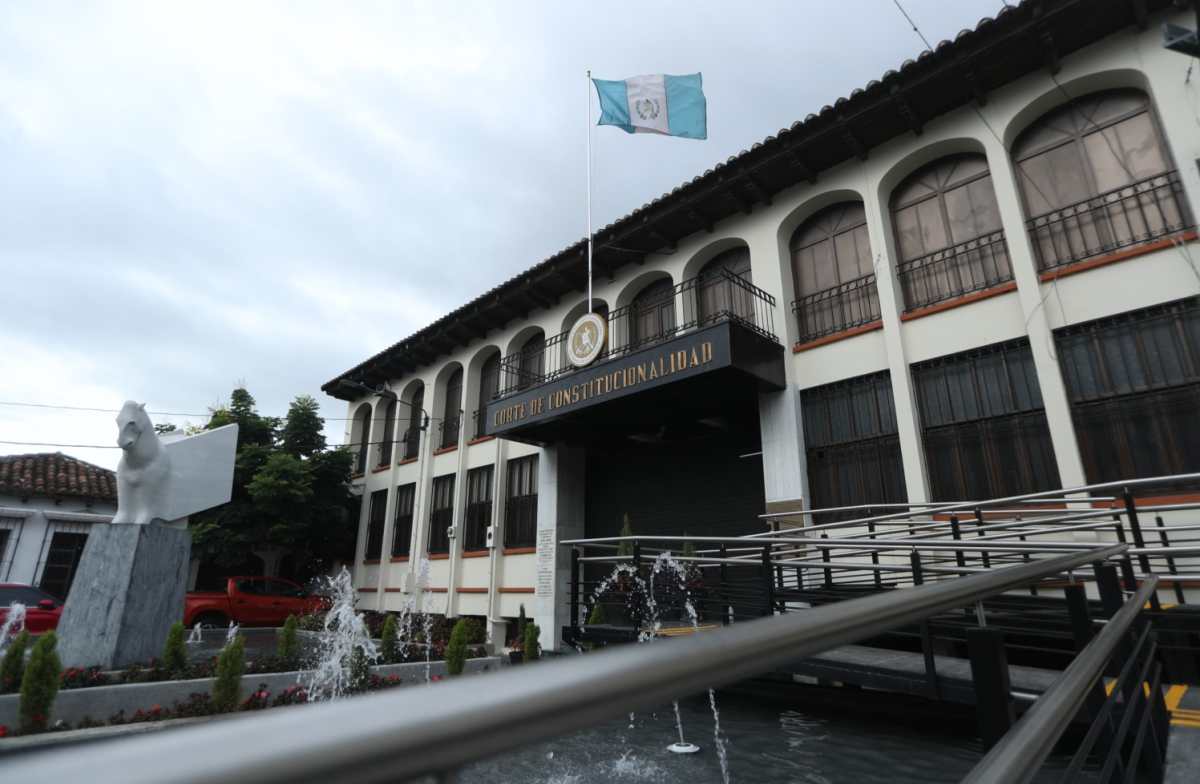
The Constitutional Court (CC) has already taken provisional action, issuing an amparo suspending the MEM's agreement following appeals from Empresa Agrícola San Francisco Cotzal, S. A.; Agrícola Cafetalera Palo Viejo, S. A.; and José Antonio Sánchez Boche. The court is also considering a similar action filed by the Association of Renewable Energy Generators (Ager), which targets not only the MEM but also President Bernardo Arévalo.
CACIF and CIG stated their actions were prompted by the belief that the Ministry overstepped its authority in issuing the agreement. They contend that the MEM disregarded existing administrative and institutional procedures, as well as International Labour Organization (ILO) Convention No. 169 on Indigenous and Tribal Peoples. The business groups argue this violates fundamental constitutional principles, including legality, normative hierarchy, and legal security. Their objective is to nullify the MEM's regulation, asserting that its implementation threatens investment and development projects beneficial to the country. While expressing respect for international commitments, they insist these must align with Guatemala's Constitution and legal framework to uphold the rule of law and preserve legal certainty.
DistantNews Editorial
Originally published by Prensa Libre in Spanish. Translated, summarized, and contextualized by our editorial team with added local perspective. Read our editorial standards.
More Stories



From Our Blog

What Gets Lost (and Found) When News Is Translated

The Critical Role of Diaspora Media in Global News

What Travellers Should Know About Countries with Restricted Press

A Digital Nomad's Guide to Following Local News

How the Same Story Looks Different in Different Countries
