


Businesses Use Robots to Replace Workers Amidst Rising Costs
Translated from Malay, summarized and contextualized by DistantNews.
At a glance
News
From a news agency
Context piece
- South Korean businesses are increasingly using robots and self-service systems to combat rising labor costs.
- This trend is expanding beyond coffee shops to include ramen restaurants and flower shops, with payment services reporting a fourfold increase in such establishments.
- Factors contributing to this shift include difficulty finding staff, high wages, low crime rates, and the country's aging population leading to a labor shortage.
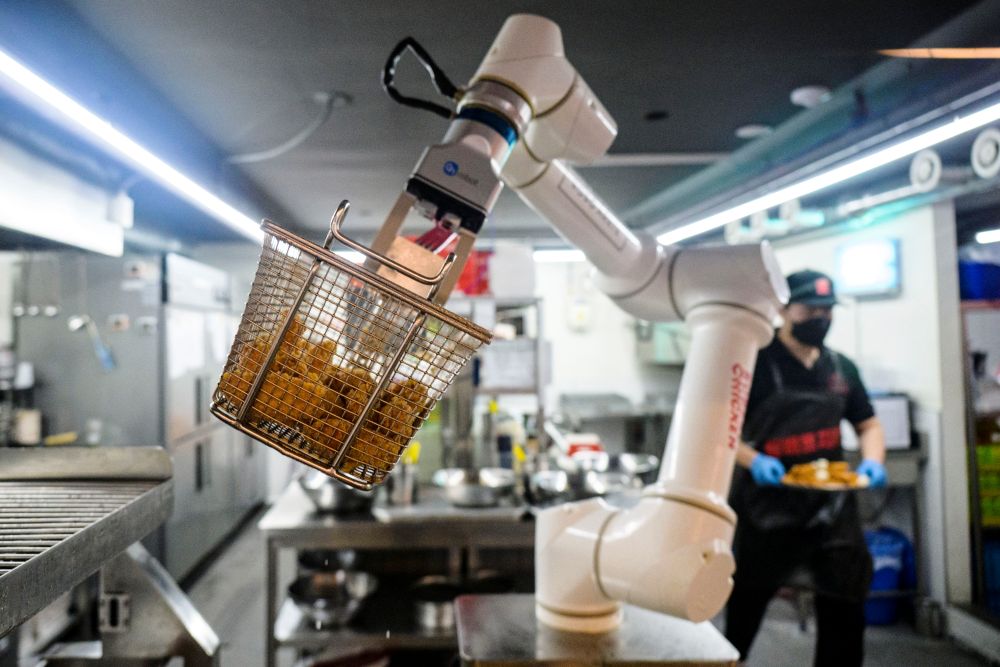
South Korea is witnessing a surge in unmanned businesses, from coffee shops and ramen eateries to flower shops, as owners turn to robots and self-service systems to navigate escalating labor costs. This business model relies heavily on customer honesty.
Payment service provider Samsung Card reported a fourfold increase in such establishments by 2025 compared to 2020. While cashier-less retail stores are not new globally, the concept has significantly broadened in South Korea.
The number of such stores has quadrupled in 2025 compared to 2020.
Business owners cite the difficulty in finding suitable staff and the rising cost of wages as primary drivers for adopting robotic solutions. The country's exceptionally low petty crime rate and a generally law-abiding populace also contribute to the feasibility of these automated businesses.
The difficulty in finding suitable staff and the increase in wage costs are the main factors for the use of robots.
Compounding these factors is South Korea's rapidly aging population and one of the world's lowest birth rates, creating a critical labor shortage. The government projects the population to shrink significantly by 2072.
Kim Dongjin, CEO of Lounge X, a coffee chain utilizing robotic arms for drink preparation, noted a drastic decline in baristas in their early twenties and increasing difficulty in hiring skilled staff. His company operates eight 24-hour unmanned coffee shops, with most located in Seoul. These automated premises require human staff for only one hour daily for restocking and cleaning.
The baristas or coffee makers in their early 20s are now drastically declining.
While sales in human-staffed coffee shops generally remain higher, Dongjin explained that savings on labor costs boost the profit margin for unmanned stores to over 40 percent, a substantial increase from the 10-15 percent typically seen in conventional coffee shops.
It is becoming increasingly difficult to hire skilled baristas.
DistantNews Editorial
Originally published by Utusan Malaysia in Malay. Translated, summarized, and contextualized by our editorial team with added local perspective. Read our editorial standards.
More Stories

From Our Blog

What Gets Lost (and Found) When News Is Translated

The Critical Role of Diaspora Media in Global News

What Travellers Should Know About Countries with Restricted Press

A Digital Nomad's Guide to Following Local News

How the Same Story Looks Different in Different Countries
