


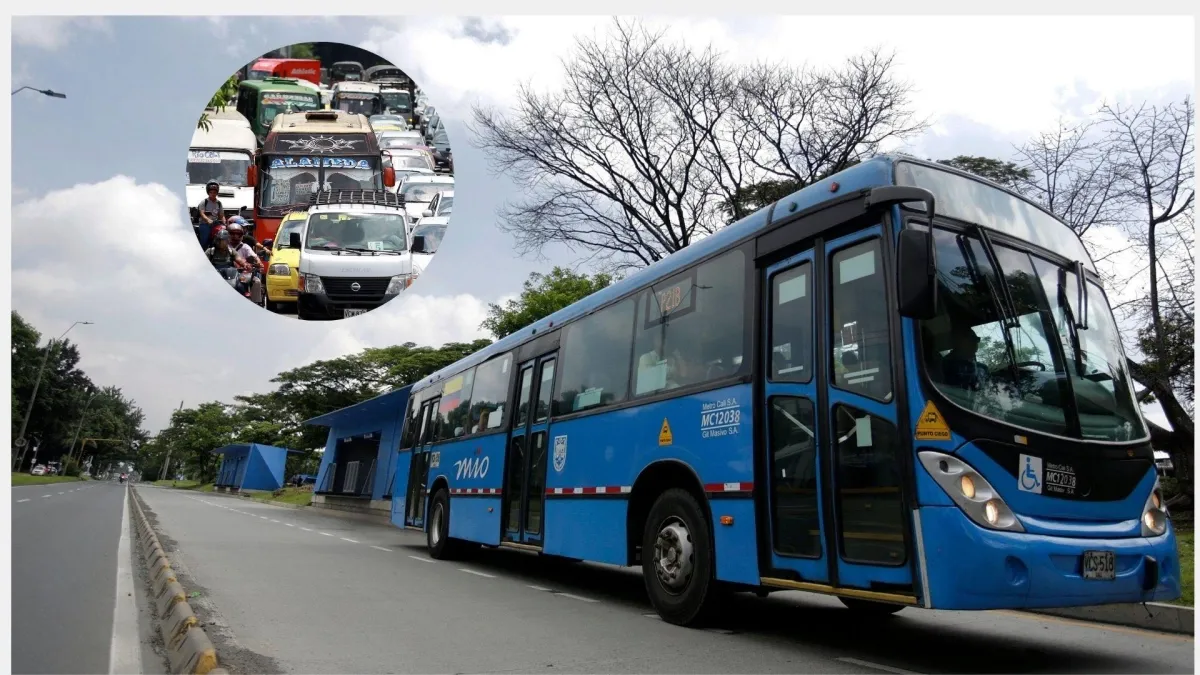
Cali transport agreements: Collective buses can join MIO or be scrapped
Translated from Spanish, summarized and contextualized by DistantNews.
At a glance
News
Sources not specified
Context piece
- Cali's city government and public transport operators have reached agreements to integrate collective transport into the MIO system or offer chatarrization for old buses.
- Technical committees formed after a May 21st protest have addressed fleet replacement freezes and the chatarrization process, aiming to modernize the collective transport fleet.
- The integration is already underway with collective transport buses operating MIO feeder routes, demonstrating a commitment to strengthening the city's integrated public transport system.
Cali's city government is moving forward with integrating its collective public transport (TPC) into the MIO integrated transport system, aiming to modernize the fleet and improve mobility. This follows technical committee discussions initiated after a May 21st transport strike.
Daniel Parra, Operations Director at Metrocali, stated that the city administration and Metrocali intend to strengthen, not eliminate, the TPC. He highlighted that steps are being taken to incorporate TPC into the new integrated system, citing the successful operation of MIO feeder routes by TPC buses since May 2025, including routes A52 and A57.
Parallel technical committee work has focused on three key areas: lifting a fleet replacement freeze in place since 2017, regulating the chatarrization process to facilitate vehicle renewal, and structuring new complementary routes in areas not served by the MIO. Arbey Hurtado, representing the G5 conglomerate of transport companies, described these measures as "guarantees for the permanence and modernization of collective public transport."
Víctor Dinas, executive director of G5, confirmed that a draft decree is ready to ensure the continuity of public transport services and allow for the incorporation of newer vehicles. He noted that transport operators have actively participated in developing administrative acts to facilitate these changes, signaling a collaborative approach to modernizing Cali's transport landscape.
DistantNews Editorial
Originally published by El Tiempo in Spanish. Translated, summarized, and contextualized by our editorial team with added local perspective. Read our editorial standards.
More Stories


From Our Blog

What Gets Lost (and Found) When News Is Translated

The Critical Role of Diaspora Media in Global News

What Travellers Should Know About Countries with Restricted Press

A Digital Nomad's Guide to Following Local News

How the Same Story Looks Different in Different Countries
