


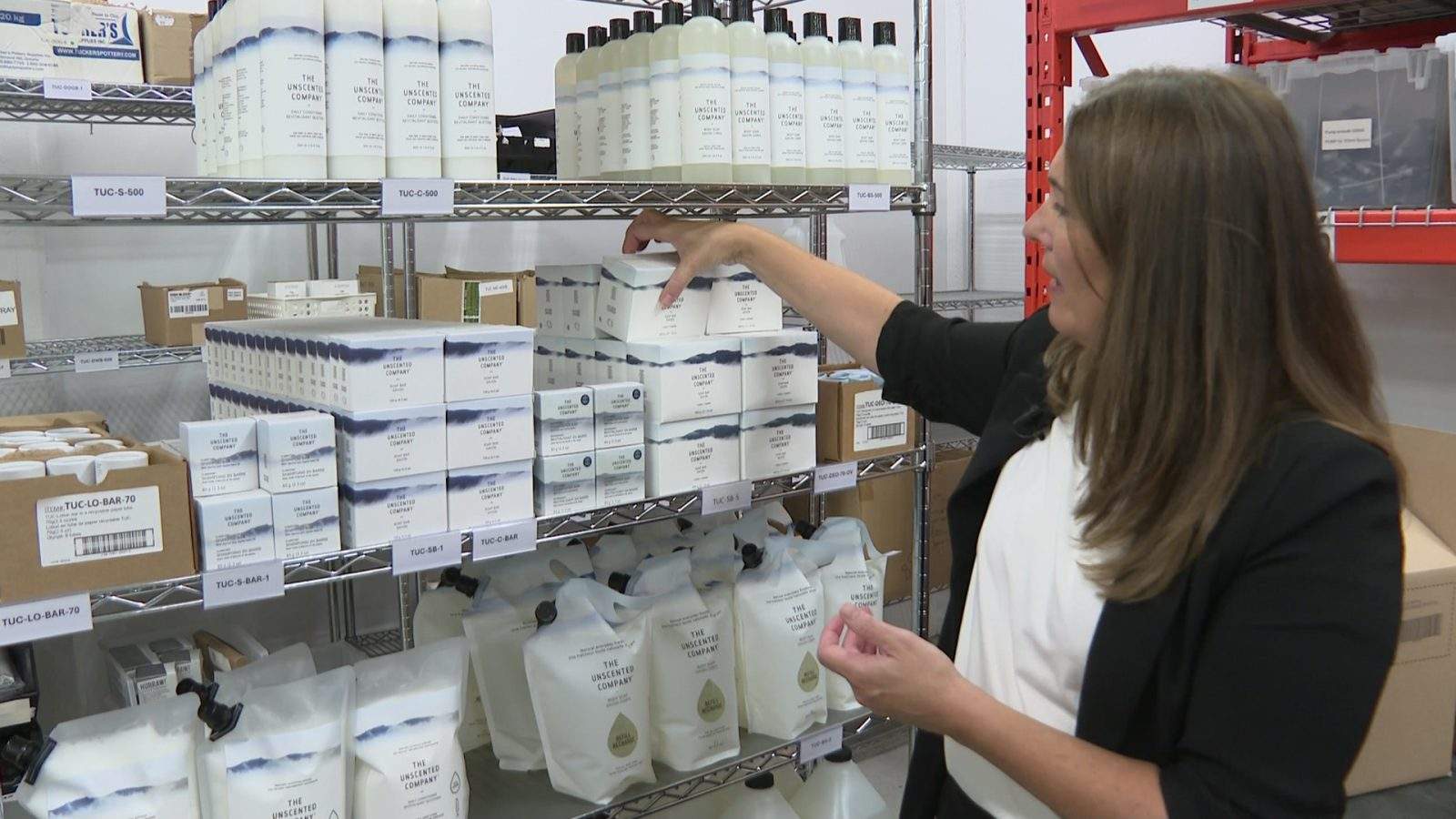
Canada's supply chain shift: Businesses reshore production amid US trade war
Translated from English and summarized by DistantNews. Read the original for the full story.
At a glance
News
Named sources
Ongoing story
- Canadian businesses are increasingly reshoring production and local sourcing to mitigate the impact of the ongoing trade war with the U.S.
- Companies like The Unscented Company and Chapman's Ice Cream are absorbing costs and investing in domestic manufacturing despite potential short-term profitability impacts.
- Experts note that while reshoring is possible, highly integrated North American supply chains, developed under agreements like CUSMA, present complexities for businesses, especially SMEs.
The escalating trade war between Canada and the U.S. is prompting some small and medium-sized businesses to bring production back home, seeking greater control over their supply chains and costs.
I love my manufacturer in Vermont. He was perfect, but we could not afford having an American flag on one of my products
Anie Rouleau, founder and CEO of Montreal-based The Unscented Company, moved soap production from Vermont back to Canada, citing the prohibitive cost of U.S. tariffs. She estimates these tariffs will cost her company $150,000 by the end of 2026. While the company already produces 80% of its stock in Canada, Rouleau is now committed to more local sourcing for ingredients, even if it means postponing profitability.
"When you make that decision to produce here in Canada, you’re obviously making it more expensive for a while until you build your volume," Rouleau told Global News. "But I’m willing to postpone profitability to make sure we produce here and to create a solid and sustainable economy."
It is significant enough to have a plan. So now we actually are executing our plan
Chapman's Ice Cream is also shifting its strategy, aiming to convert over 70% of its ingredients from the U.S. back to Canada or other countries. Last year, the company absorbed initial tariff costs, and COO Ashley Chapman announced that prices would not increase until March 2028. The company has also partnered with other Canadian firms to reshore production of items previously manufactured elsewhere.
When you make that decision to produce here in Canada, you’re obviously making it more expensive for a while until you build your volume. But I’m willing to postpone profitability to make sure we produce here and to create a solid and sustainable economy.
Saibal Ray, chair of supply chain management at McGill University, acknowledges the benefits of reshoring but highlights the complexities. "Because of NAFTA and CUSMA, supply chains were so integrated across the three countries, we have not developed competency in certain things because that was not needed," he explained. "The competency was somewhere else." He added that for small and medium-sized enterprises, handling all aspects of production at scale is "absolutely impossible."
Not only have we managed to keep our component costs the same, but we have also partnered with other Canadian companies to reshore production of some items that have never been produced in Canada before.
About this summary
Originally published by Global News in English. Translated, summarized, and contextualized automatically by DistantNews, with a note on how the source frames the story. Not individually reviewed before publishing. How this works.
More Stories


From Our Blog

What Gets Lost (and Found) When News Is Translated

The Critical Role of Diaspora Media in Global News

What Travellers Should Know About Countries with Restricted Press

A Digital Nomad's Guide to Following Local News

How the Same Story Looks Different in Different Countries
