


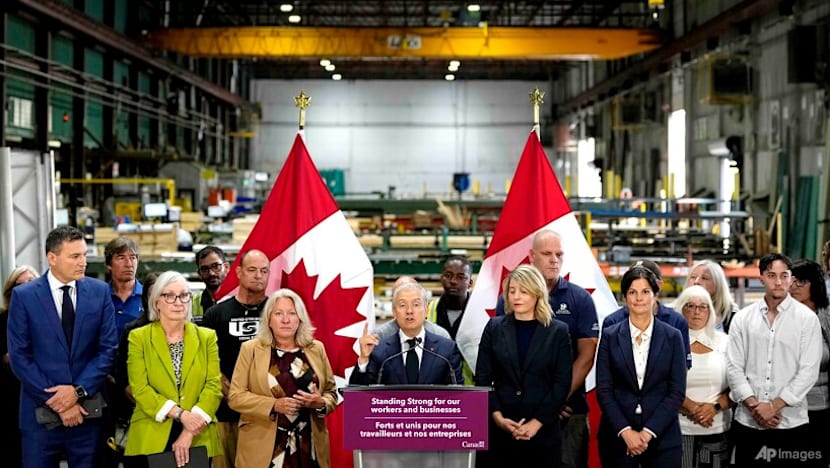
Canada slaps retaliatory tariffs on US goods worth US$20 billion as trade war intensifies
Summarized and contextualized by DistantNews.
At a glance
News
Sources not specified
Ongoing story
- Canada announced retaliatory tariffs on US goods, ranging from 15 to 50 percent, effective September 8.
- These tariffs target industries including steel, dairy, and electronics, matching US levels in response to earlier US duties.
- The Canadian government also unveiled a C$7.5 billion aid package for affected firms and workers amidst the escalating trade war.
Canada has intensified its trade war with the United States by announcing counter-tariffs on a range of U.S. goods. Effective September 8, these retaliatory tariffs will impose duties between 15 and 50 percent on various products, mirroring the levels previously set by the U.S.
The targeted industries include steel, dairy, and electronics. Specific items affected by the new tariffs include frozen and fresh fish, consumer goods like dishwashers and washing machines, and industrial products such as railway construction materials. This move comes after Prime Minister Mark Carney outlined the timeframe for retaliation following the U.S. President Donald Trump's imposition of 50 percent duties.
This is an unprecedented challenge imposed on Canada. But Canada will meet the moment. I think what Canadians can see this morning is that we stand united.
In response to the escalating trade conflict, Canada's Finance Minister Francois-Philippe Champagne stated that the nation "will meet the moment" and "stand united." The government also announced a significant aid package totaling C$7.5 billion (US$5.4 billion) to support Canadian firms and workers impacted by the trade dispute. Industry Minister Melanie Joly echoed the call for Canadians to support domestic businesses and pledged to work with new allies and trading partners.
The tit-for-tat measures come after trade negotiations collapsed, with Trump's latest tariffs affecting approximately US$20 billion in Canadian goods. Analysts warn of further escalation, especially as Trump has threatened to double tariffs on Canadian autos. The U.S. tariffs do not exempt products under the US-Mexico-Canada free trade agreement, raising the effective U.S. tariff rate on Canadian exports. Manufacturers in Quebec, New Brunswick, and Ontario are expected to be the most affected.
fight back
DistantNews Editorial
Originally published by CNA. Summarized and contextualized by our editorial team with added local perspective. Read our editorial standards.
More Stories


From Our Blog

What Gets Lost (and Found) When News Is Translated

The Critical Role of Diaspora Media in Global News

What Travellers Should Know About Countries with Restricted Press

A Digital Nomad's Guide to Following Local News

How the Same Story Looks Different in Different Countries
