

Canadian Player Koné Uses 'Green Whistle' Inhaler After Severe World Cup Injury
Translated from Spanish, summarized and contextualized by DistantNews.
At a glance
News
Named sources
Outcome reported
- Canadian midfielder Ismaël Koné suffered a severe tibia fracture during a World Cup match against Qatar.
- He was seen using a green inhaler, identified as Penthrox, for pain relief.
- Koné underwent successful surgery and faces a recovery period of six to 12 months.
During Canada's dominant 6-0 World Cup victory over Qatar, Canadian midfielder Ismaël Koné sustained a serious tibia fracture after a foul from Qatar's Assim Madibo, which resulted in Madibo's expulsion following a VAR review.
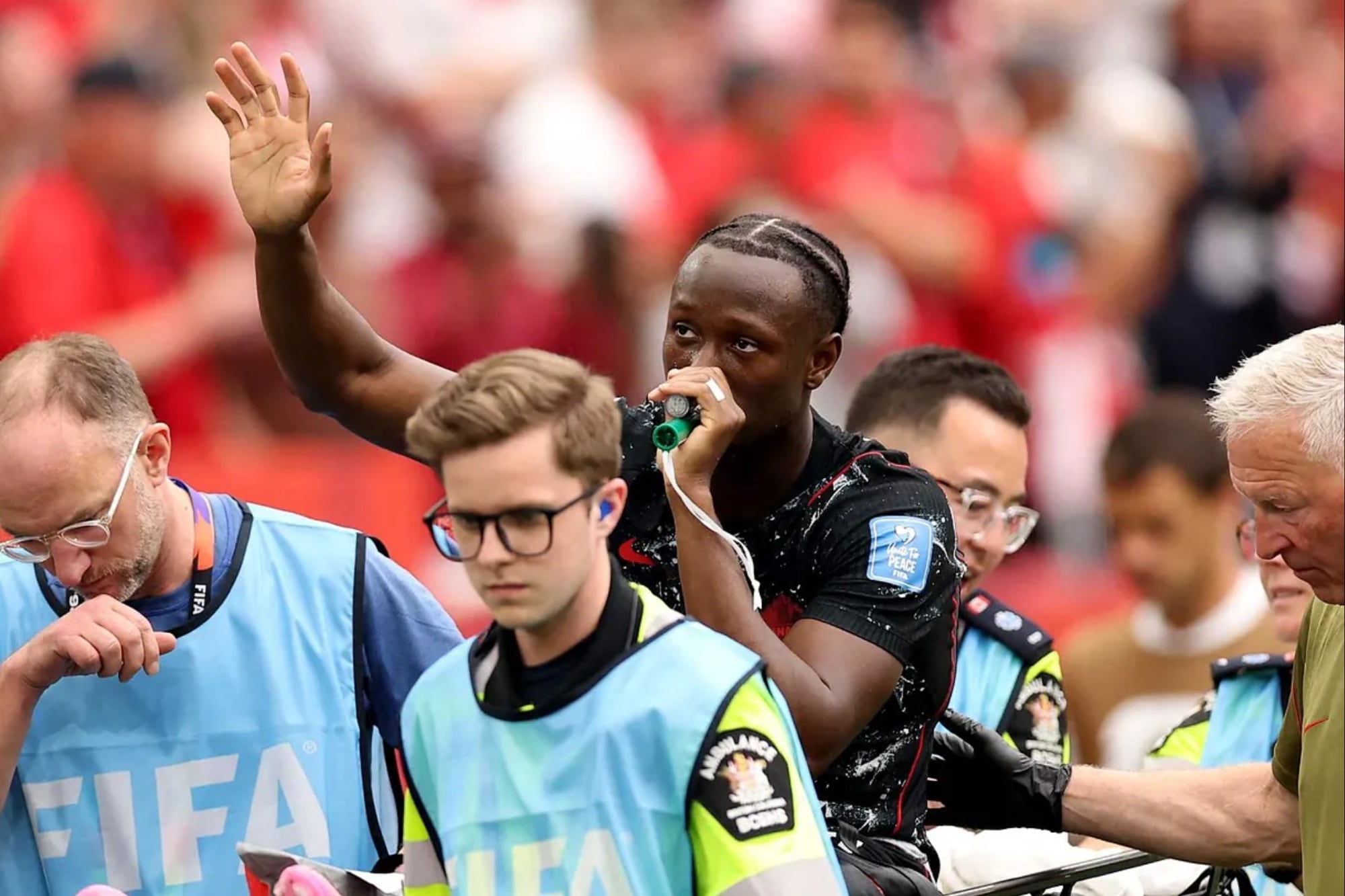
Amidst the concern for the player's well-being, a notable image emerged: Koné was seen using a small green inhaler, commonly known as the "green whistle" or Penthrox, as he was being taken off the field on a stretcher. This device administers methoxyflurane, a fast-acting analgesic used in emergency medicine and sports.
it is a portable inhaler that administers methoxyflurane, a drug that has revolutionized pre-hospital emergency medicine and pain management in sports events.
According to anesthesiologist Herman Granados, Penthrox is used in ultra-low concentrations (0.1% to 0.3%) as a potent, non-opioid painkiller. It provides rapid pain relief, typically requiring fewer than six inhalations to take effect, without the need for intravenous access on the field. Crucially, it allows the patient to remain conscious and cooperative while severe pain is managed.
it provides extremely rapid pain relief that requires less than six inhalations to start working, and all this without the need for a venous line on the field.
This explains why Koné, despite suffering a potentially debilitating injury, was able to leave the field on a stretcher while appearing to acknowledge the crowd. Canada's coach, Jesse Marsch, was seen comforting Koné after the incident.
Following the match, the Canadian Soccer Association confirmed that Koné underwent successful surgery on Thursday night. While a full recovery is expected, the rehabilitation process is estimated to take between six and 12 months, depending on his post-operative progress.
The patient remains awake, lucid, and cooperative with medical personnel, but with severe pain completely controlled.
DistantNews Editorial
Originally published by La Nación in Spanish. Translated, summarized, and contextualized by our editorial team with added local perspective. Read our editorial standards.
More Stories


From Our Blog

What Gets Lost (and Found) When News Is Translated

The Critical Role of Diaspora Media in Global News

What Travellers Should Know About Countries with Restricted Press

A Digital Nomad's Guide to Following Local News

How the Same Story Looks Different in Different Countries
