


Cannot Hand Children Over to Social Media: Banning is Easy, Managing is the Hard Part!
Translated from Vietnamese, summarized and contextualized by DistantNews.
At a glance
News
Sources not specified
Context piece
- Vietnamese readers are discussing the challenges of managing children's early access to social media and digital devices.
- Many parents and educators express concern over children's excessive use of platforms like TikTok and Facebook.
- The debate centers on whether to ban platforms or educate children on self-protection, with a call for balanced family, school, and state involvement.
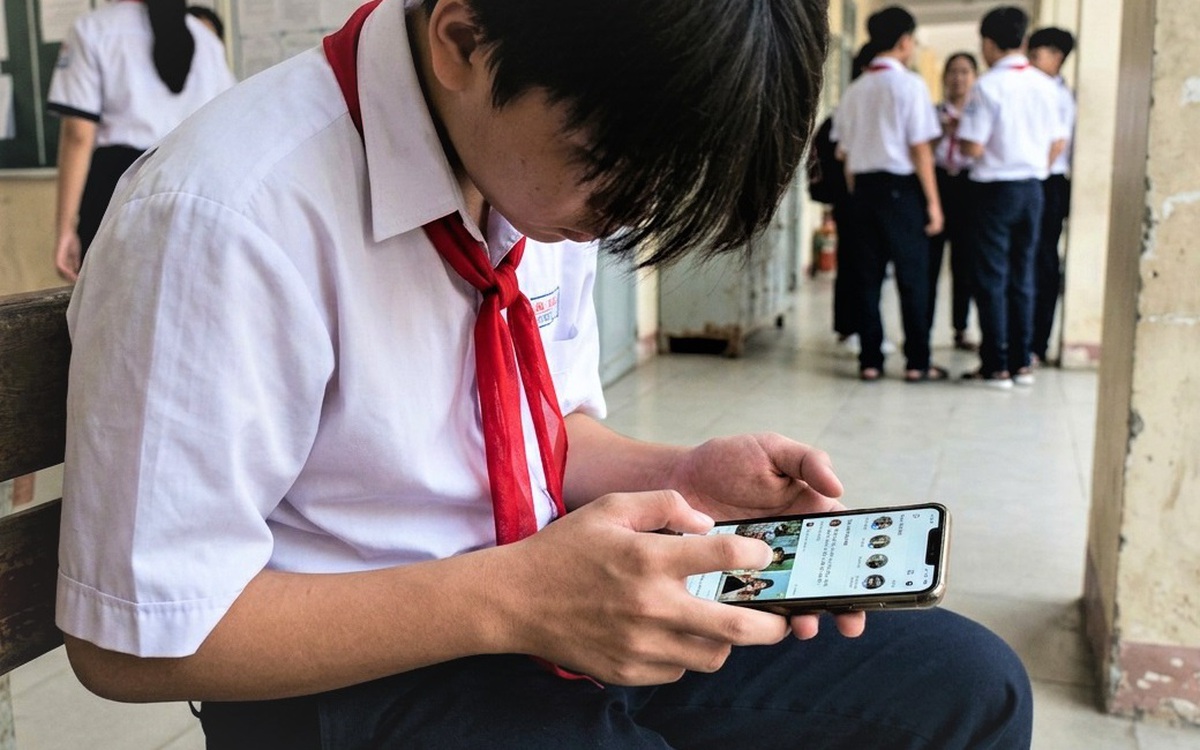
A growing concern among Vietnamese parents and educators is the early and often unsupervised access children have to social media and digital devices. Recent discussions highlight the anxieties surrounding young students, even in middle school, who are frequently seen scrolling through social media during school breaks.
It's not that difficult to see students in middle school taking advantage of their break time to scroll through social media.
Readers shared personal anecdotes and opinions, with many commending teachers who handle sensitive situations with empathy. One reader noted the importance of parents setting a good example, rather than simply handing over devices to keep children occupied. Another pointed out that children's creation of "rebellious personas" online can stem from a lack of parental engagement, emphasizing the need for a wake-up call.
The complexity of the issue is further illustrated by parents' struggles to keep up with their children's online activities, including unfamiliar slang and hidden accounts. This has led to questions about effective, yet subtle, monitoring methods.
If only everyone could be as calm as that teacher, perhaps many children would be 'saved' in time before it's too late.
The conversation also touches upon the necessity of a balanced approach. While some advocate for outright bans on entertainment platforms like TikTok and Facebook, others argue that completely prohibiting social media might hinder communication with peers and teachers, especially when school-related activities are conducted online. There's a recognition that social media itself isn't inherently bad; the content consumed is key, with some children benefiting from educational channels in English.
After reading this, I tell myself I must set a better example for my child, rather than just handing them a phone and saying 'go play so I can work'.
Ultimately, the consensus leans towards a shared responsibility among families, schools, and the state. While bans might be a temporary measure, the core challenge lies in educating children to navigate the digital world safely and responsibly. The debate underscores the difficulty of managing, rather than simply prohibiting, children's engagement with the online sphere in the digital age.
Many times I see the kids using terms and slang on TikTok and Facebook that adults can't understand. Do any parents have a secret to 'stake out' or subtly monitor their child's hidden accounts?
DistantNews Editorial
Originally published by Tuổi Trẻ in Vietnamese. Translated, summarized, and contextualized by our editorial team with added local perspective. Read our editorial standards.
More Stories

From Our Blog

What Gets Lost (and Found) When News Is Translated

The Critical Role of Diaspora Media in Global News

What Travellers Should Know About Countries with Restricted Press

A Digital Nomad's Guide to Following Local News

How the Same Story Looks Different in Different Countries
